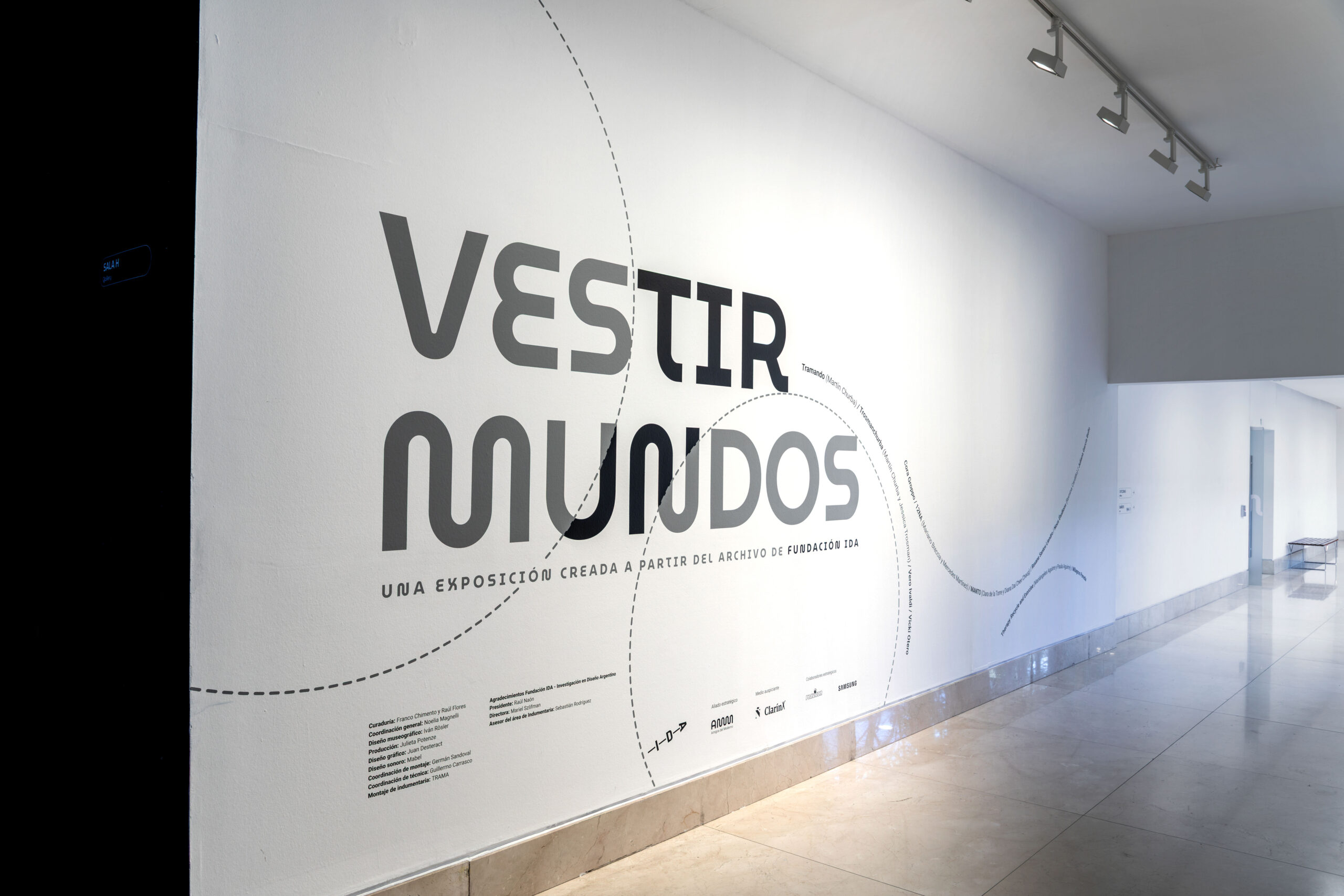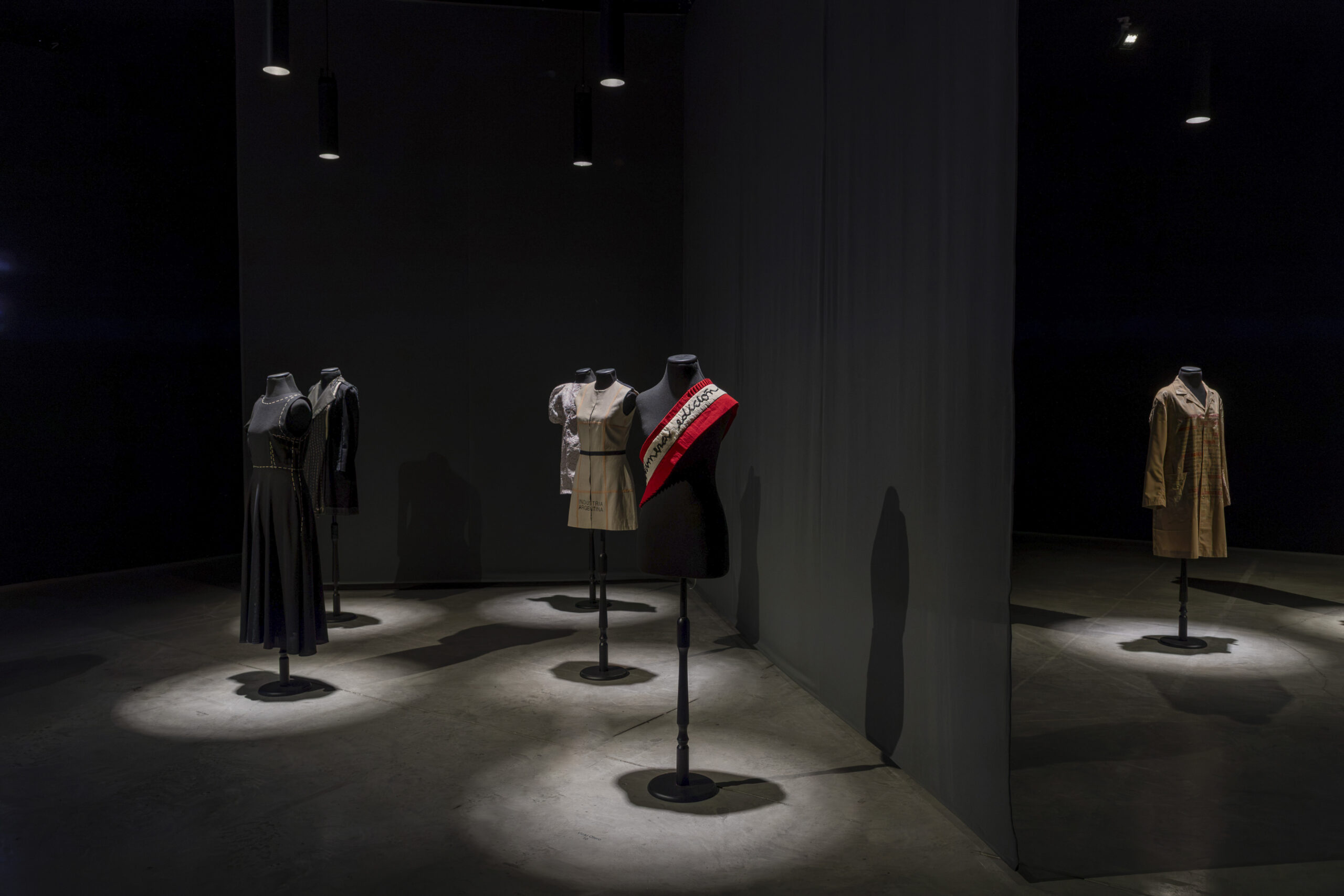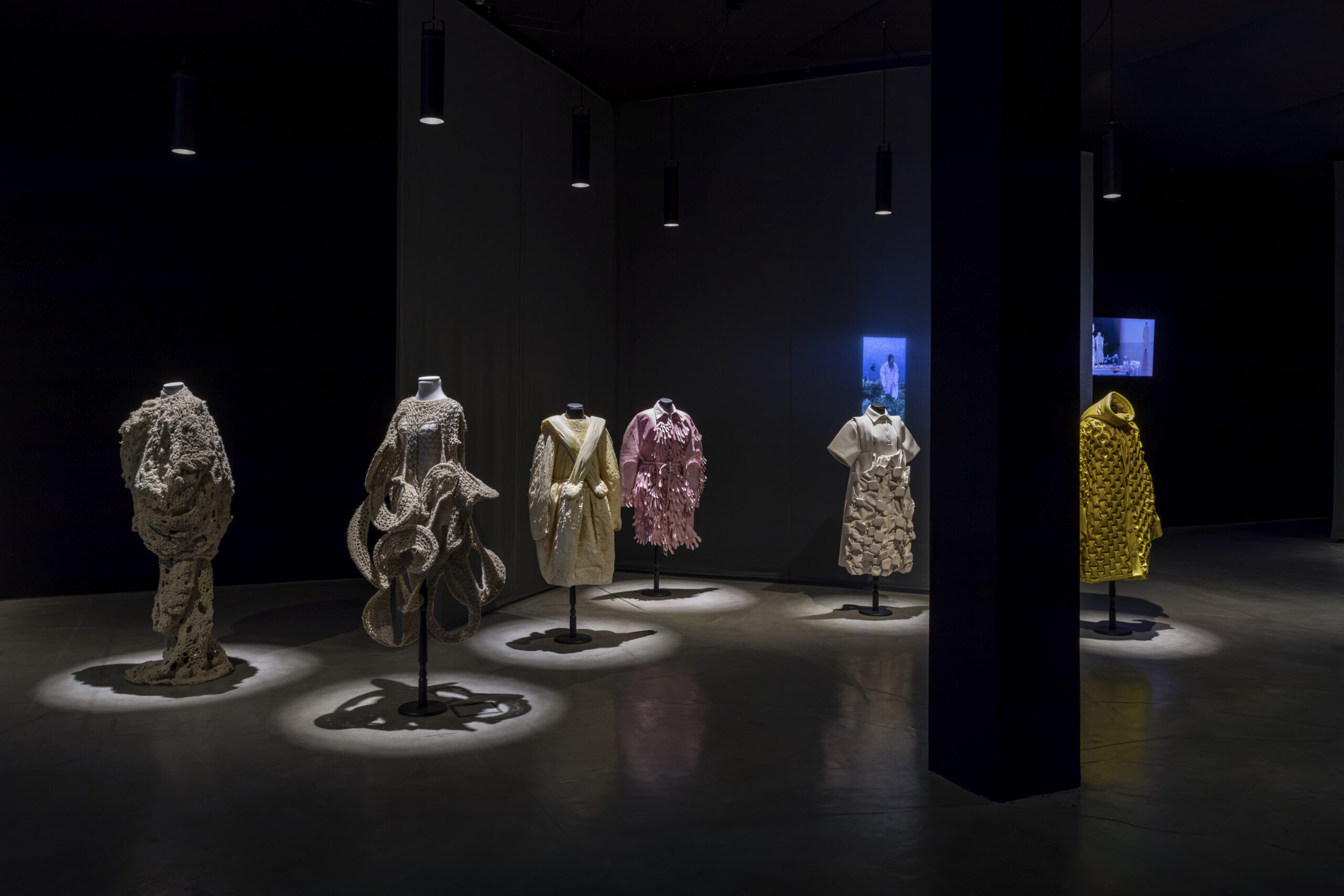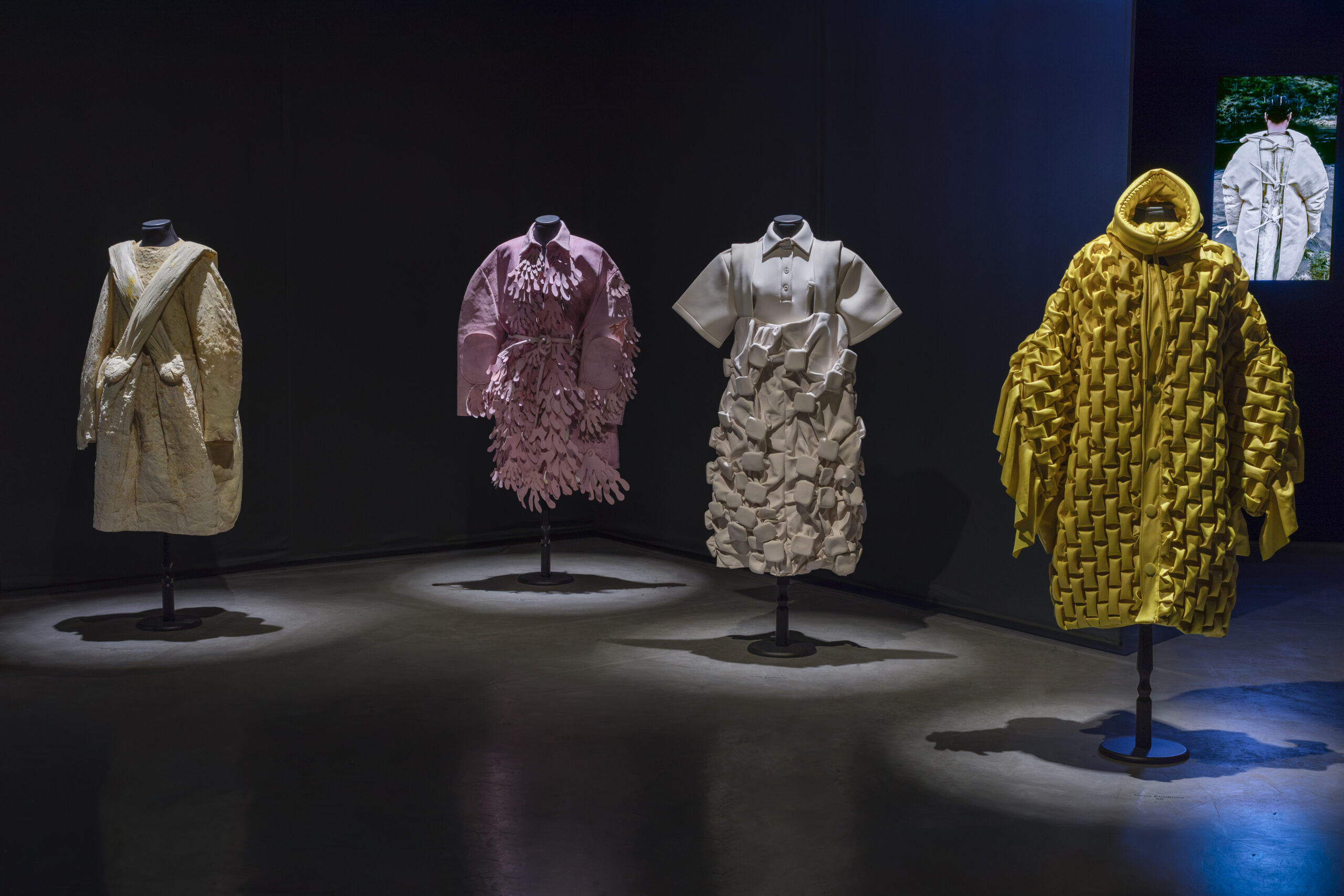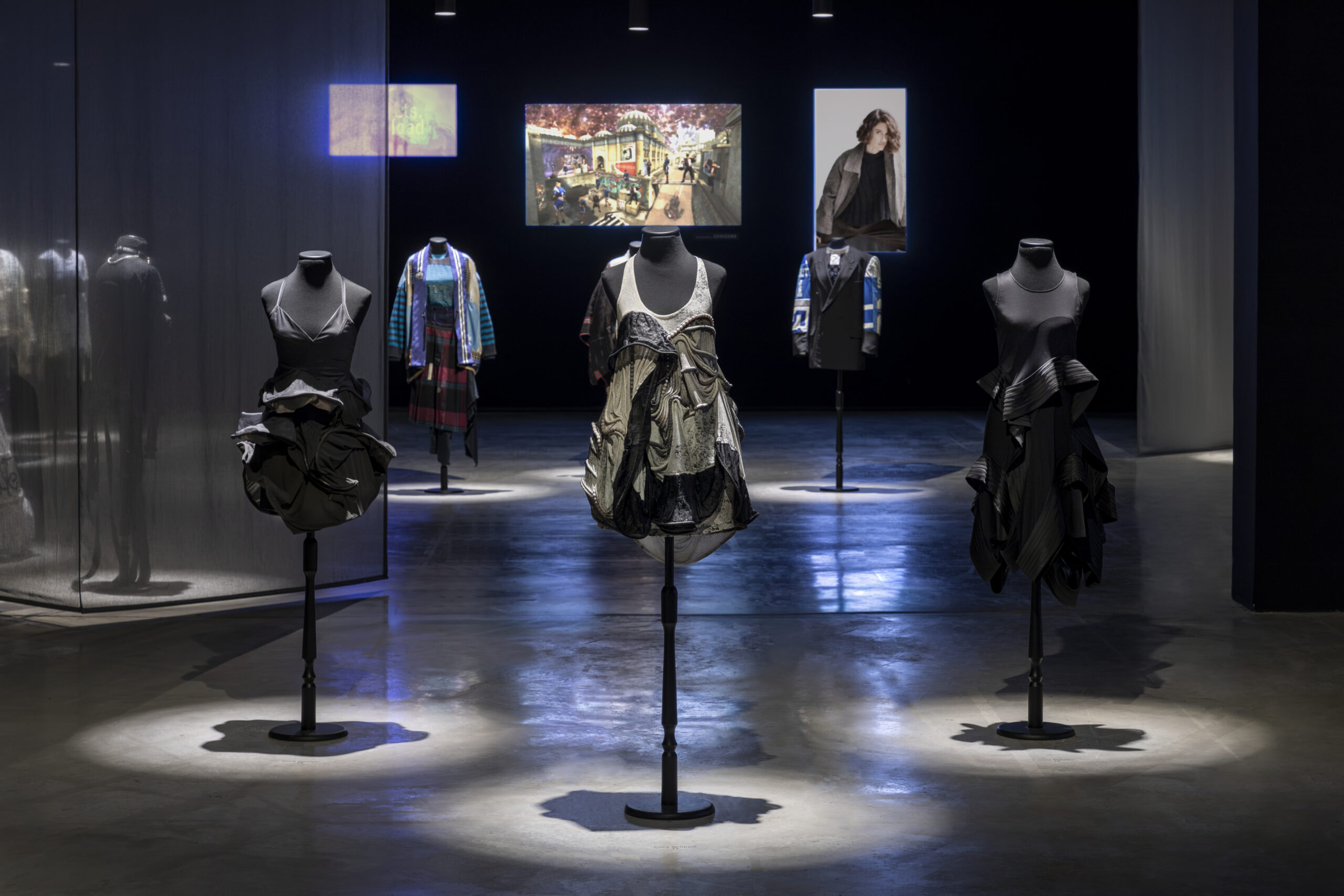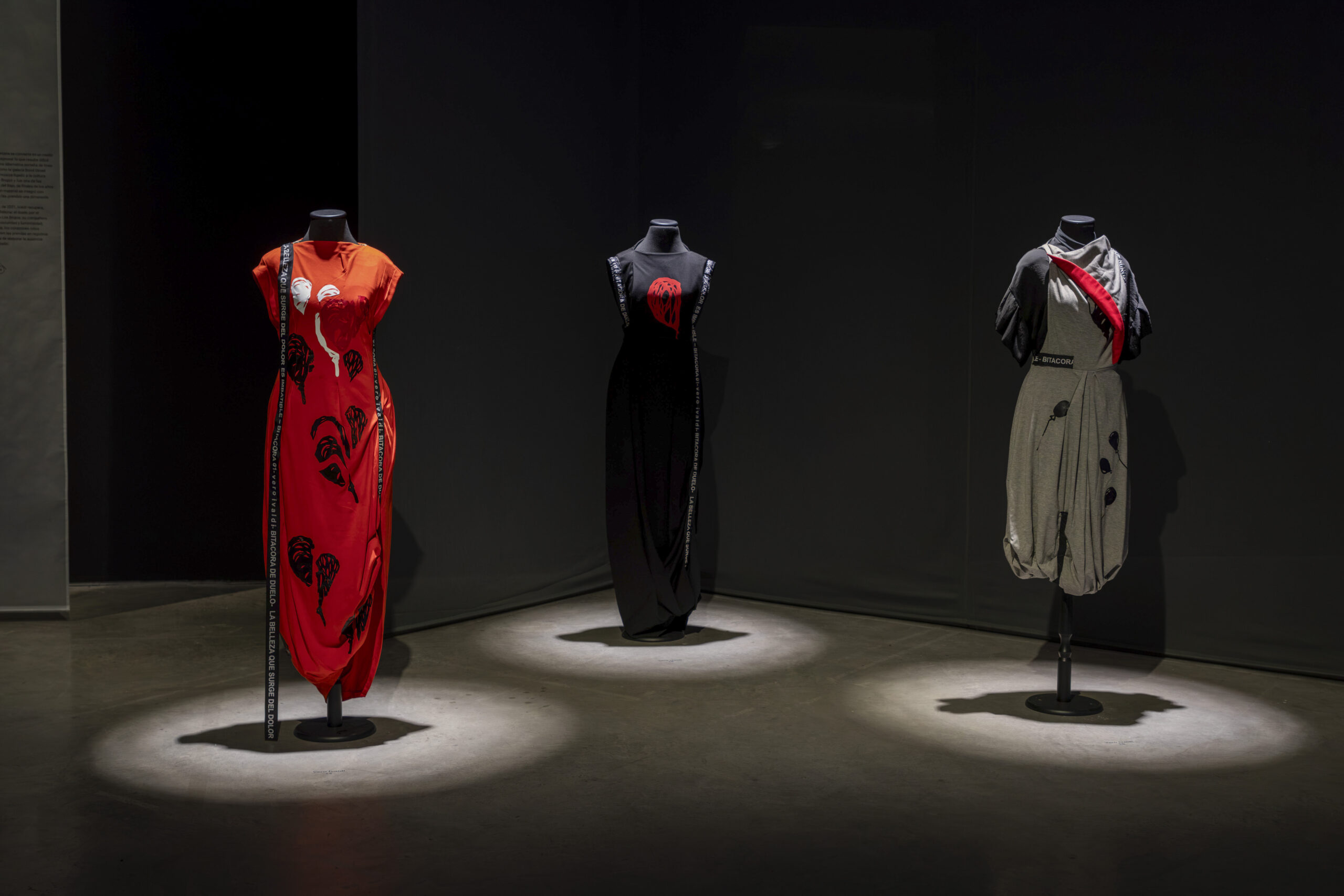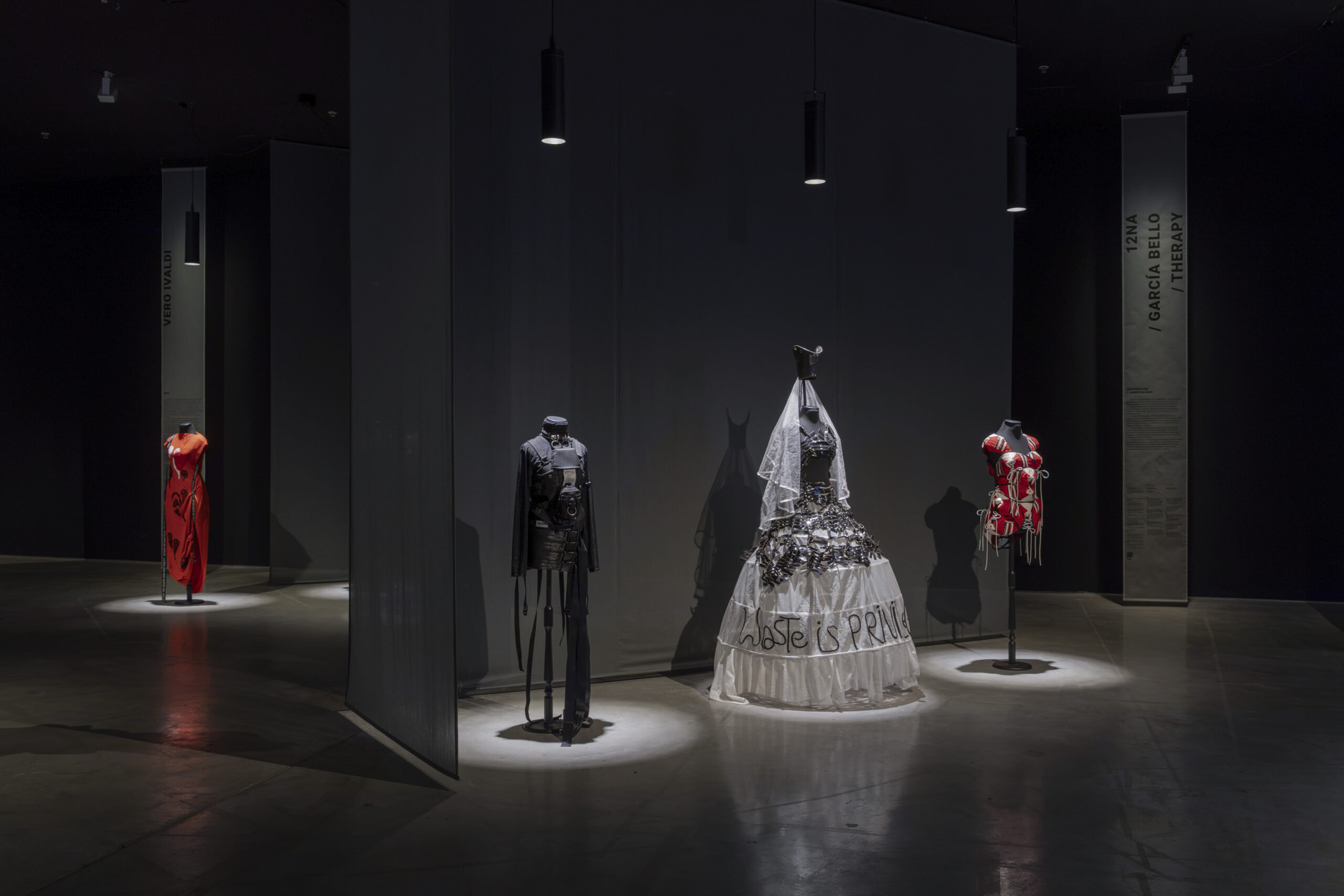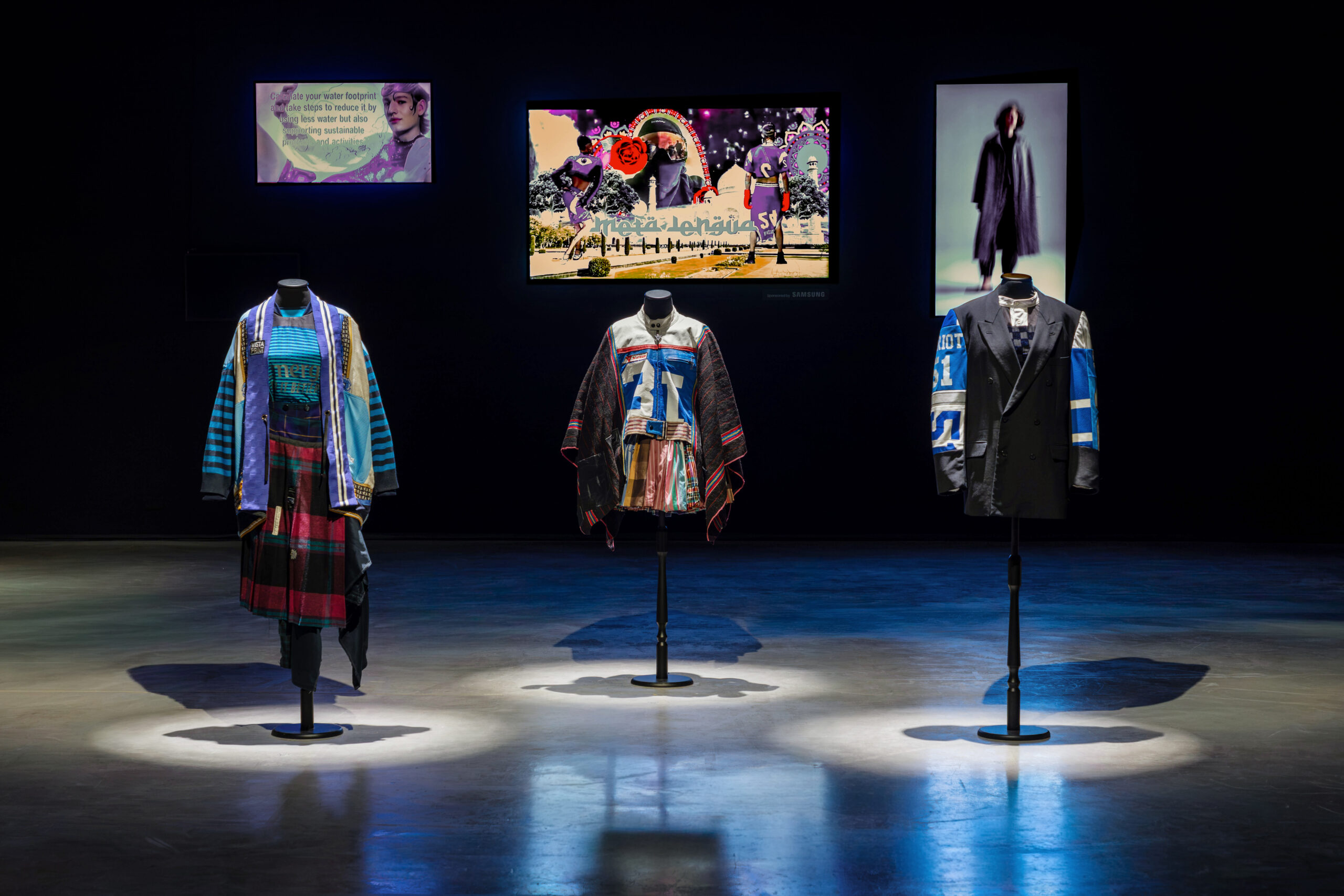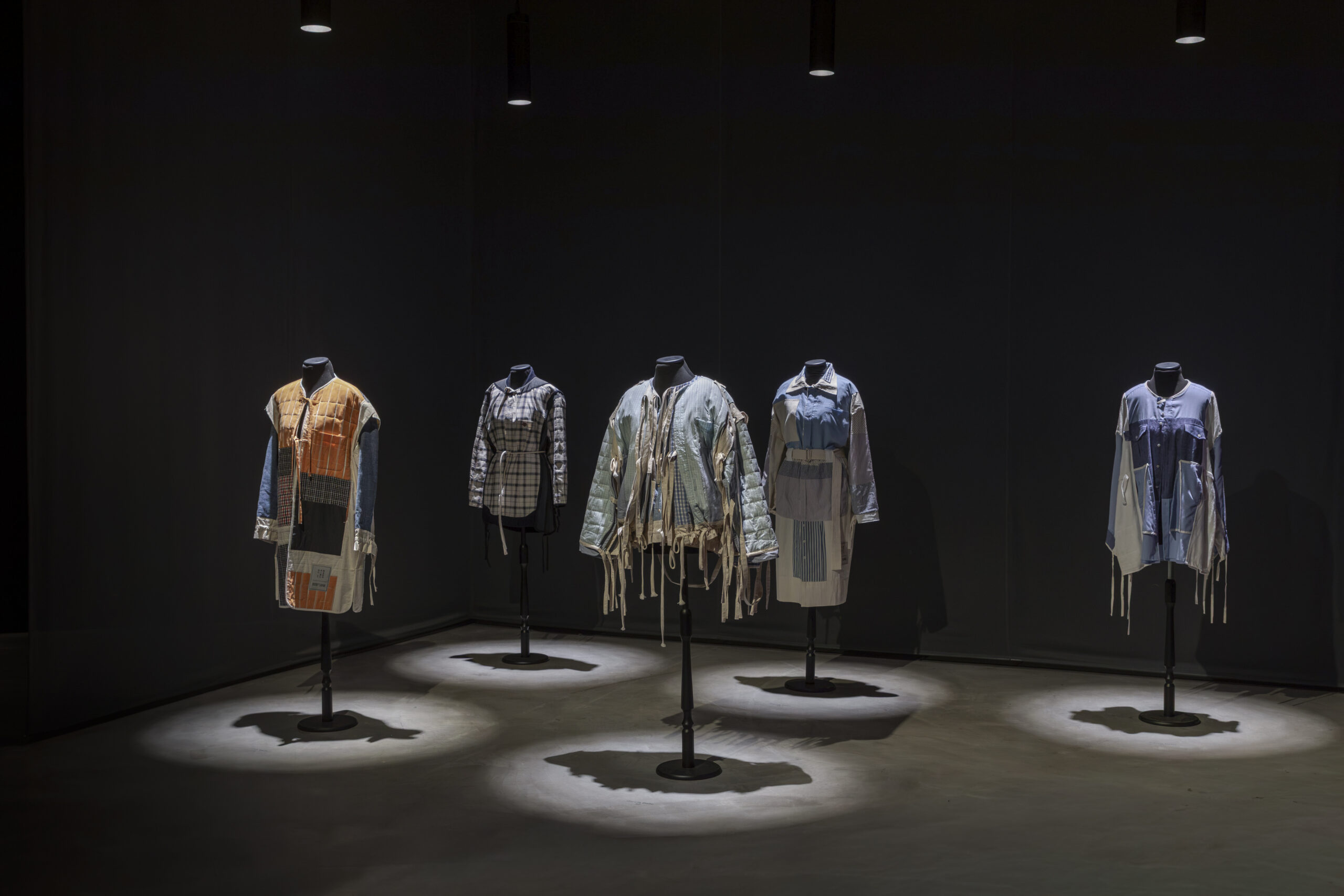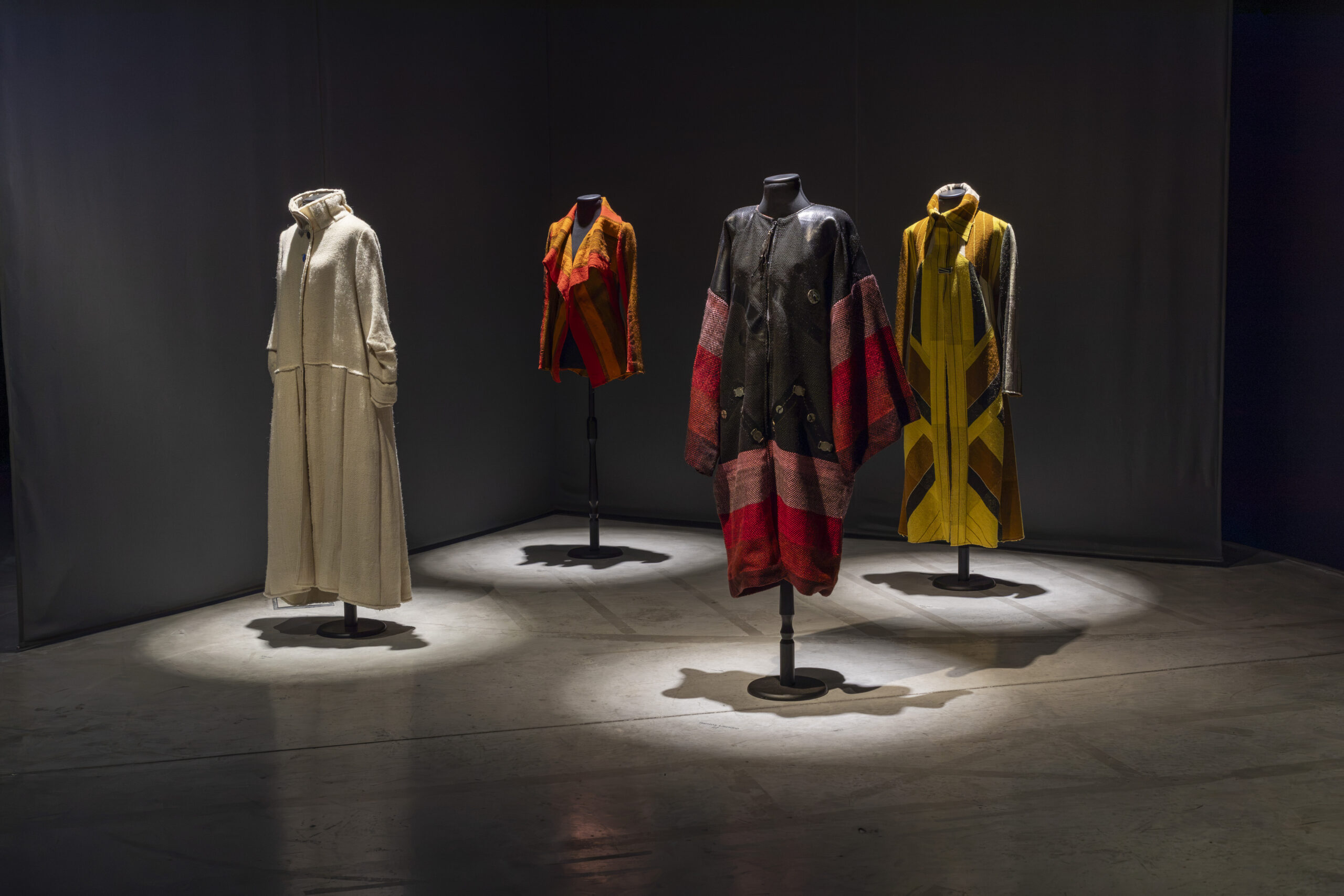


Vestir mundos [Dressing Worlds] looks at fashion design as a practice that transforms the spaces we inhabit. This exhibition brings together leading designers who have redefined contemporary dress, pushing beyond its traditional boundaries in response to twenty-first century social and environmental challenges.
Their practices explore new modes of production through the revival of traditional crafts and collaboration with artisan communities and their heritages, as well as with urban collectives and co-operatives whose resurgence has, since the start of the century, been driving alternative forms of productive organisation. This experimentation ranges from manual techniques and natural materials to biomaterials developed from fungi and bacteria.
In their intimacy and collectivity, these practices address different forms of loss and reconstruction. Some respond to the dismantling of the industrial fabric and the disappearance of technical skills, traditional crafts and ways of working; others explore how clothing enables us to negotiate personal grief, accompany life transitions and construct new forms of identity.
Dressing, in these works, is a way of taking a stand against accelerated consumption, the offshoring of production and the growing disconnect between garments and those who make them. Each piece is a manifesto affirming discrete local languages. They underline the fact that what we wear on our bodies expresses how we relate to one another and how we inhabit the planet.
Created primarily around the archives of the Fundación IDA (Research in Argentinian Design), the exhibition is completed by loans from the designers themselves and recently acquired works from the Museo de Arte Moderno de Buenos Aires Collection. The collaboration with IDA brings two growing collections into dialogue, highlighting the value of archives as active tools for constructing, preserving and transmitting the identity of Argentinian design and its cultural and material legacy.
Designers:
Tramando (Martín Churba)
Trosmanchurba (Martín Churba y Jessica Trosman)
Vero Ivaldi
Vicki Otero
Cora Groppo
12NA (Mariano Breccia y Mercedes Martínez)
MANTO (Clara de la Torre y Diana Dai Chee Chaug)
Roxana Liendro
Nous Étudions (Romina Cardillo)
Juliana García Bello
Therapy Recycle and Exorcise (Mariángeles Aguirre y Paula Aguirre)
Milagros Pereda
Curated by: Franco Chimento and Raúl Flores
General Co-ordination: Noelia Magnelli
Exhibition Design: Iván Rösler
Production: Julieta Potenze
Graphic Design: Juan Desteract
Sound Design: Mabel
Installation Co-ordination: Germán Sandoval
Technical Co-ordination: Guillermo Carrasco
Costume Installation: TRAMA
Fundación IDA – Investigación en Diseño Argentino Acknowledgments
President: Raúl Naón
Director: Mariel Szlifman
Fashion Advisors: Sebastián Rodríguez

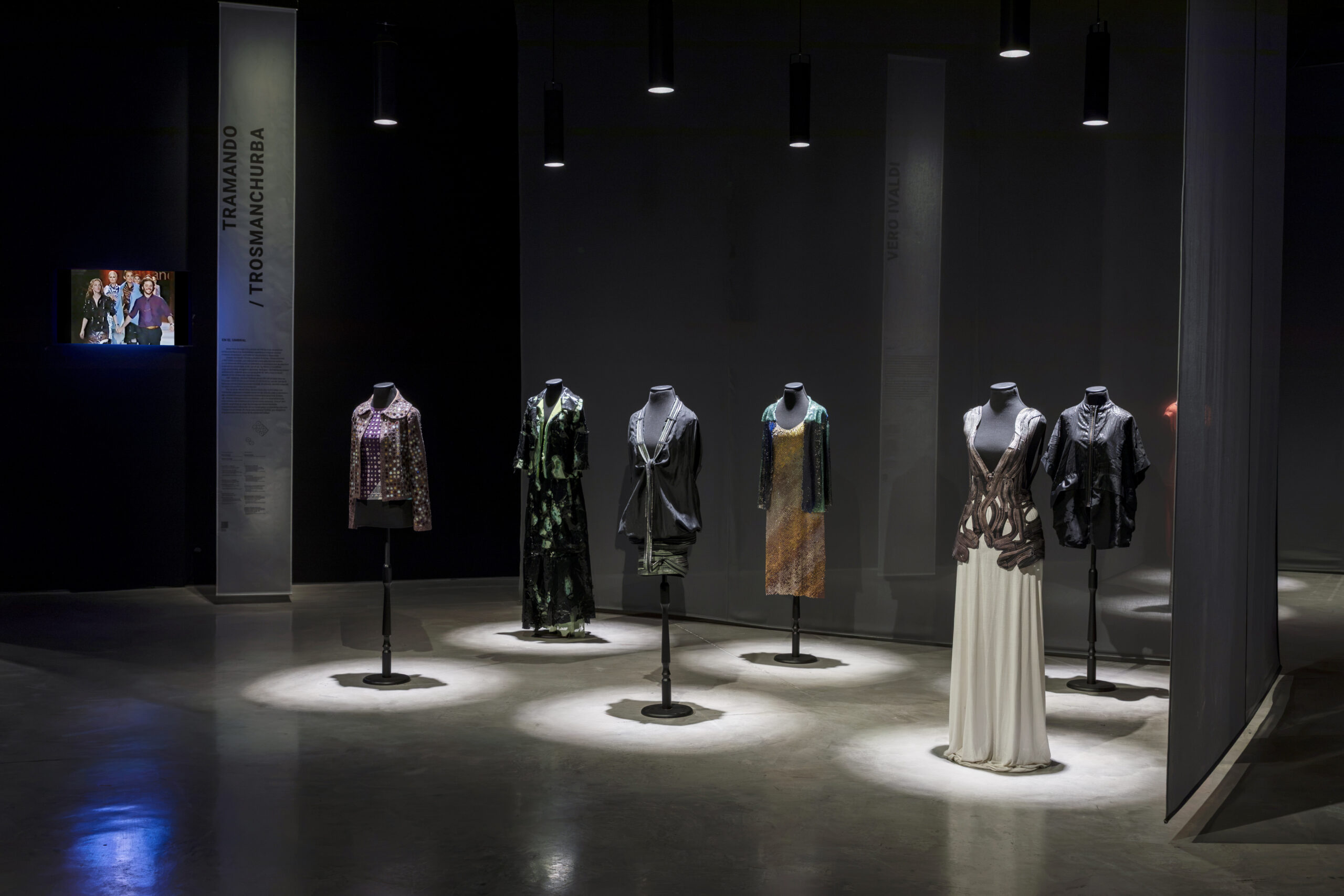
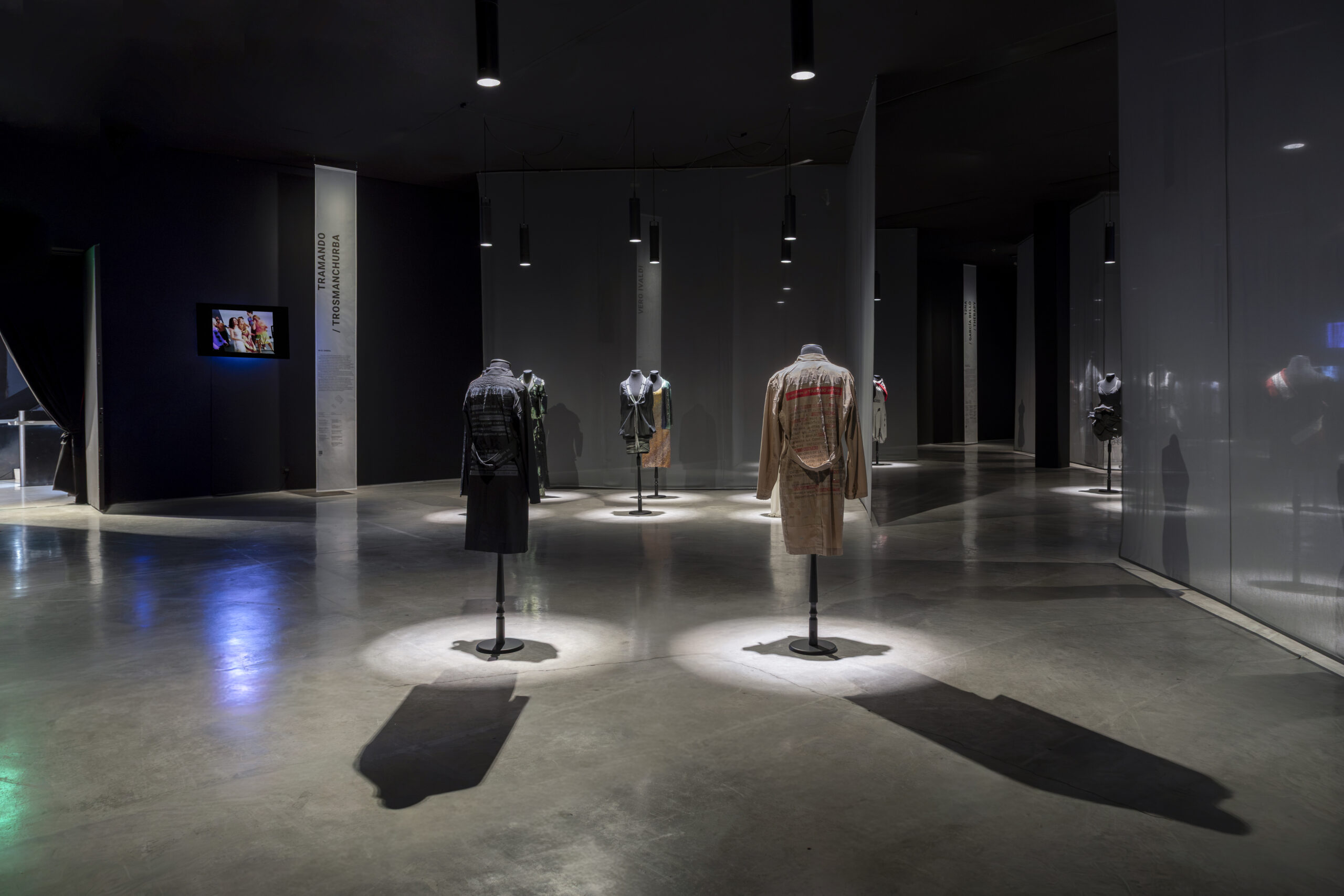
Tramando / Trosmanchurba
On the Threshold
In the late twentieth and early twenty-first century, economic and industrial crisis led the Argentinian fashion industry to imagine new means of production focused on transforming what was already available.
Founded by Martín Churba and Jessica Trosman, Trosmanchurba (1997-2002) conceived its collections as textile laboratories. The combination of fusing, scorching and reworking plastics and industrial waste, coupled with the use of fibres and microfibres and crinkled prints nicknamed ‘lechugas’ [‘lettuces’] defined a new material sophistication for a haute couture/prêt-à-porter approach removed from international trends.
Jessica Trosman later developed her own labels – Trosman (2002-2012) and JT (2013-2019) – to put her collections on the international stage. In parallel, she also branched out into sculpture and installation.
From 2003 onwards, Martín Churba embarked on a new phase with Tramando, a venture conceived as shop, studio, workshop and laboratory. In Tramando, he combined manual and industrial processes to create textiles featuring reliefs, transparencies and images, extending his experiments to objects, installations and artistic actions. After 2001, when there was a boom in self-managed workers organisations, he developed the collection ‘Pongamos el trabajo de moda para siempre’ [‘Let’s Make Work Fashionable Forever’] (2004) with La Juanita Cooperative, which resignified the guardapolvo smock as an icon of working-class culture.
Vicki Otero
Disassemble
Clothing often reveals the times, crafts and knowledge involved in its production. Against a backdrop of cyclical crises, the exposed seams and unfinished edges of these garments expose both the crafts that usually remain hidden behind the final product and the fragility of Argentina’s industrial fabric.
Since founding her label in 2001, Vicki Otero has been re-interpreting the conventions of tailoring by shifting between right side and wrong side, as well as changing scales and structures. In ‘Industria argentina’ [‘Made in Argentina’], a collection presented in 2017, each piece evokes a stage in the production chain. Staged as a sewing workshop, the models gradually removed machines and tools from the catwalk until the workspace was left bare. The physical dismantling of the workshop and the deconstruction of the garments became a metaphor for the weakening of domestic industry and the collective loss of jobs and skills.
12NA / García Bello / Therapy Recycle and Exorcise
Salvage and Environmentalism
Since early in this century, the re-use of garments and fabrics has established itself as a way of re-examining production processes and our relationship with clothing. In the face of waste and the acceleration of consumption, upcycling salvages materials without fully processing them. By keeping part of their original identity and composition intact, it gives them new meaning while extending their lifespan.
Founded in Buenos Aires in 2004 by Mercedes Martínez and Mariano Breccia, 12NA selects, unpicks and re-assembles second-hand clothing from different times and places. Their work draws on urban and Latin American imagery and engages with collective forms of learning and production.
At García Bello, a label founded in 2019, Juliana García Bello links these processes with domestic knowledge, personal attachments and the landscape of Patagonia. Mending and reconstructing inherited or discarded garments transforms them into surfaces that preserve memories and family ties.
Founded in 2012 by Mariángeles and Paula Aguirre, the label Therapy Recycle & Exorcise brings ‘super-recycling’ to urban subcultures and the nightlife scene. Working between Córdoba and Berlin, they transform textile waste and cast-off clothing into seasonless, gender-neutral garments that push back against overconsumption and social exclusion.
Vero Ivaldi
Mourning
Clothing in Vero Ivaldi’s work becomes a medium for processing experiences of loss and expressing what is difficult to put into words. Emerging from the late-1990s alternative scene in Buenos Aires, she found in the Bond Street gallery and others a space where fashion and music linked to nightlife culture converged. She designed the costumes for the ‘beatcore’ band Los Brujos [The Warlocks] and was one of the driving forces behind the late-1990s ‘Diseñadores del Bajo’ [Waterfront Designers] collective. In that setting, material research was integrated with character-building, imbuing the garments with a performative edge.
In her 2021 collection ‘Bitácora del duelo’ [‘Grief Logbook’], Ivaldi salvages, transforms and re-interprets garments to process her grief following the death of Ricky Rúa, a member of Los Brujos, her life partner and B-side. The progression from darkness to light and back, the removal of parts of the garment, the broken hearts and messages addressed to Ricky turn these pieces into sensitive records of loss as a means of coming to terms with absence and transforming indescribable pain into something beautiful.
Manto / Santos Liendro
Community and Identity
At the turn of this century, the revival of regional crafts and materials gathered pace with the search for identity in Argentinian design. Against the fast-paced rhythms of the industry, these practices uphold forms of production that prioritise manual labour and the passing-on of knowledge from generation to generation.
Founded in 1996 by Clara de la Torre and Diana Dai Chee Chaug, the Manto label has over the years built up a network of spinners and weavers in northern Argentina. Sheep’s wool and llama hair are transformed into coats with austere lines, whose cuts and asymmetries link traditional craftsmanship with urban tailoring.
Santos Liendro, a label founded by Roxana Liendro in Vaqueros, Salta Province, brings the goldsmithing skills that Roxana learnt in her father’s workshop to clothing. Using embossing and chiselling techniques, she integrates metals such as nickel silver and copper into regional barracán and aguayo textiles. This crossover transforms the family legacy into a contemporary expression of Andean identity.
Cora Groppo / Nous Étudions / Milagros Pereda
Nature and Ethical Industry
In response to the environmental crisis, the clothing industry is re-examining its ties with nature, a concern which involves observing natural processes and developing techniques that respect the origin of resources and our co-existence with other species.
Since founding her label in 1996, Cora Groppo has developed her garments straight on the mannequin, where she explores the relationship between the body and pattern-making. Her collections ‘Micótica’ [‘’Mycotic’] and ‘Vertebrada’ [‘Vertebrated’] translate the forms of natural organisms onto the garments’ surface. Observation and imitation of fungi, roots and bone structures inspire the layering, pathways and articulated volumes of her garments.
Romina Cardillo explores the relationship between nature and industry through the lens of veganism. At Nous Étudions, a label founded in 2014, she works with biomaterials and textiles free of animal components. In her collection ‘Fin del mundo. Principio de todo’ [‘The End of the World. The Beginning of Everything’], the landscape of Tierra del Fuego is linked to the organic origins of the material, grown from agro-industrial waste products.
Through her label, founded in 2019, Milagros Pereda explores the relationships between natural processes and circular production systems. In the ‘Crudo’ [‘Cru’] collection, she upcycles wool discarded during shearing and works with women from Entre Ríos Province, washing and spinning it by hand to create fabrics with digitally designed patterning.