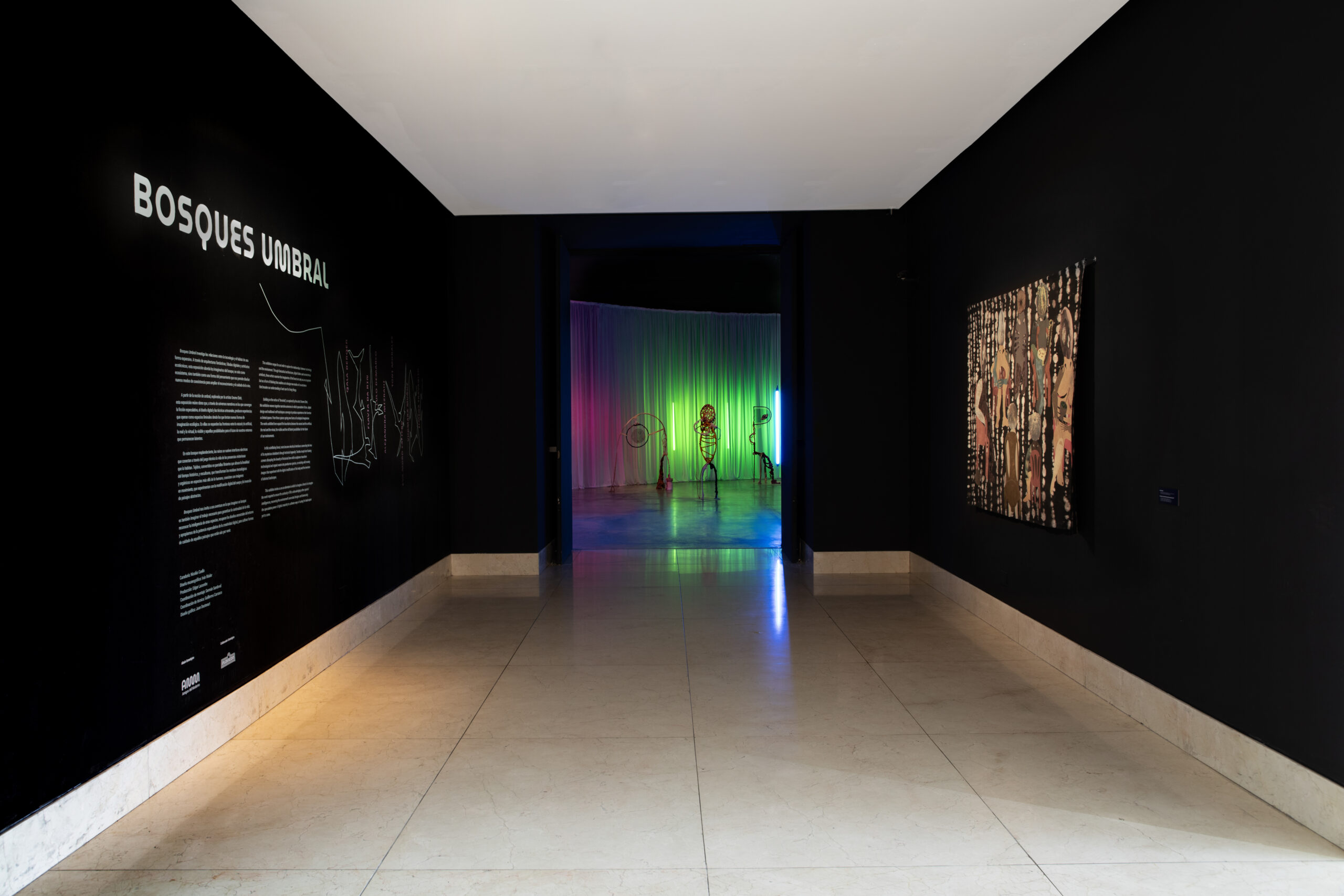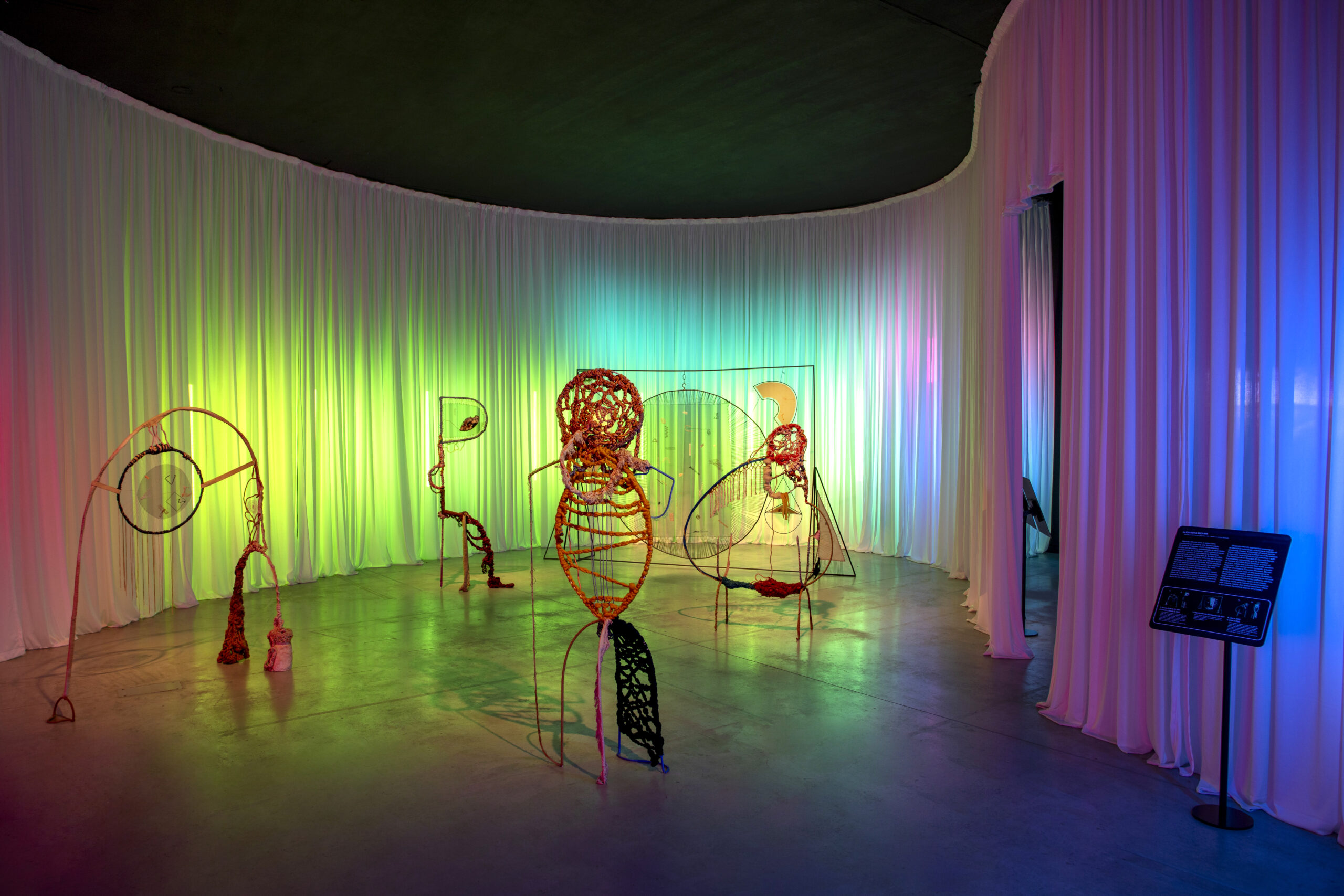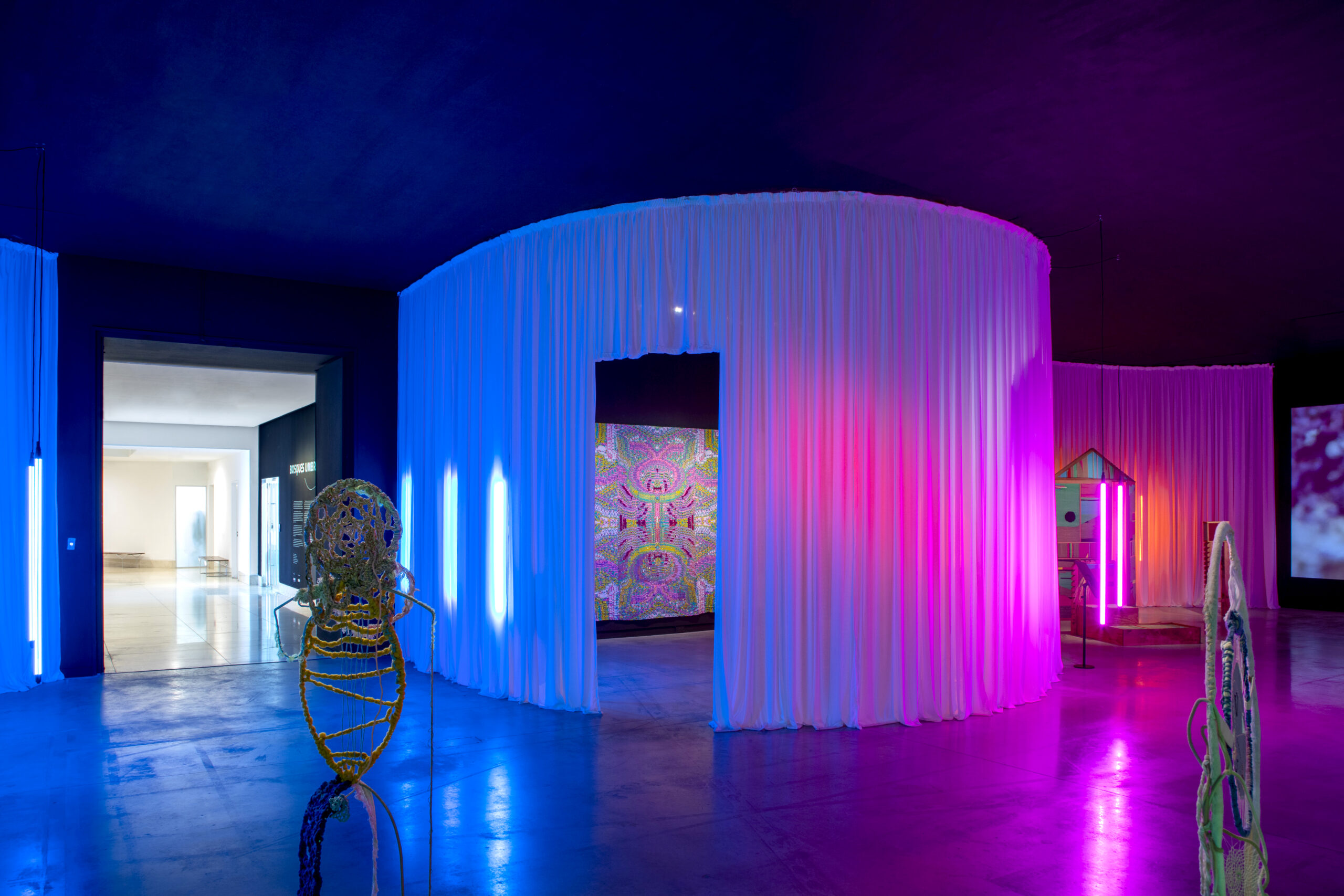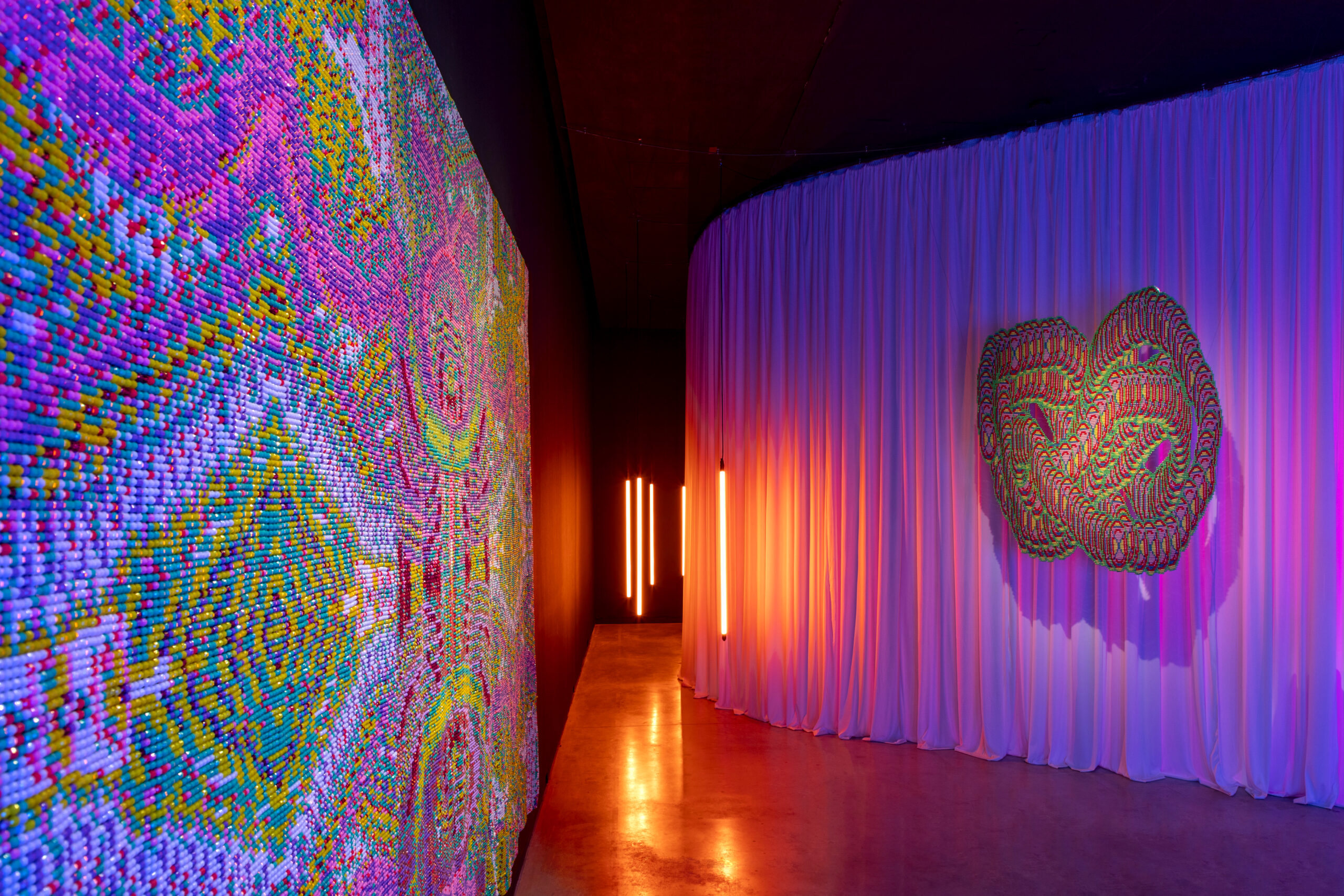


This exhibition ranges far and wide to explore the relationships between technology and the environment. Through fantastical architectures, digital fables and ecotechnical artefacts, these artists examine the imaginaries of the forest not only as an ecosystem but as a form of thinking that enables us to design new modes of co-existence that broaden our understanding of and care for living things.
Building on the notion of ‘threshold’, as explored by the artist Onome Ekeh, this exhibition weaves together narrative universes in which speculative fiction, digital design and traditional craft techniques converge to produce experiences that function as liminal spaces. From these spaces spring new forms of ecological imagination. The works exhibited here expand the boundaries between the natural and the artificial, the real and the virtual, the visible and the still latent possibilities for the future of our environments.
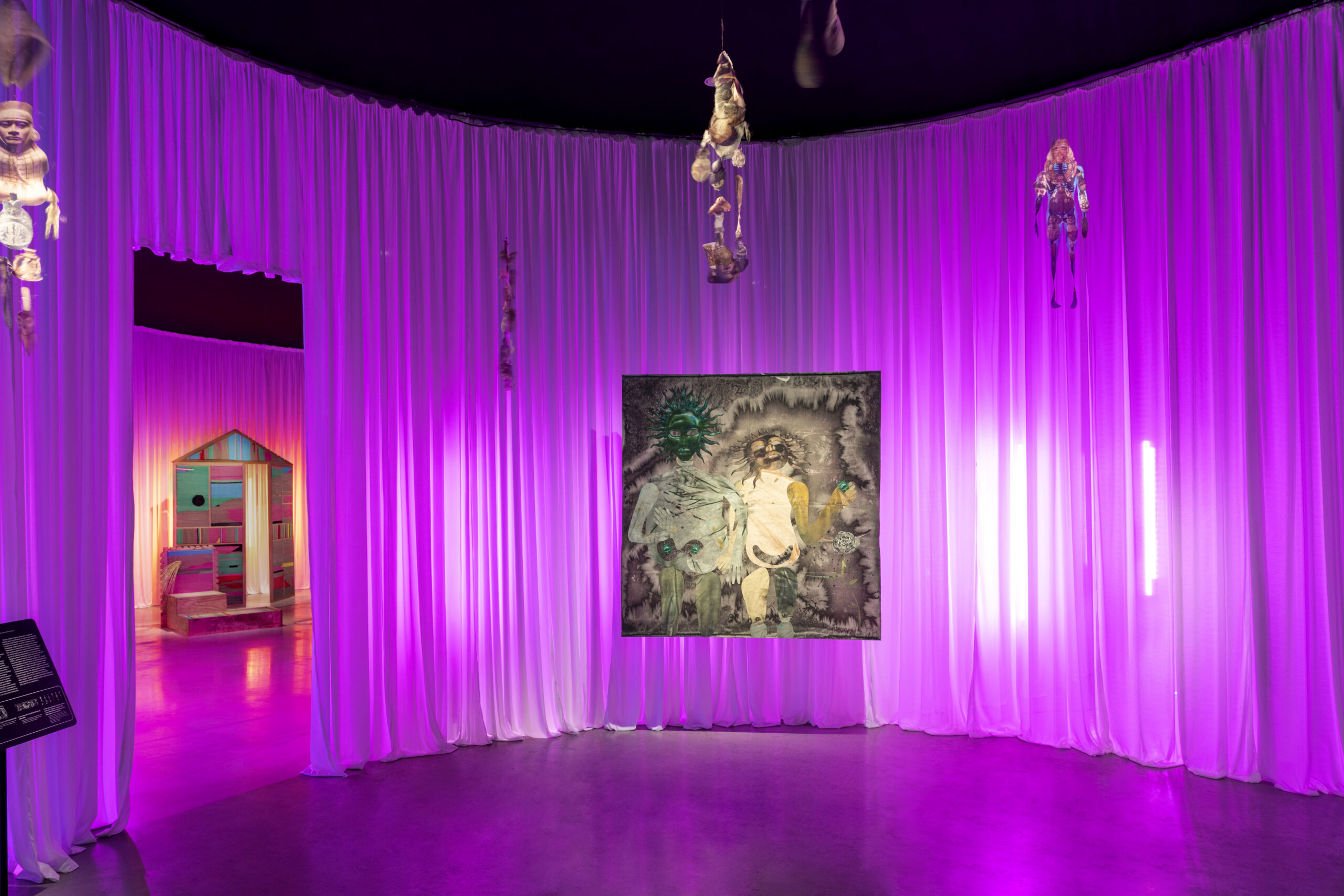
In this scintillating forest, roots become electrical interfaces connecting the lives of its mysterious inhabitants through technical ingenuity. Textiles morph into floating screens disrupting the linearity of historical time while sculptures transform technological and organic waste into parahuman species, co-existing with moving images that experiment with the digital modification of the body and the invention of abstract landscapes.
This exhibition invites us on an adventure in which to imagine a forest is to imagine the work required to ensure the continuity of life: acknowledging other species’ intelligences, recovering the environment’s ancestral designs and harnessing the speculative power of digital creativity to cultivate ways of caring for landscapes yet to come.
Artists: Gala Berger, Flavia Da Rin, Lulo Demarco, Alejandra Mizrahi, Toni Morales, Eva Moro Cafiero, Yhomara Muñoz and Jimena Travaglio.
Curator: Nicolás Cuello
Exhibition Design: Iván Rösler
Production: Edgar Lacombe
Installation Co-ordination: Germán Sandoval
Technical Co-ordination: Guillermo Carrasco

Gala Berger
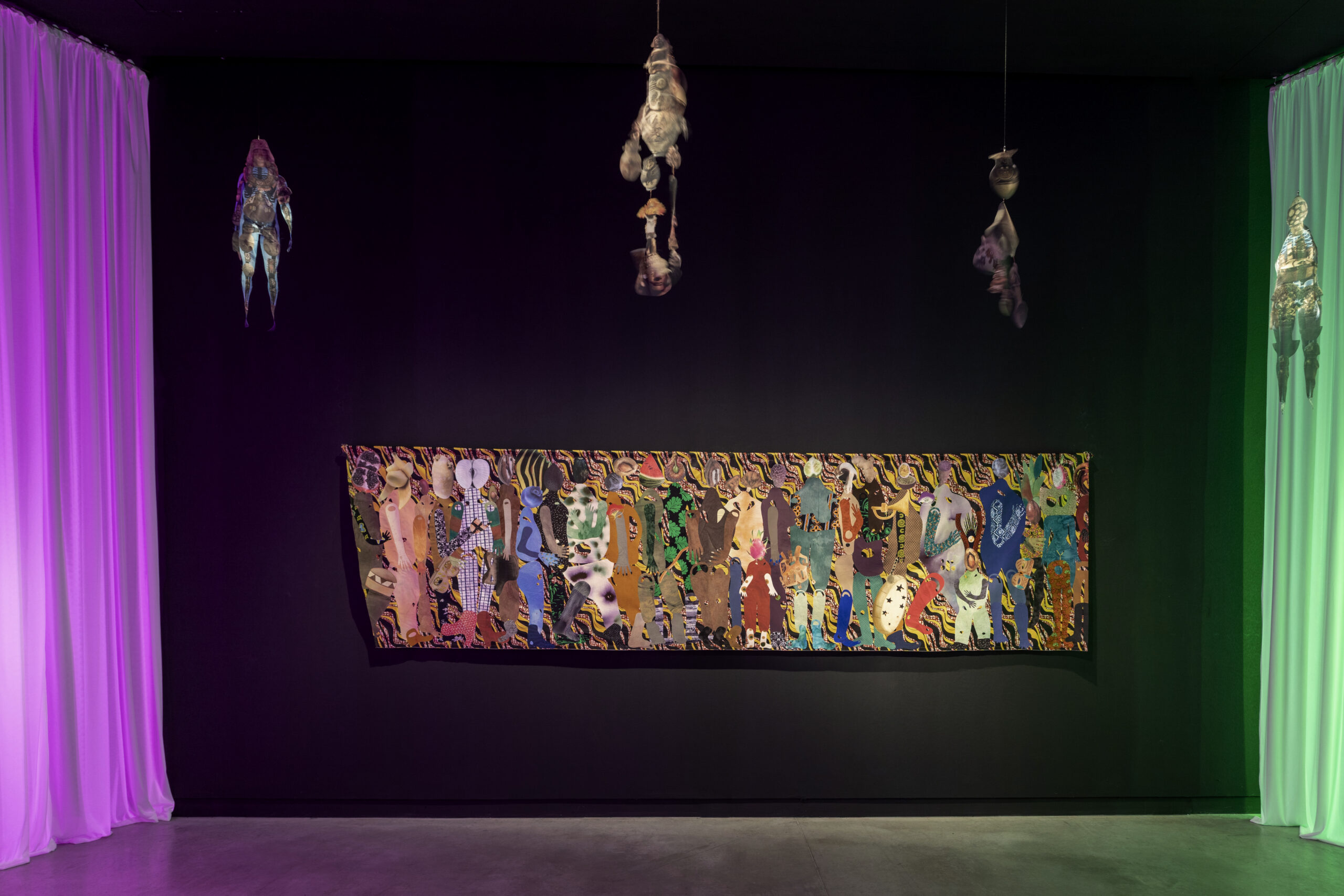
Using collage, digital sublimation, appliqué, sewing and a combination of organic and synthetic materials, Gala Berger transforms textile work into a space for research, in which traditional craft knowledge, digital design techniques and critical reflections on colonisation processes intersect. Her practice draws on science fiction as a method for constructing visual narratives about different forms of political organisation. In such works as Neighbourhood Assembly (2024) and Fruit Carnival (2026), anthropomorphic figures made from colourful native Latin American textiles, fruit, seeds and vegetables imagine forms of collective gathering and assemblies or march through a fantasy space in celebration of a communal life based on fairer relationships between humans, species and modes of social production. Her appropriation of open-access digital images and AI-generated modelling – as incorporated into the textiles of the 2021 ‘Wild Objects’ series – questions the North’s historical appropriation of the Global South’s cultural heritage and calls for its restitution.
Flavia Da Rin
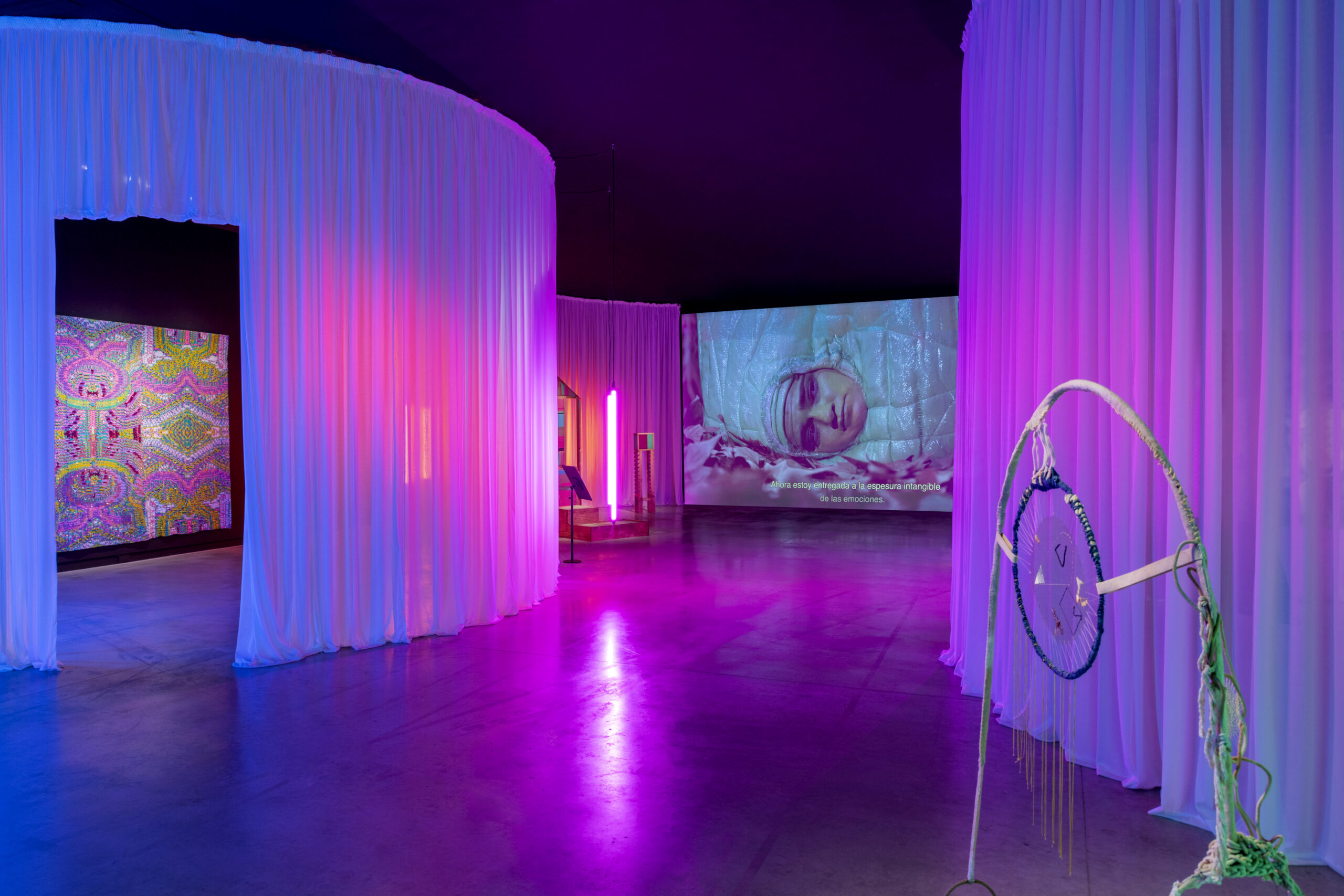
Making use of digital tools, aesthetic elements of science fiction and comicstrip narrative techniques, Flavia Da Rin constructs imaginary worlds in which identity and the body are in a state of constant flux. Using her own image, she creates characters whose (particularly female) bodily construction allows her to experiment with different ways of being and explore relationships between gender, technology and visual culture. In 2019’s The Epic of the Chrysalis, Da Rin constructs interwoven fantasy universes in which the chrysalis functions as a metaphor for metamorphosis and different women’s experiences. Through a complex combination of performance, photography, animation and digital manipulation, her body becomes a malleable medium that takes on multiple appearances and even non-human forms of existence. She thus invites the viewer on a journey through fictional natural landscapes where her protagonists experience the adventure of growth.
Lulo Demarco
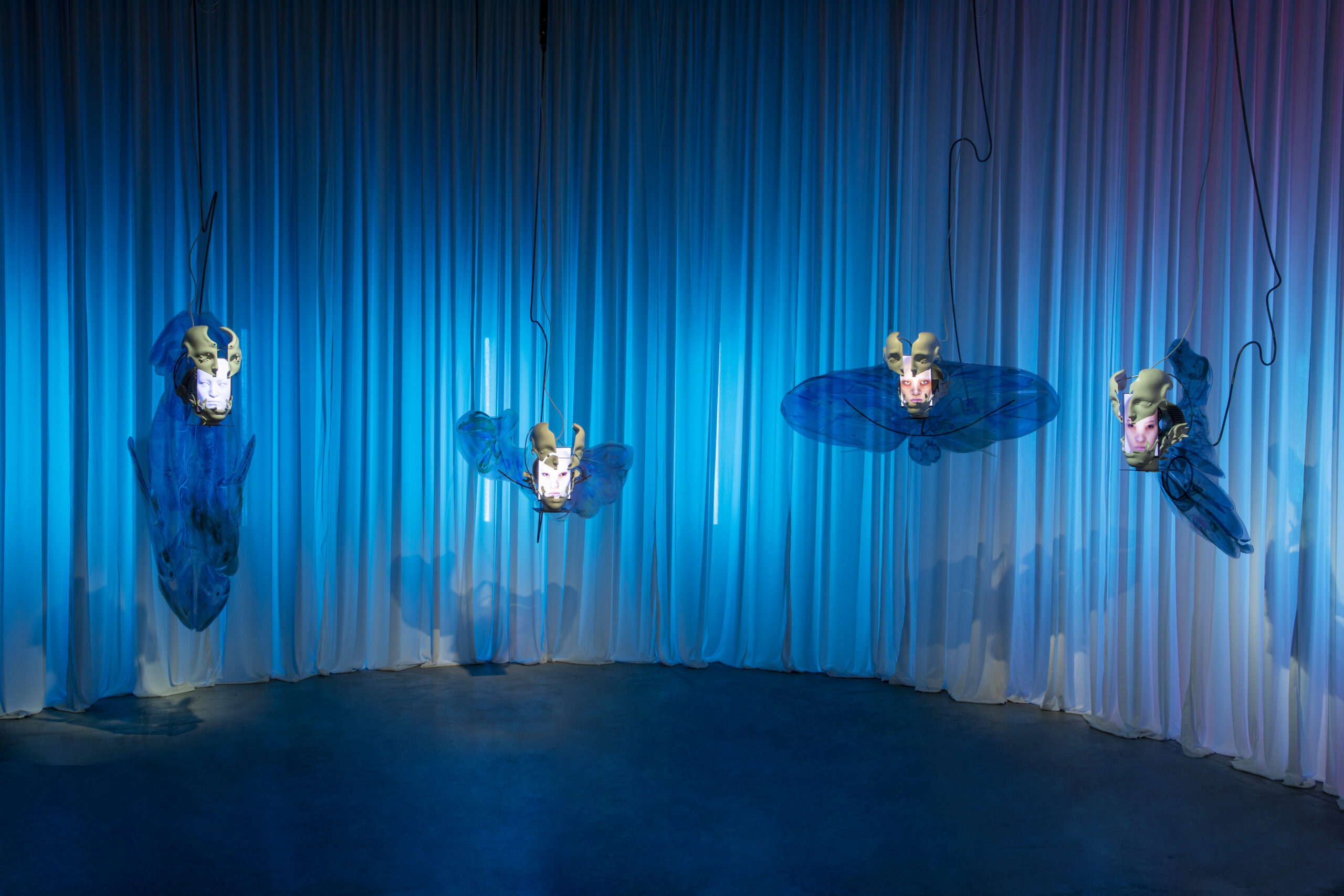
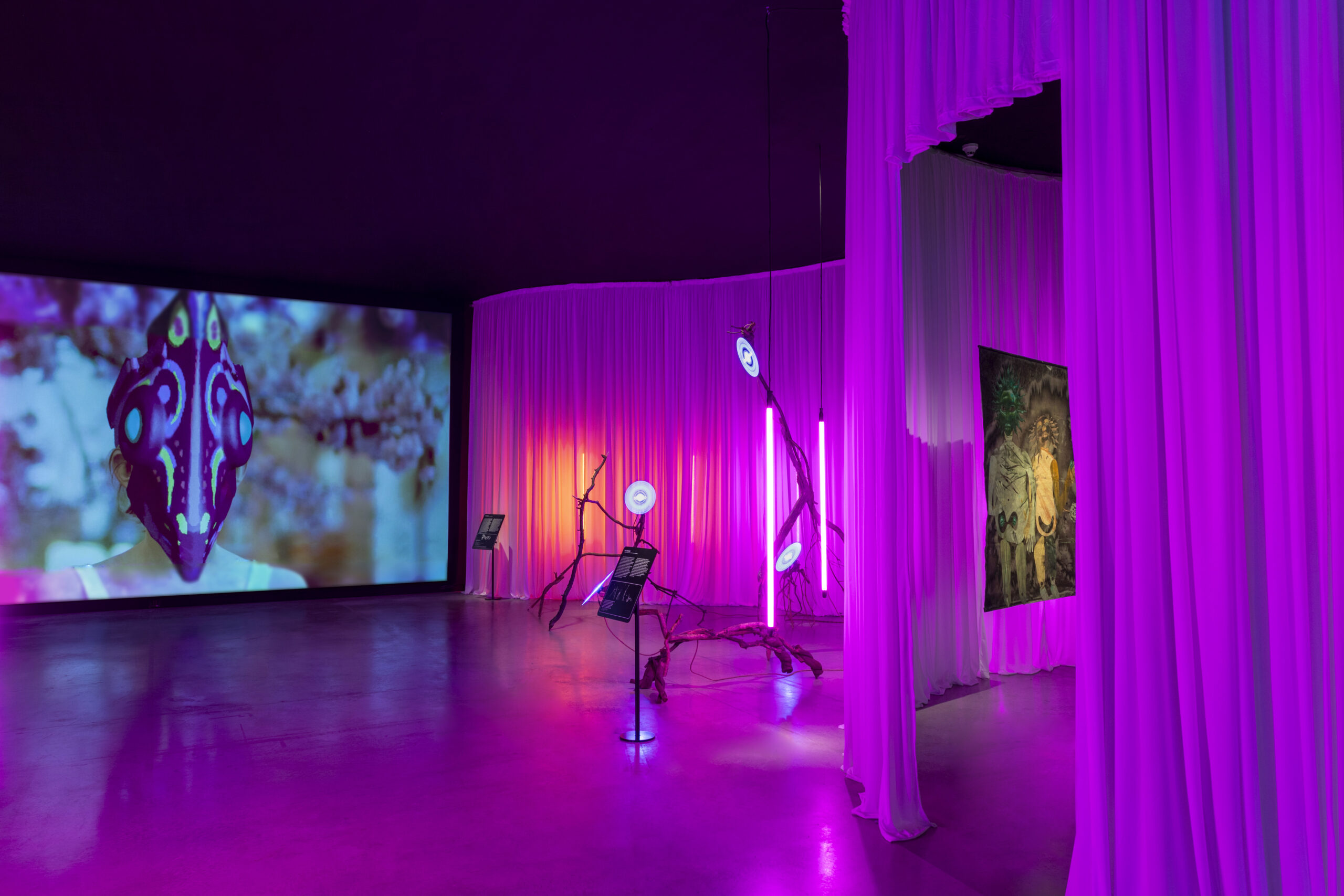
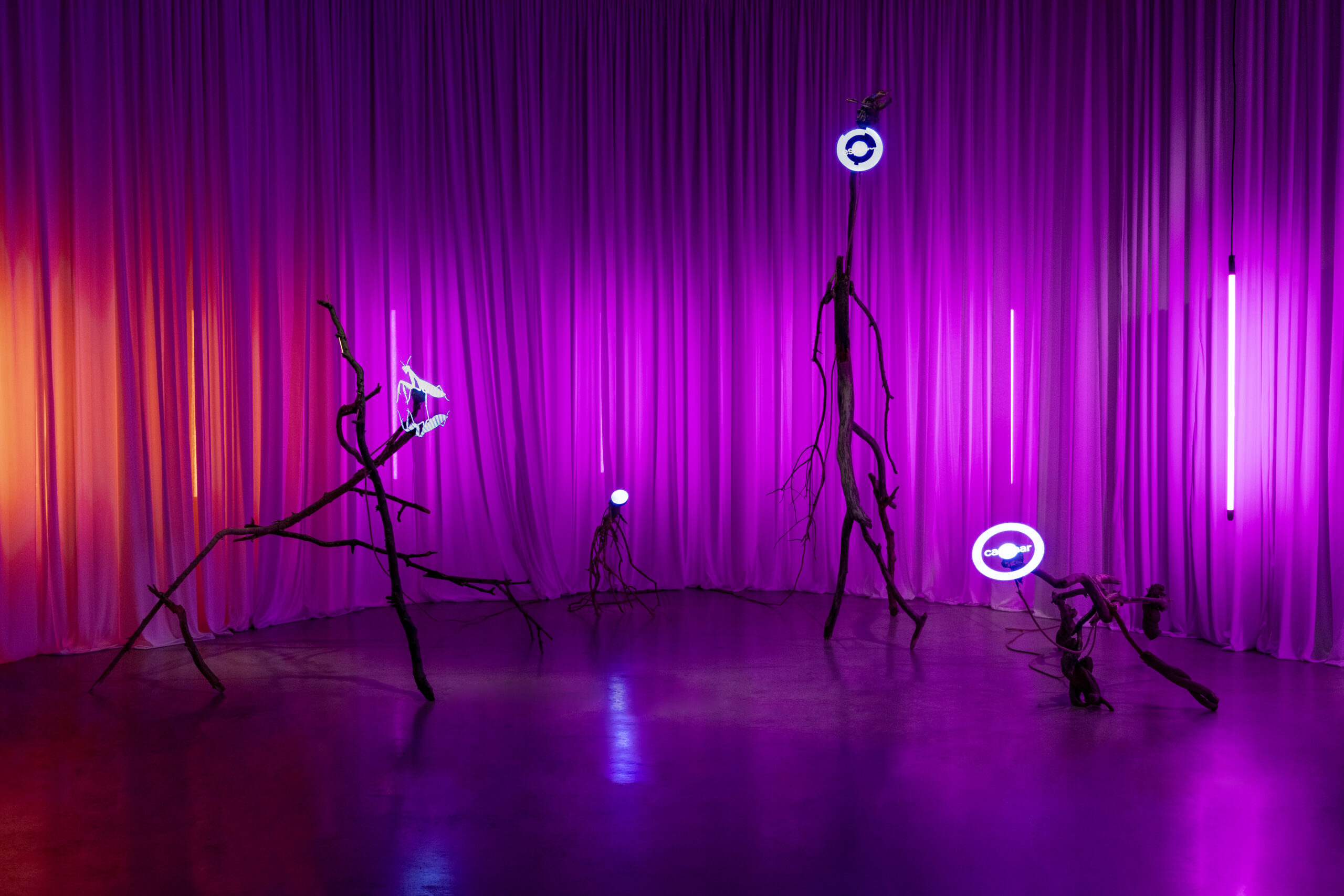
Lulo Demarco’s installations reference moving-image production, speculative fictional narratives and knowledge of deep ecology to explore how species co-exist with their environments. By collecting and transforming the remains of fallen trees found in the city, he creates animated organic sculptures incorporating screens onto which he projects AI-designed short films. Demarco conceives his sculptures as narrative ecosystems in which the fantasy characters he creates tell stories about other possible forms of co-existence across species, nature and technology.
Alejandra Mizrahi
Alejandra Mizrahi approaches weaving as an ancestral technology: a technique capable of producing images, knowledge of which can be learnt, reinterpreted and handed on in the present. In her work, both individual and collective – with the Randeras de El Cercado (El Cercado Randa Lacemakers) community and as a member of Textiles Semillas (Seed Textiles), a union of weavers, artists and activists from north-western Argentina – she revives randa lacework, a textile tradition practised in Tucumán Province. Mizrahi shifts the traditional uses of this lacemaking to an exploration of textiles’ performative dimension. These designs function in her sculptures as screens upon which abstract forms unfold: patterns, stitches, scalloping and embroidery cease to be merely decorative motifs and instead construct surfaces with volume, rigidity and spatial presence, which in turn create fantastical organic structures.
Toni Morales
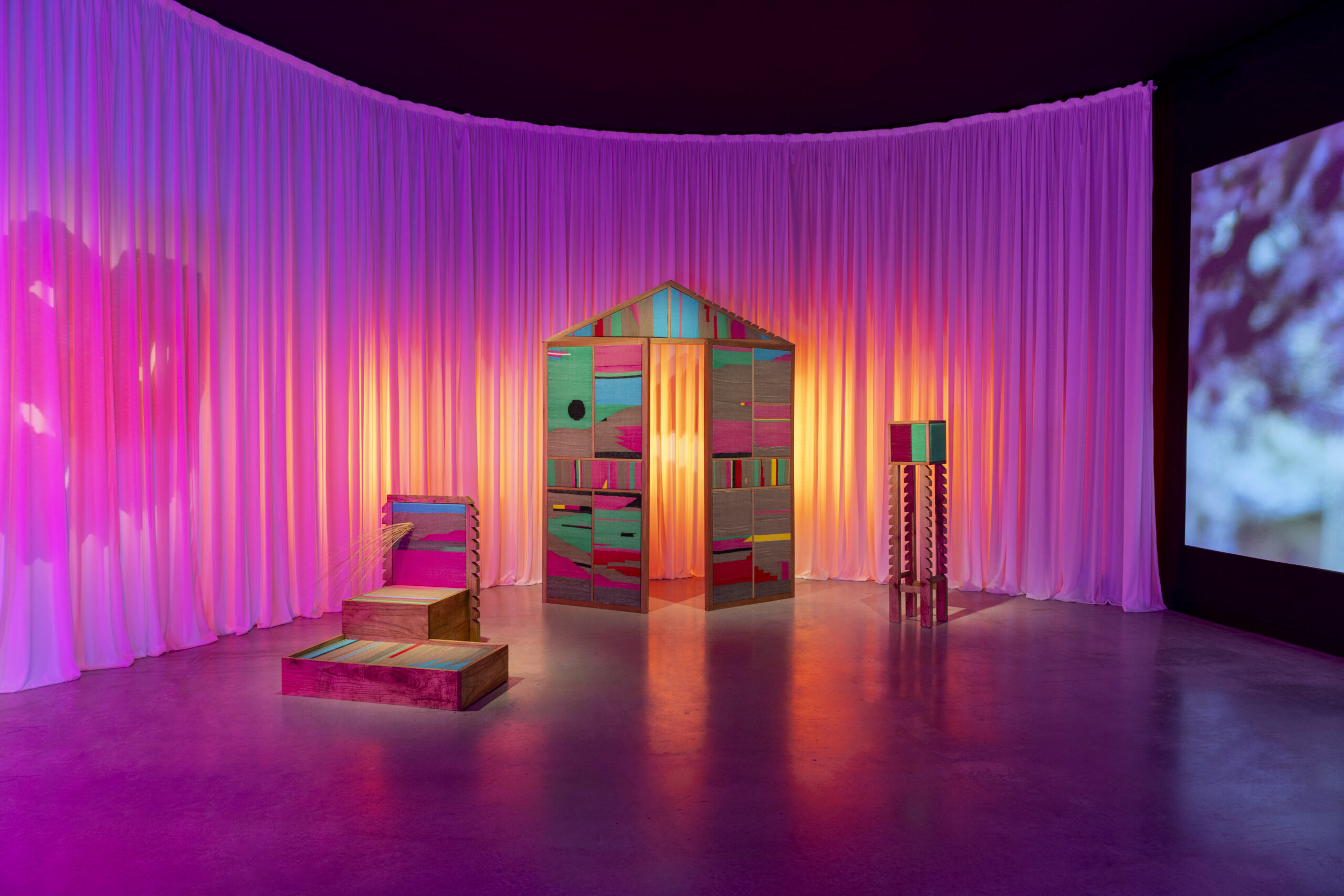
In Toni Morales’s work, the traditional crafts of the Calchaquí Valleys – loom weaving, carpentry and painting – are explored as community-based techniques through which to investigate ways of visually representing the territory. In the 2026 pieces Camp Bed, Form and Affect and Rafael, these concerns manifest as sculptural objects informed by the language of industrial design, architecture and textile production to symbolically represent the landscapes of his place of origin. In these works, Morales uses weaving as a technique to construct fictional images and abstract forms in which the warp threads function as expanded pixels. This creates intersections in which the history of artisanal image-making and digital designs are superimposed through the use of colour, material and geometry.
Eva Moro Cafiero
In ‘The Deterritorialisation of My Avatar’ sculpture series (2026), the artist and environmental activist Eva Moro Cafiero explores the materiality of digital culture through the re-use of technological waste. The artist transforms technological waste and animated images into fantastical beings, finding new uses for both the discarded materials and the data stored in them, thereby reducing environmental impact. The videos incorporated into these works challenge the notion of the avatar as a stable virtual identity through which we interact online. Drawing on digital design and science fiction, the artist explores the unease felt by a generation that transits between the virtual and the material and transforms hardware – the physical parts of discarded electronic devices – into a sculptural element capable of conjuring a new ecological consciousness.
Yhomara Muñoz
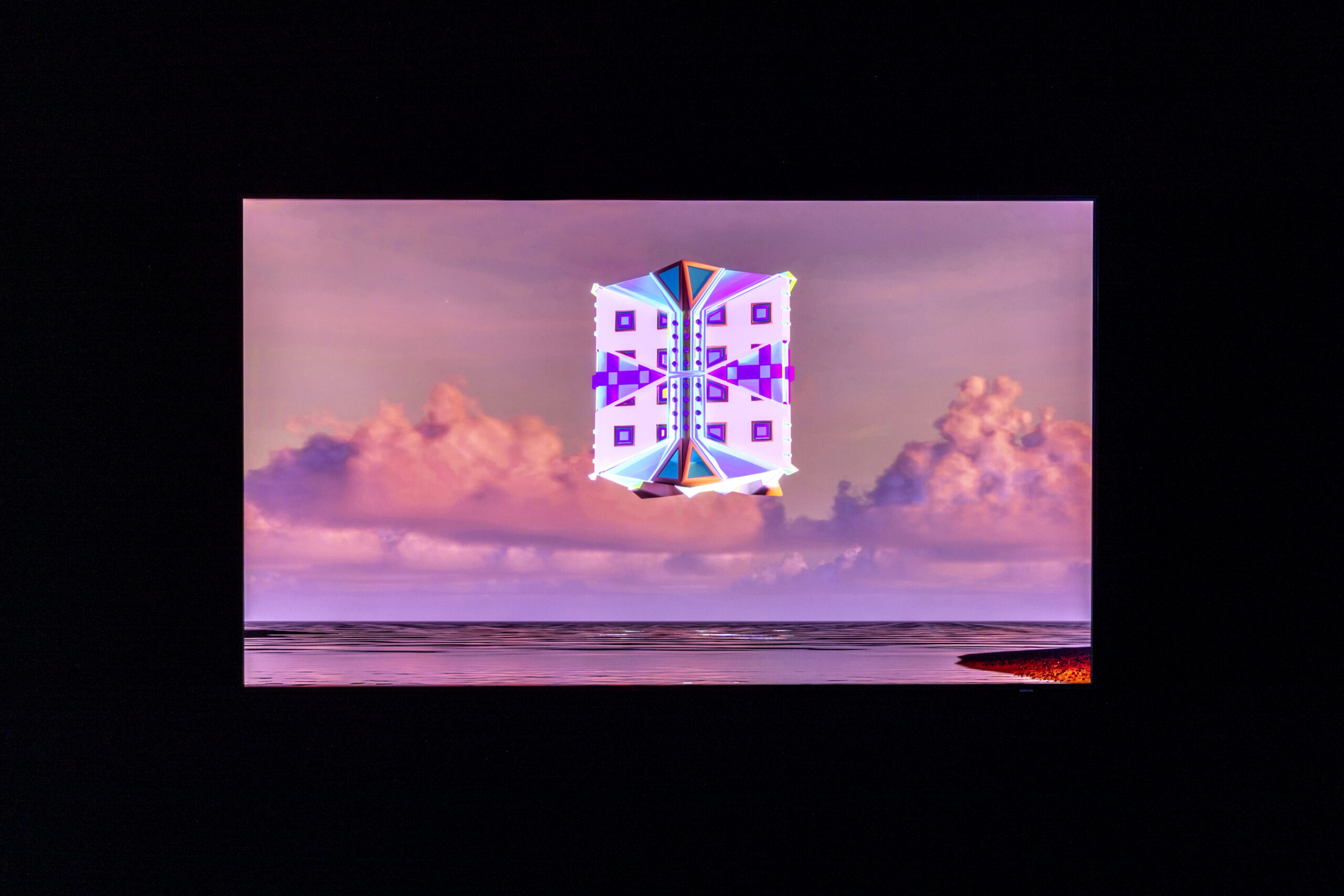
Drawing on her architectural background, Yhomara Muñoz explores the relevance of Andean worldviews in her work through the interwoven use of digital design tools and such manual skills as textiles and ceramics. In The Last Daughter of K’ooj – The Return Journey (v.2), Muñoz utilises cross-platform video-game development engines to simulate a natural setting in which the viewer embarks on an adventure guided by the song of Lola Kiepja, the last shaman of the Selk’nam people, an indigenous community that once inhabited Isla Grande in Tierra del Fuego. As we move through this digital landscape, we discover that this magical song emanates from a geometrically abstract object which Muñoz conceives as a luminous architecture. The artist merges it with healing vibrations synthesised from the sound of the ocean to create a sonic gateway to indigenous knowledge of our natural environments.
Jimena Travaglio
Jimena Travaglio’s work reflects on the history of technology through weaving. In her ‘Relics’ series (2016), the artist crafts textiles using synthetic plastic and glass beads to create pixelated organic forms based on geometric patterns digitally designed by herself. In these pieces, the artist experiments with the relationship between the virtual and the real to set up a tension between the speed of virtual images and the slow patience of manual labour. In The Sleepless Mountain (2025), she broadens her interest in technology as a data storage space. By replicating the pattern formed by circuits on a motherboard – a component computers rely on to work – she constructs an abstract landscape that transforms the immaterial nature of digital information into a physical object.