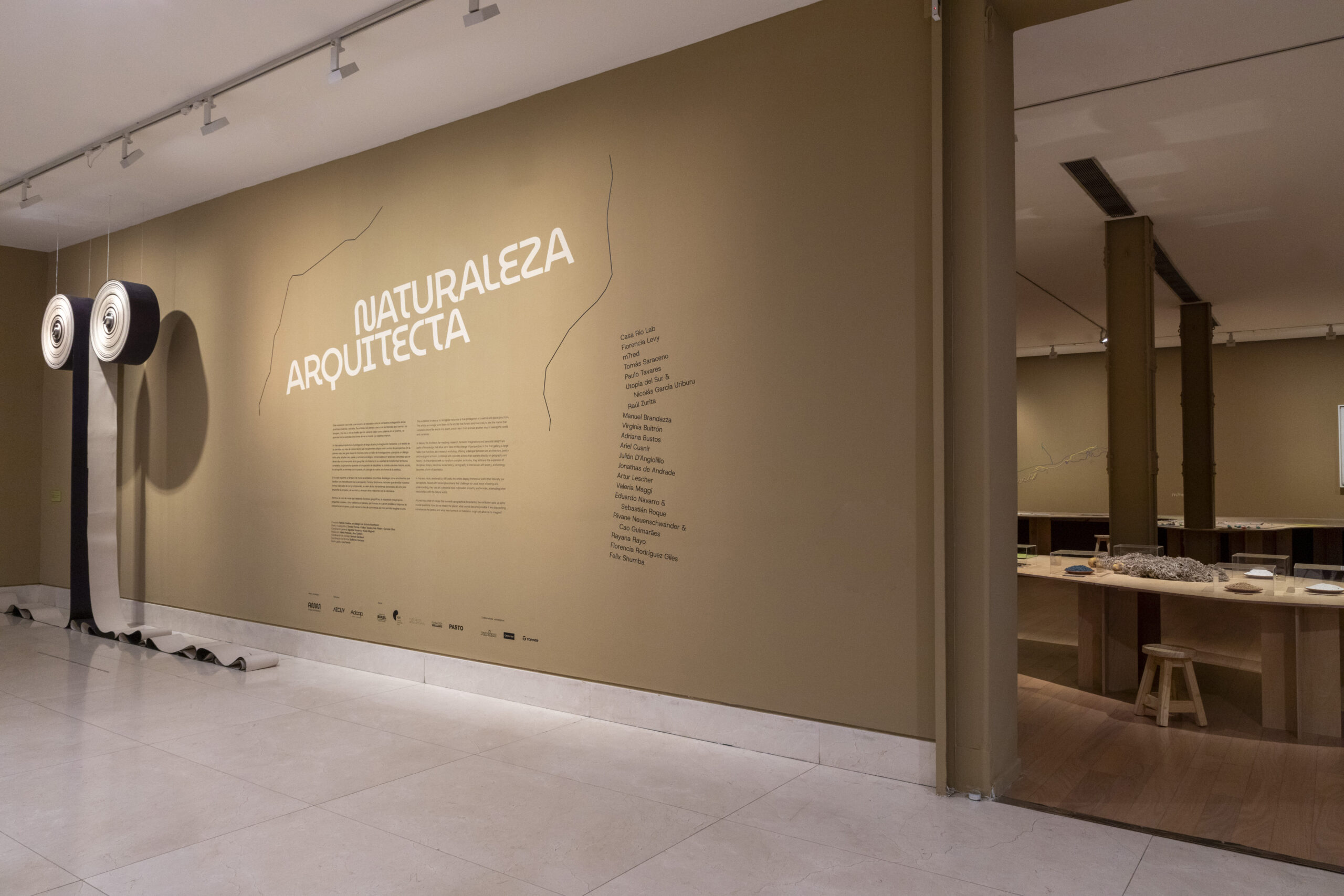

This exhibition invites us to recognise nature as a true protagonist of creative and social practices. The artists encourage us to listen to the stories that forests and rivers tell, to see the marks that volcanoes leave like words in a poem, and to learn from animals another way of seeing the world and ourselves.
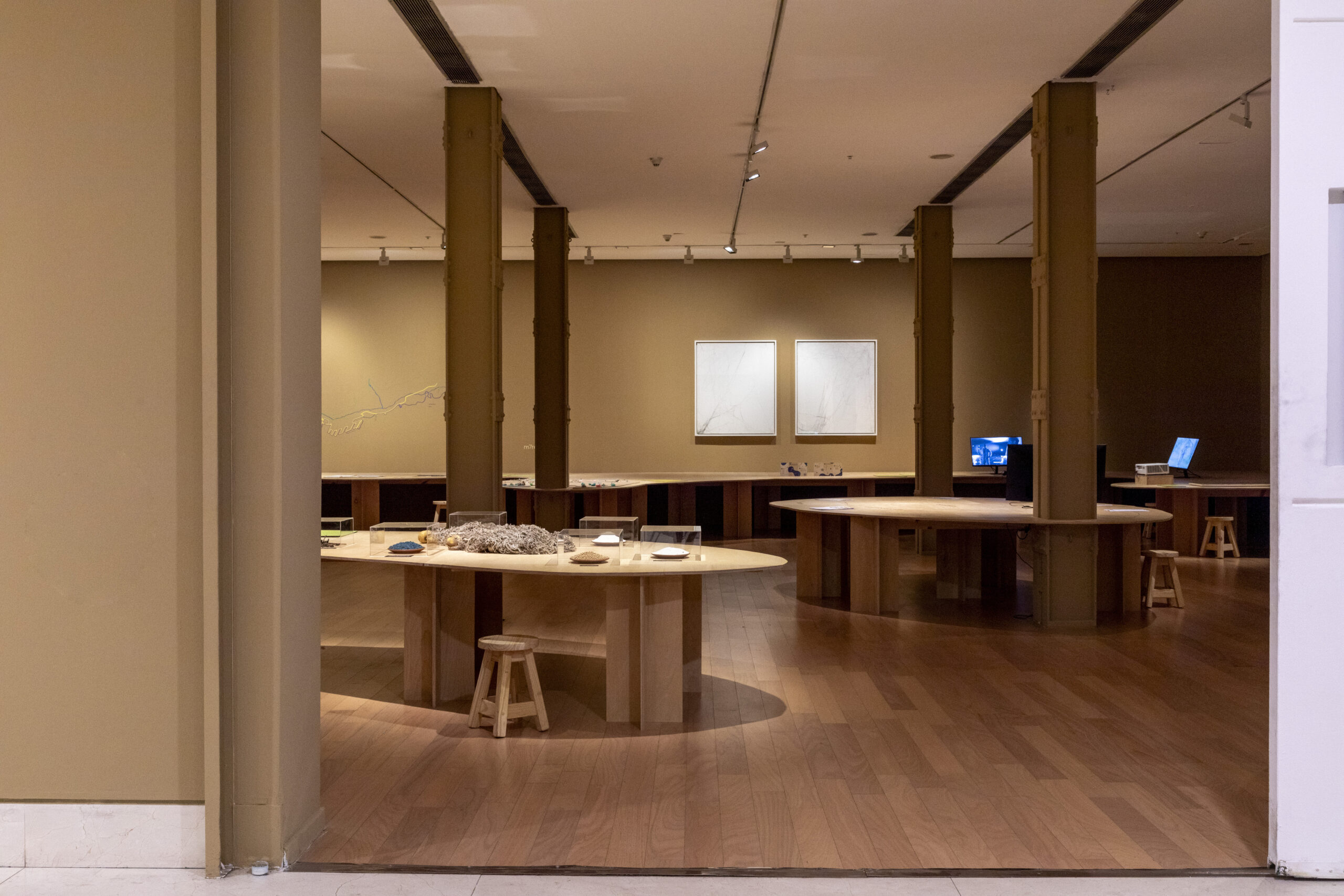
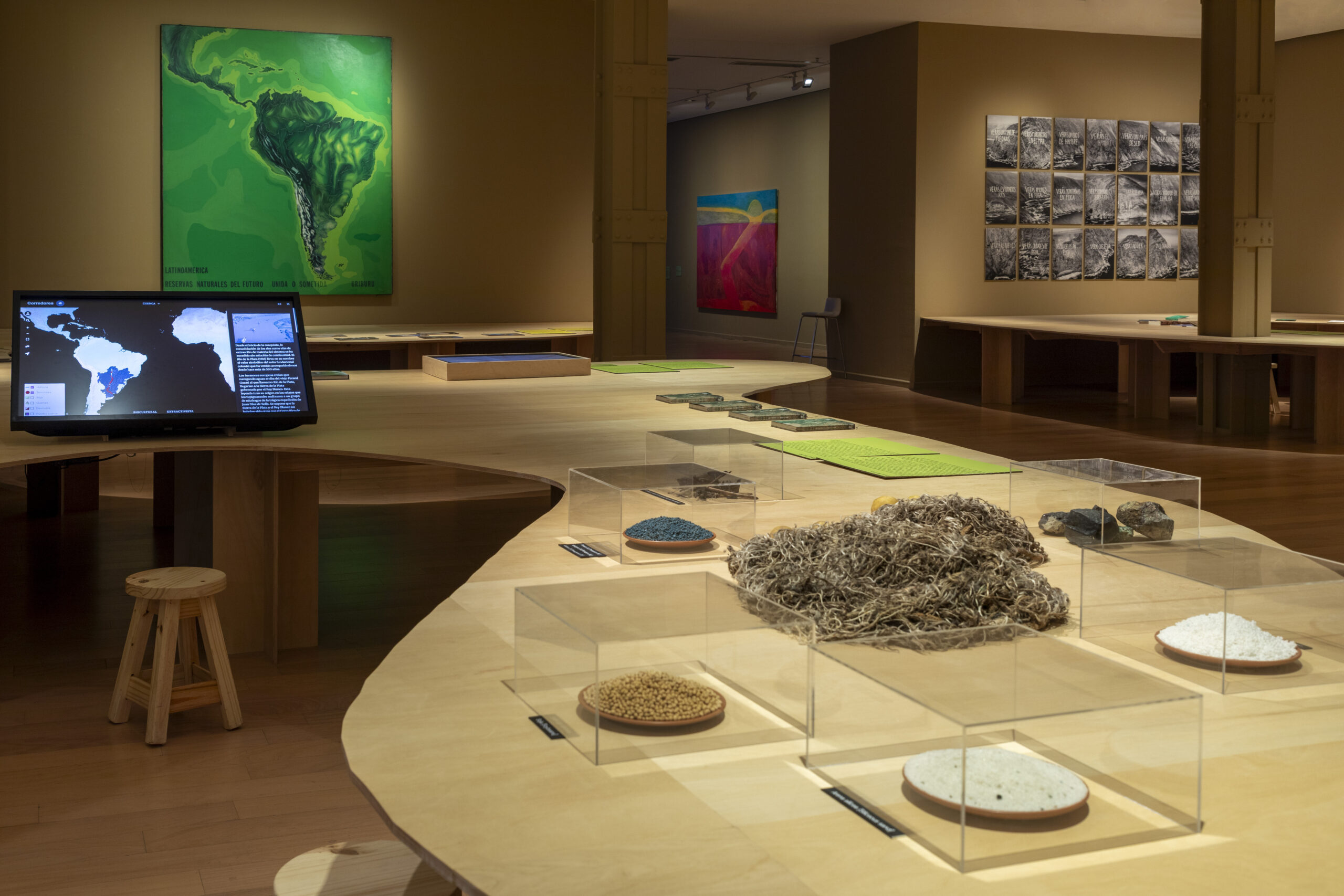
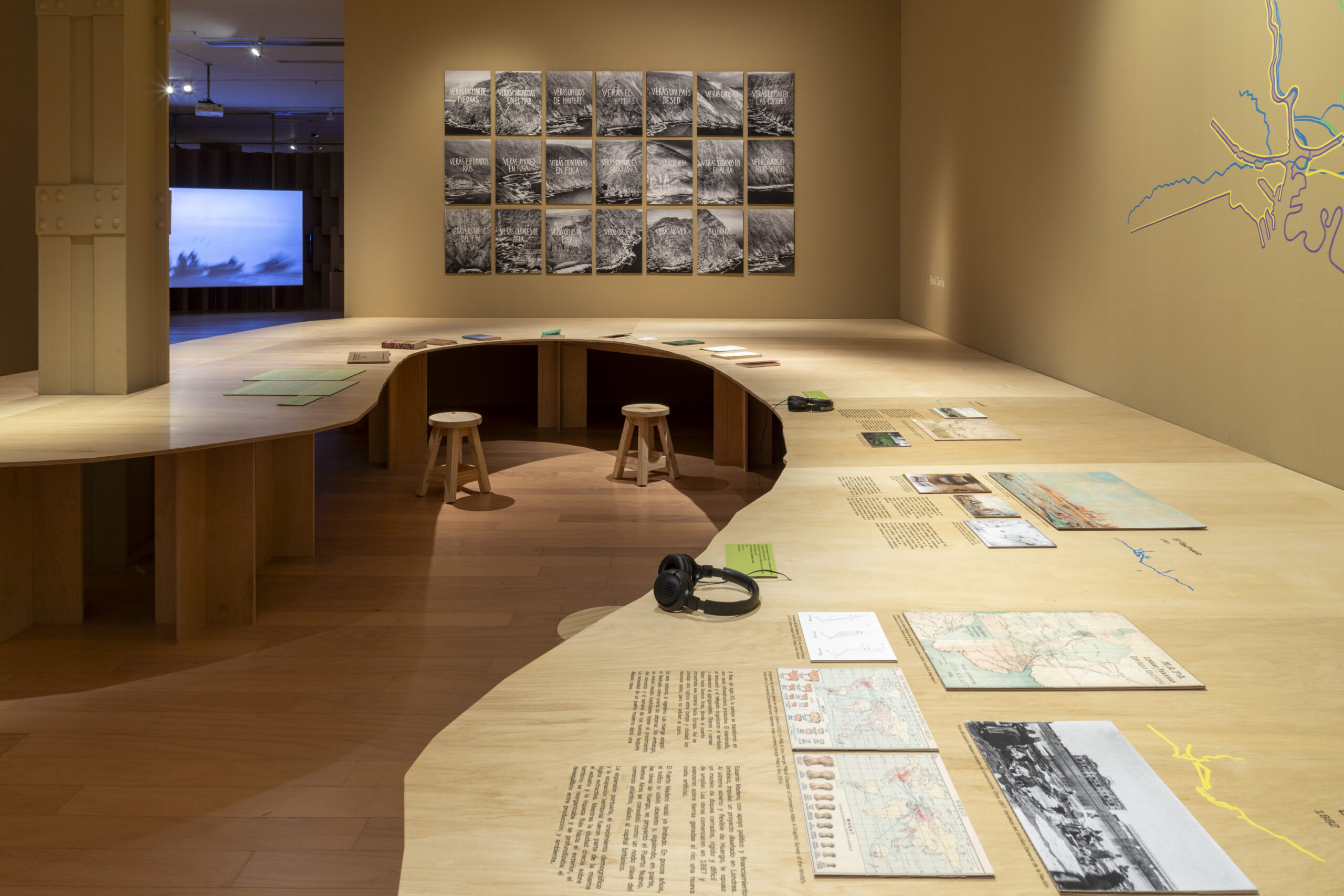
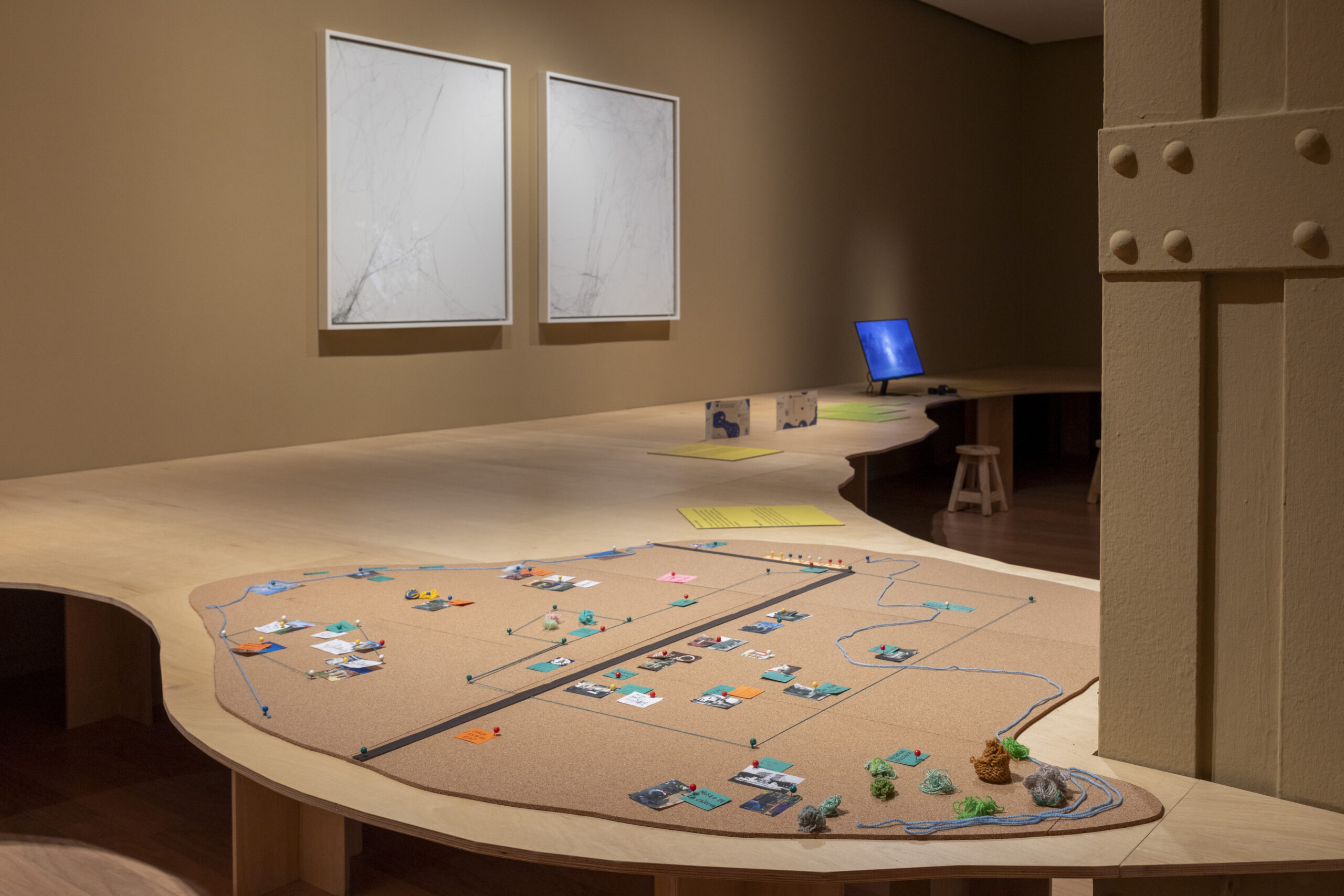
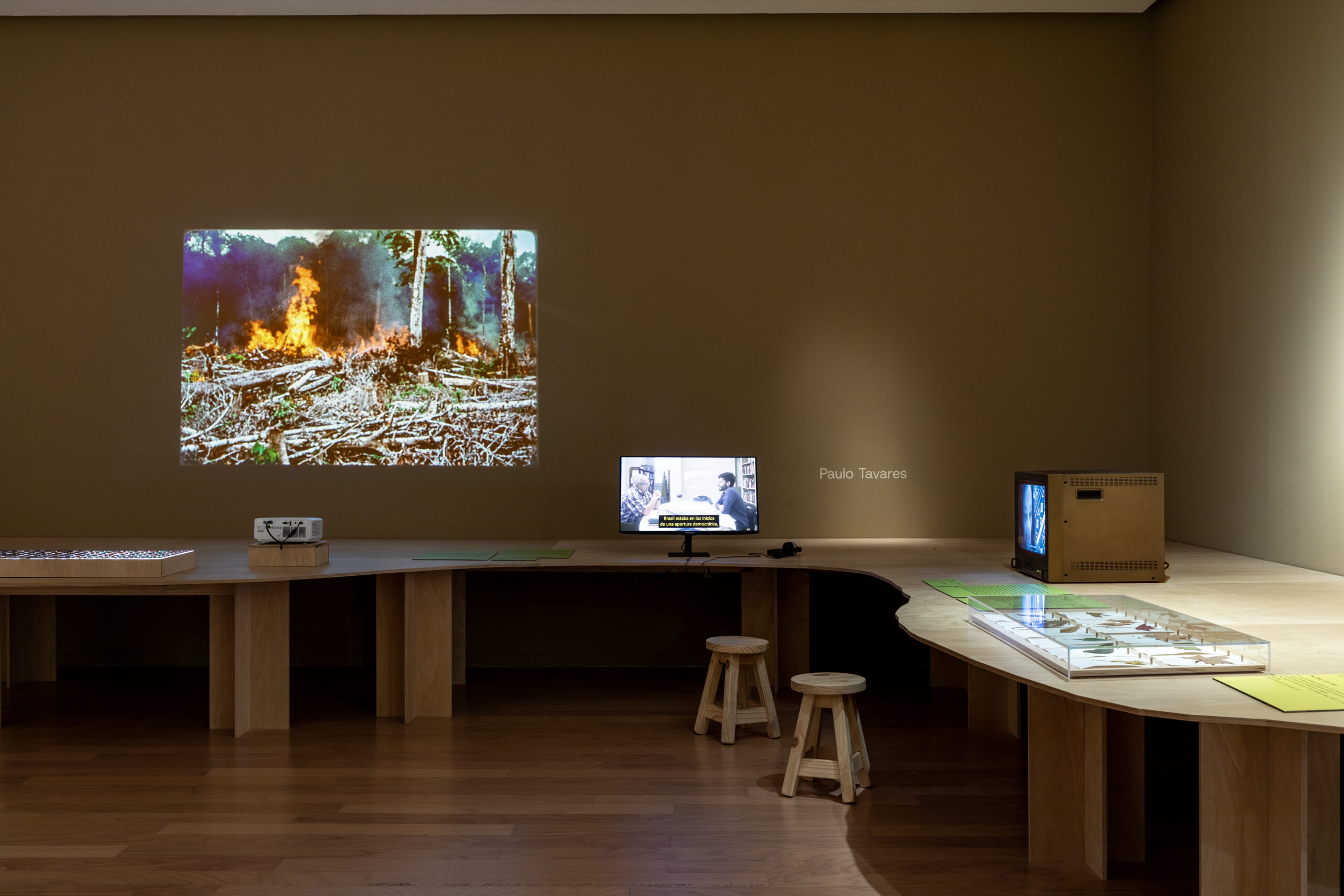
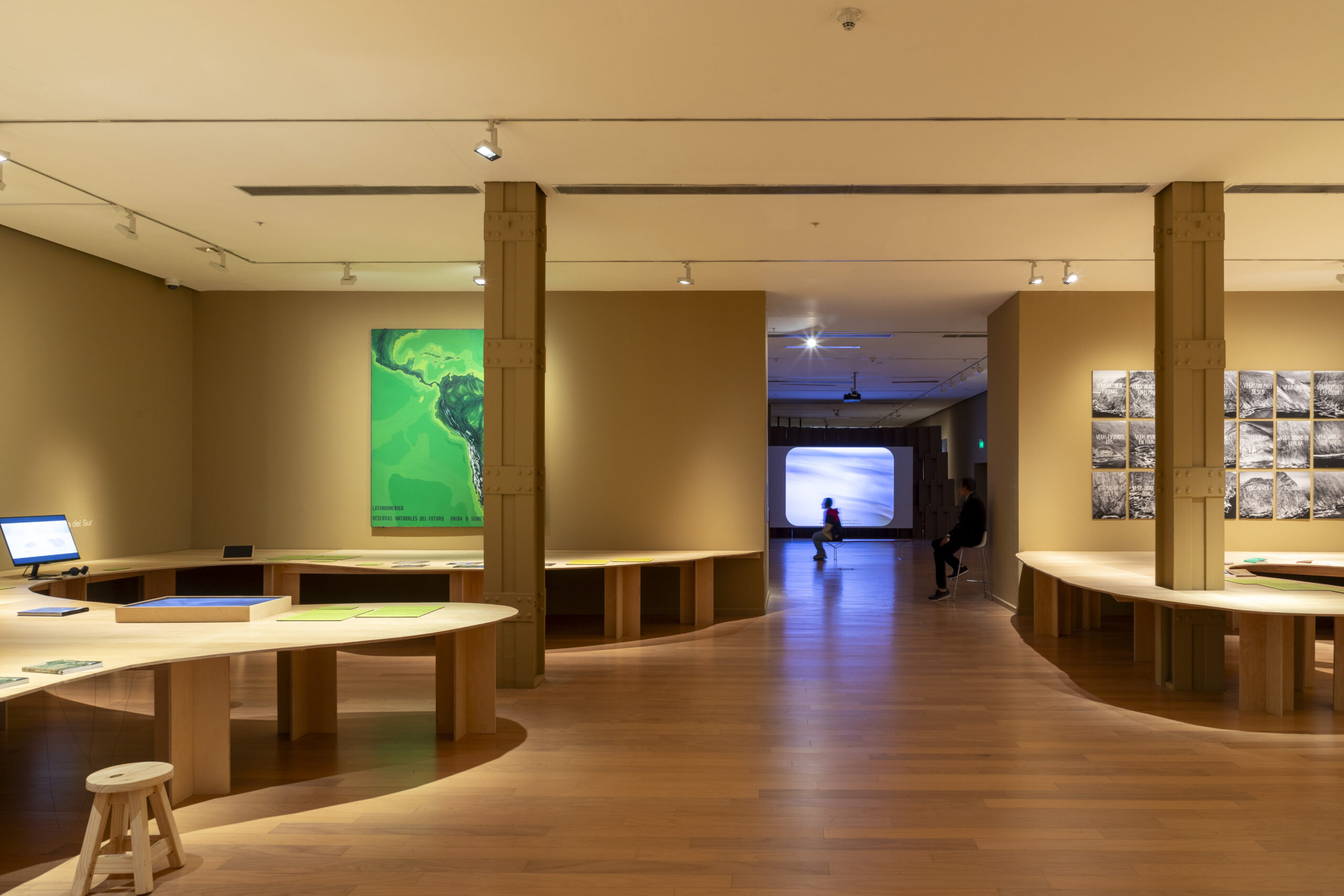
In Nature, the Architect, far-reaching research, fantastic imaginations and sensorial delight are paths of knowledge that allow us to take on this change of perspective. In the first gallery, a large table-river functions as a research workshop, offering a dialogue between art, architecture, poetry and ecological activism, combined with concrete actions that operate directly on geography and history. As the projects seek to transform complex territories, they embrace the expansion of disciplines: botany becomes social history, cartography is interwoven with poetry, and zoology becomes a form of aesthetics.
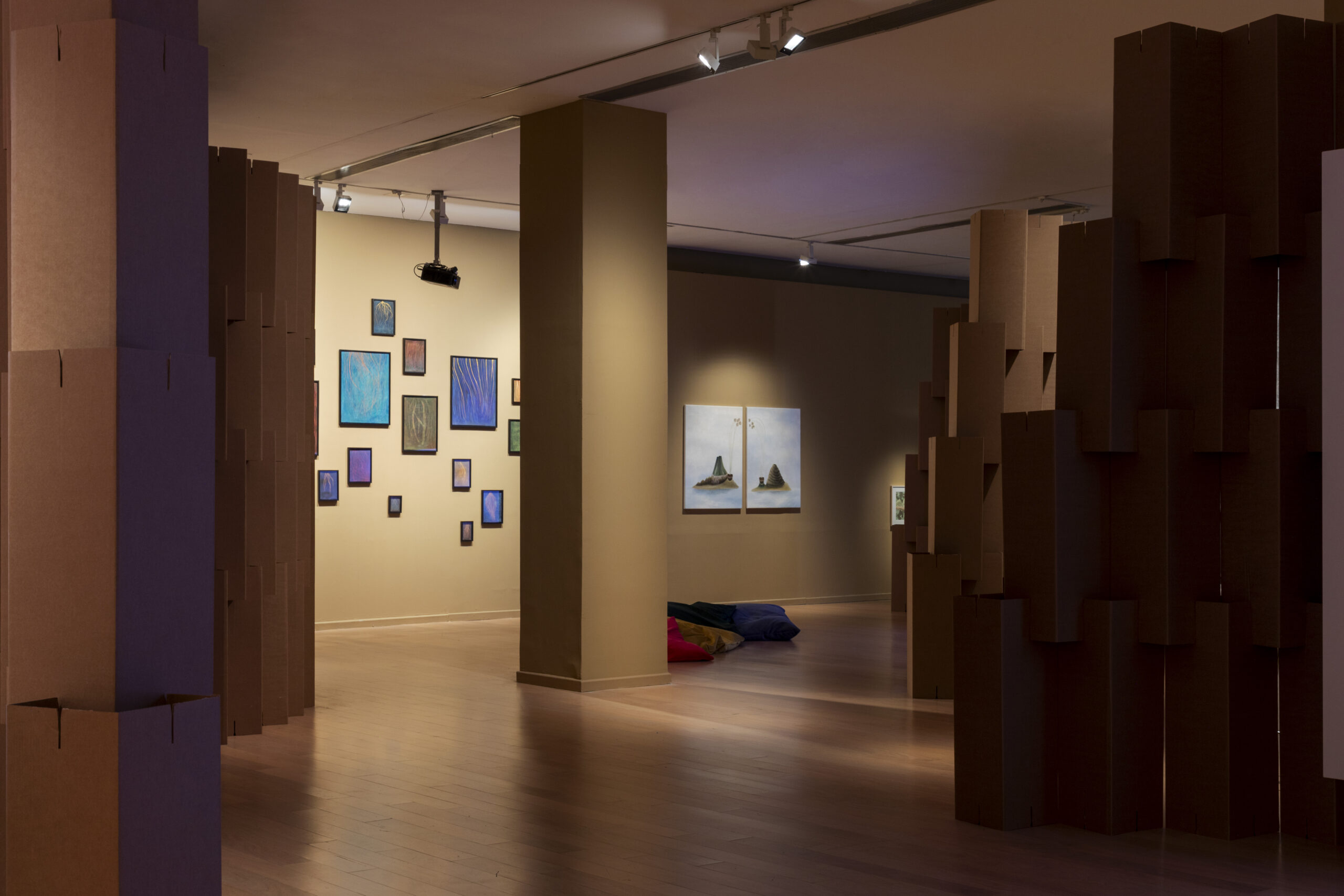
In the next room, sheltered by cliff walls, the artists display immersive works that intensify our perceptions. Faced with natural phenomena that challenge our usual ways of seeing and understanding, they use art’s sensorial tools to broaden empathy and wonder, attempting other relationships with the natural world.
Attuned to a choir of voices that exceeds geographical boundaries, the exhibition asks us some crucial questions: how do we inhabit the planet, what worlds become possible if we stop putting ourselves at the centre, and what new forms of co-habitation might art allow us to imagine?

Gallery A
This gallery features artistic investigations that explore nature, from the rivers of the city of Buenos Aires to the Brazilian Amazon and the cliffs of the Chilean Pacific, to find out how we relate to the territories we inhabit. Conceived as a space of learning, with interactive activities devised with the Department of Education, we walk through the gallery like we might sail down a river, docking on its banks to spend time with the materials and experiences there.
It starts with the Brazilian architect Paulo Tavares, whose notion of “cultural forest” is the inspiration for the exhibition. Tavares sees the jungle as a form of collective design where history, ecology and politics come together. Tomás Saraceno also reflects on nature as creator in his research into cobwebs as works of art and models of inter-species collaboration. The collectives m7red and Casa Río explore riverside territories to understand ecological and social processes on a regional and global scale. Florencia Levy looks at territories marked by extractivism, complex landscapes where matter, memory and conflict overlap. The project Utopias del Sur continues the legacy of the great artist Nicolás García Uriburu (1937-2016), extending his manifesto of art as ecological action through an education program and environmental reserves. The gallery also explores connections between poetry and landscape in the work of Chilean Raúl Zurita.
Gallery B
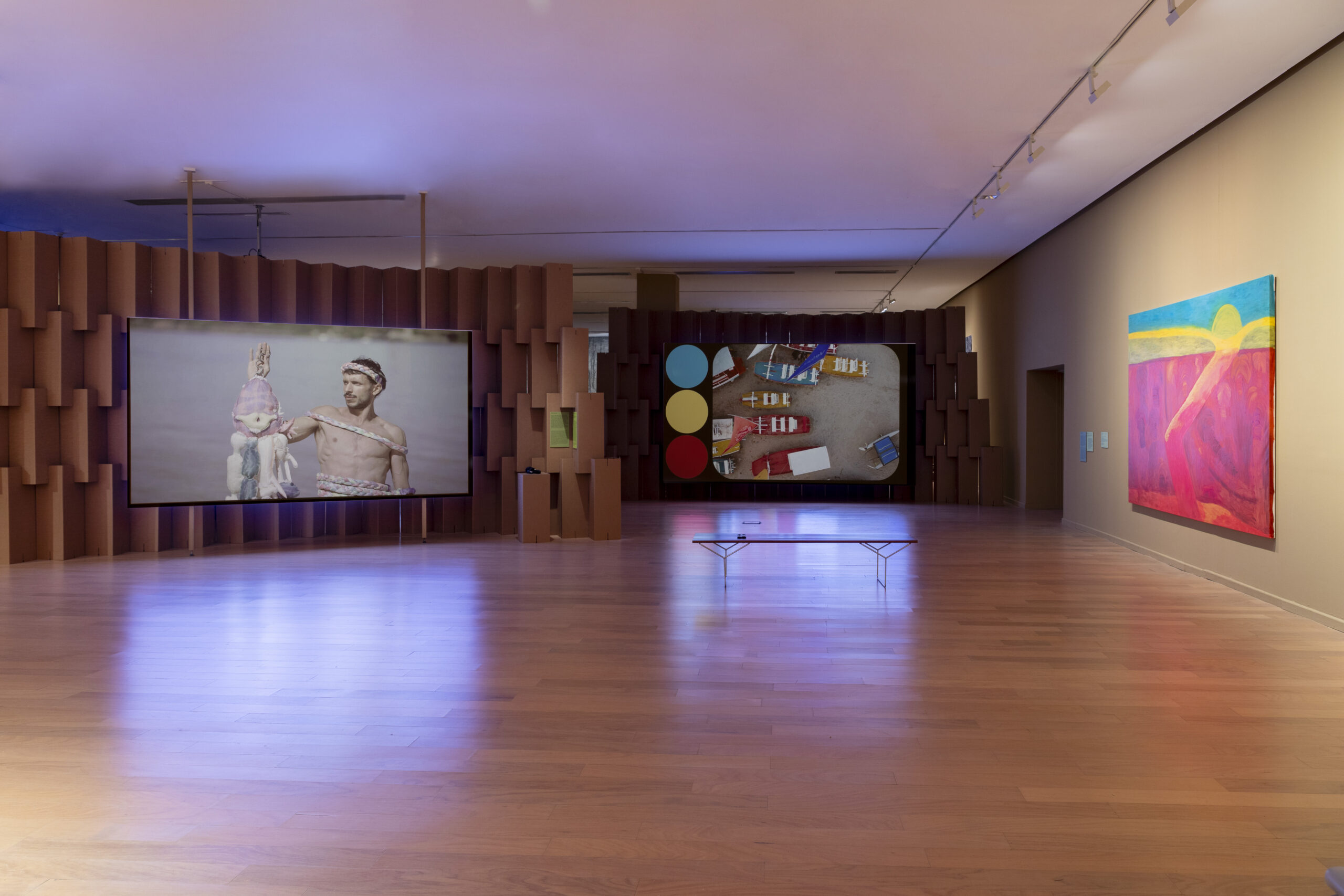
In this gallery, nature unfurls spaces to awaken the body and the senses: from festive movements and intense colours to listening closely to delicate whispers in more intimate spaces.
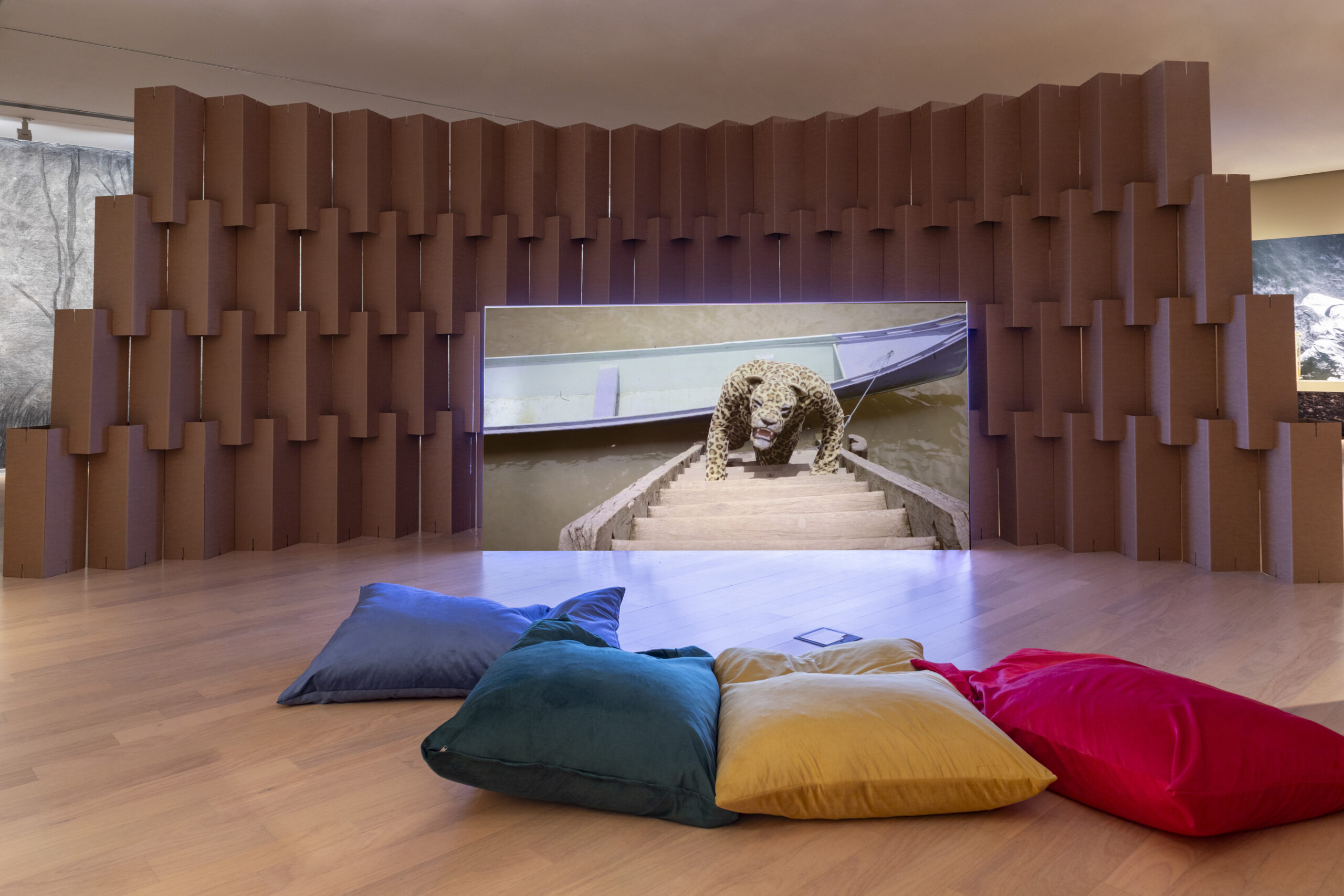
Rivers cleave through territories like lines on a drawing, blurring solid and liquid states and cutting across society boundaries. Artists find in them an alternative way of leaning about and teaching history, while others inhabit them as places of celebrations and unexpected encounters where fantastical mythologies, personal stories and connections with other species emerge. They also use the sensorial power of painting to create fantastic landscapes with a strongly expressive and personal weight. Other artists get close to the animals to open their perception to new perspectives, in a theatrical game that goes beyond the limits of human experience.
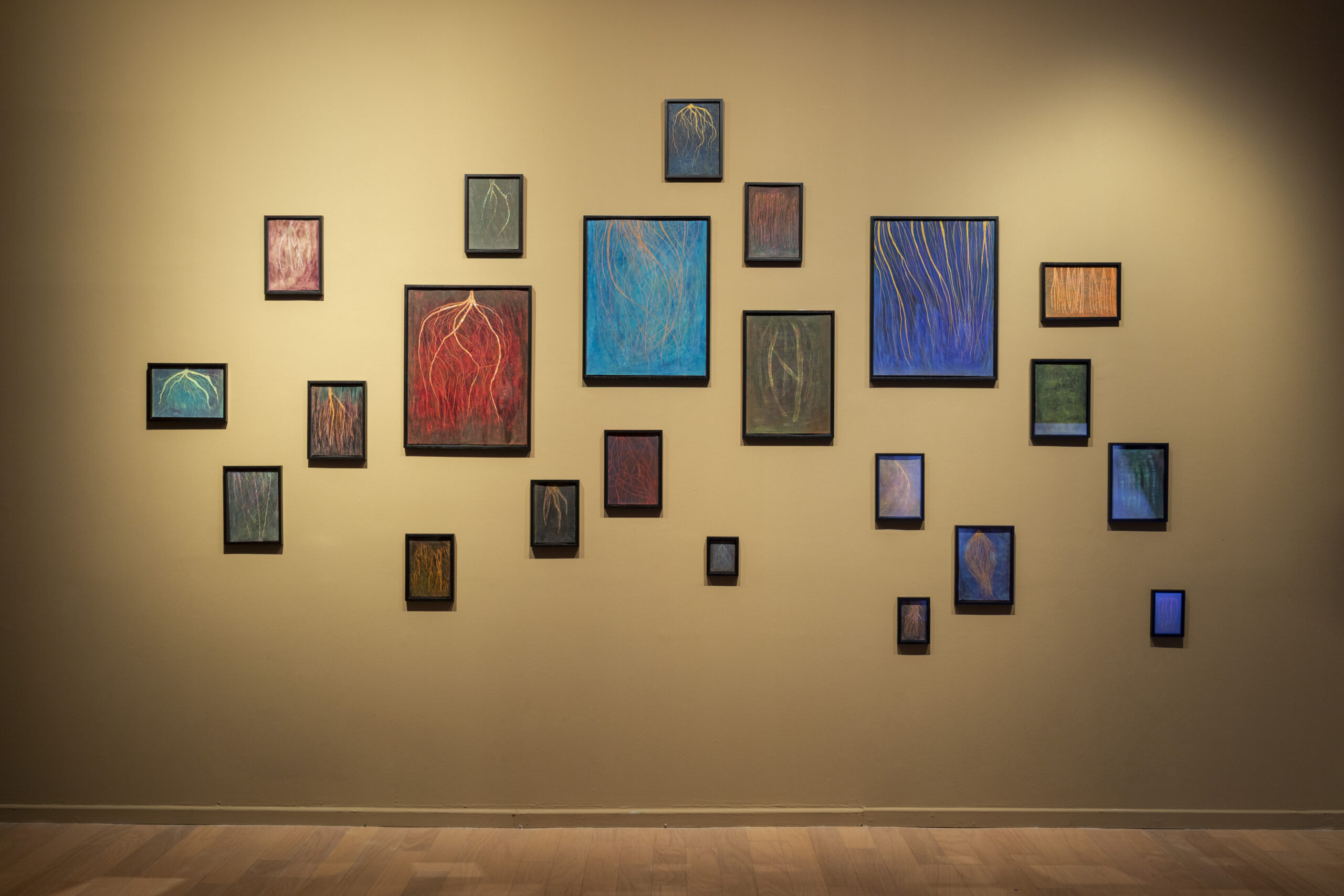
What is hidden below the surface, beneath the rocks, in the layers that sustain the world? The roots and the volcanoes reveal the aesthetic and material power of what lies underground.
At the end of the room, a large mural draws us into a forest inhabited by intriguing presences, suggesting the opportunity to recognise in nature a repertoire of multiple ways of inhabiting.
Paulo Tavares
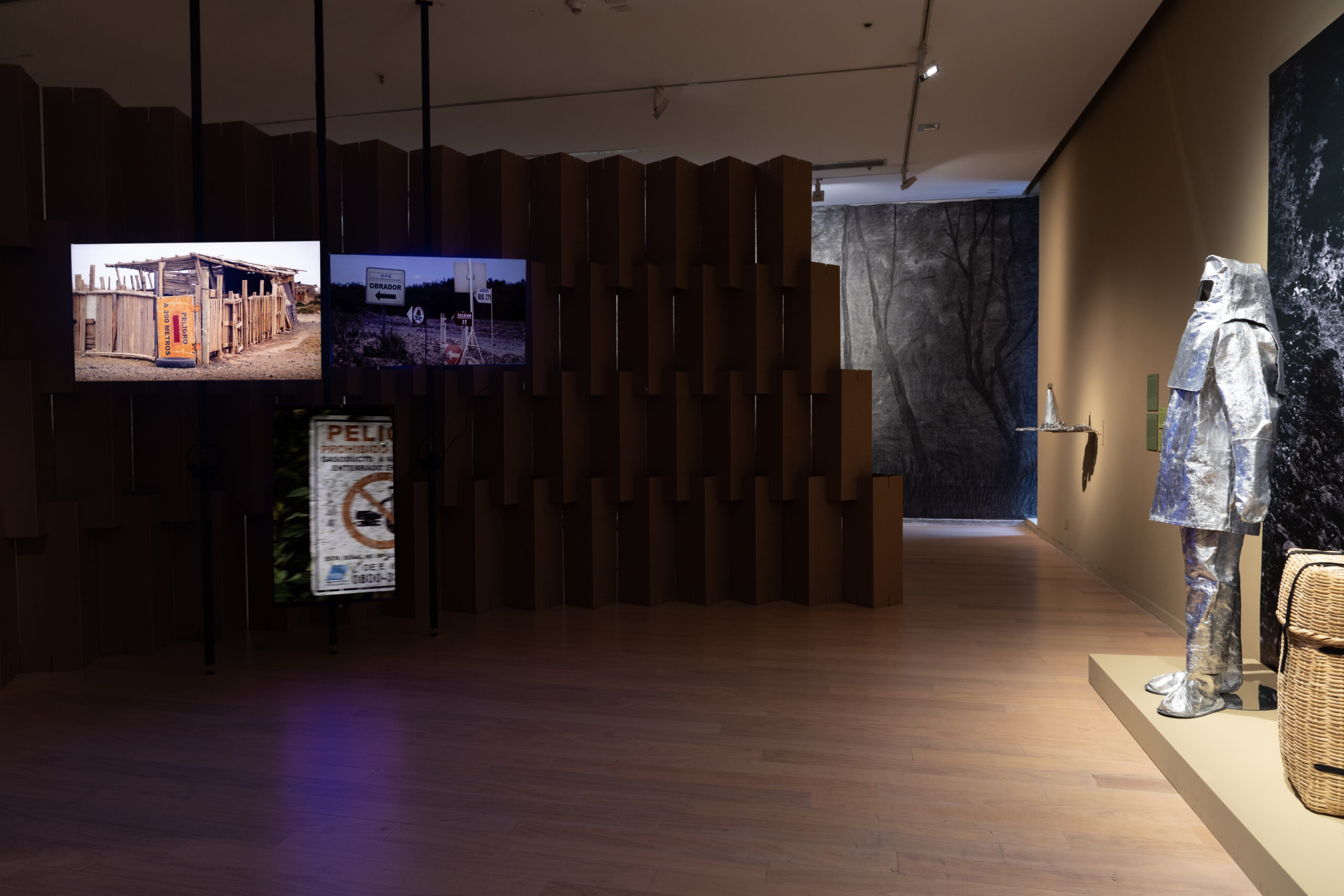
Paulo Tavares has made a significant contribution to rethinking our relationship with nature. A Brazilian architect, writer, teacher, and winner of the Golden Lion at the 2023 Venice Architecture Biennale, Tavares has spent years researching the Brazilian Amazon, which he sees as a ‘cultural forest’, an architectural archive rooted in the communal-led design of the indigenous peoples. His work has been inspired by the worldviews of these communities, for whom nature is a living being. In his films Derechos no humanos [Non-human Rights] and Contra el Estado [Against the State], Tavares presents a range of interviews and archival footage from indigenous activists and leaders who fought for the recognition of the Rights of Nature in Ecuador’s constitutional reform (2008), which adopts an ‘animist’ legal framework granting fundamental rights to rocks, mountains, rivers and seas. He also documented the lawsuit brought by the Kichwa people of Sarayaku against the State of Ecuador (2012), in which he shed light on the community’s resistance to military incursions aimed at enabling oil production.
An Architectural Botany
Modern western thinking sees the jungle as a symbol of nature unspoiled by humans and, therefore, bereft of culture and organisation. Paulo Tavares takes a different stance: he believes the jungle is a cultural artefact. Over the course of the 1980s, botanist William Balée carried out a series of botanical surveys together with the Ka’apor people, with the aim of producing a detailed record of the ways in which their communities use, transform and decode the forest environment. Balée proved that vast areas of the Amazon are the result of the long-standing relationships between humans and the environment: essentially, they have been designed in partnership. An Architectural Botany is an installation that poses a series of questions that arise from Balée’s photographic archive. Generally, this type of material is displayed in natural history museums and botanical gardens as evidence of a biological history rather than a social one, but what if we were to view this collection as an architectural archive?
Trees, Vines and Palms
Can we think of trees, vines and palms as part of our historical heritage? This work by Paulo Tavares addresses this question by drawing on an event that took place in the 1960s and 1970s, during Brazil’s military dictatorship, when the Xavante people, from the centre of the country, were subjected to a campaign of forced evictions and displacement to make way for cattle ranching and soy cultivation on their lands, in a process that was perversely termed ‘pacification’. Working in collaboration with the B’öu Xavante association of Marãiwatsédé, Tavares mapped the former villages from which the Xavante people had been forcibly displaced. A strip of vegetation has grown at the sites, with the typical species of trees, vines and palm trees that were part of the indigenous people’s traditional way of life. These plant communities sprung up, following the layout of the villages designed by their former human inhabitants, like living architectural ruins. Most of the sites are located on what is now private land the Xavante cannot access and are at risk of destruction due to the expansion of industrial agriculture.
Raúl Zurita
Since the dawn of poetry, poets have sung the praises of the most sublime landscapes. But the great Chile poet Raúl Zurita sought to go even further, writing on the landscape itself as if it were a notebook the size of the planet. He wrote verses both in the skies above New York (1982) and in the Atacama desert (1993). Verás no ver [You Will See Not to See] is his third poetry project in a landscape, this time, the cliffs of the Chilean Pacific. It was conceived 25 years ago and produced in 2024, with funding from the Engel Foundation. With the help of DelightLab, a light art collective, the 22 verses of the poem were projected onto the cliffs – over 1,000 metres high – from one night until dawn the next morning, when the last verse disappeared with the light of the sun. We present a selection of books by great Latin American poets who explored the expressive possibilities of the landscape, together with a series of photographs illustrating Zurita’s project.
m7red – Pío Torroja
Founded in 2005 by Mauricio Corbalán and Pío Torroja, m7red is a research and action platform that focuses on complex territories – such as river basins and areas of environmental conflict – through interdisciplinary practices that intersect architecture, art and activism. Created by Pío Torroja in dialogue with “Las tres ecologías” [‘The Three Ecologies’], a project of the Museo Moderno’s Education Department, Modos de existencia de la costa [Ways of Life on the Coast] reconstructs the transformation of the Buenos Aires coastline through an analysis of the geological, ecological and political processes that altered the city’s rivers. This study of four different historical periods – from 4000 BC to the construction of the Ecological Reserve, which initiated during the civil-military dictatorship (1976–1983) – shows how economic pressures, port infrastructure and state violence turned the coast into a contested space where nature and history intertwine. The project includes interviews with architect and historian Graciela Silvestri and geologist Marina Lema.
Casa Río Lab
Casa Río Lab is a platform dedicated to art, ecology and territorial work, based in the Río de la Plata. Founded by Alejandro Meitin and Dani Lorenzo, among others, the group carries out projects investigating the relationships between global infrastructures – such as agribusiness and logistics – and local ecosystems, particularly rivers and wetlands. Through maps, archives and actions in specific territories, the platform invites us to think of geography as a shifting biocultural fabric, shaped by environmental, economic and political processes. On the circular table – a space for dialogue and debate – Casa Río displays a diagram that summarizes its biocultural stance. The items on the other table document the tangible marks of extractivism in the La Plata Basin, ranging from monocultures and soil degradation to mining, energy extraction and the exploitation of the river. The objects are evidence of the ecological and social impacts – such as pollution, fires, the spread of invasive species – that are transforming life in our region.
Florencia Levy
We are used to hearing about lithium and so-called ‘rare earth’ minerals – those materials found in the batteries of our phones and other technological devices – but what do we know about what the places where lithium is extracted actually look like? What happens to the land when it is exploited to get these raw materials, and what consequences does that exploitation have for the environment? These were the questions that drove Florencia Levy to produce Tercer sedimento [Third Sediment], a work acquired by the Museo Moderno in 2024. Levy’s practice is rooted in the traditions of investigative art and the film essay, bringing together wide-ranging research through a significant investment in montage and editing. In this video, the artist examines the remains and debris left by human activity in the landscape, particularly in environments overtaken by extractive industries. The project observes how these sediments – layers of waste, residue and fragments – are part of a new, emerging geology.
Nicolás García Uriburu / Utopía del Sur
Nicolás García Uriburu (1937–2016) was a pioneering figure in ecological art in Argentina, a visionary who paved the way for future generations of artists, many of whom are included in this exhibition. ‘With my art, I denounce antagonism between Nature and Civilisation’, he wrote. ‘The most developed countries are in the process of destroying the water, land and air, the reserves of the future in Latin America countries’, he warned. His iconic works drew on images of a Latin America united by nature, free from the political divisions imposed on it by colonialism and modernisation. His maps are not mere representation, but powerful tools for inspiring critical imagination and resistance, conveying a sense of rebellion in the face of threats to ecological balance. The project Utopía del Sur embraces his utopian vision, implementing transformative projects in the local territory that focus on conservation, community building and environmental education through art. In the El Potrero and El Yerbal reserves, the group works to regenerate ecosystems, reintroduce vulnerable species and protect biodiversity. Through its work with artists and schools, it has also designed an educational programme that introduces García Uriburu’s pioneering strategies to new generations.
Tomás Saraceno
Of the more than 50,000 species of spiders in the world, only 25 are considered social; that is, they live and build their webs in communities. Just one of these can be found in our region: Parawixia bistriata. In 2017, the Museo Moderno was transformed into a vast sanctuary for 7,000 spiders of this species, when artist Tomás Saraceno and a team from the museum joined forces with scientists from the Museo de Ciencias Naturales Bernardino Rivadavia to create an exhibition that blurred the boundaries between art, science and nature. The Parawixia bistriata works in groups to trap and transport the food it captures with the webs it spins during the night. The Museo Moderno adapted to this routine so that the artist could work alongside them to create an enormous, three-dimensional sensitive and dynamic weave, allowing us to reconsider the ways in which we inhabit our surroundings, through a stunning aesthetic experience. These works – recently donated to the Moderno by Saraceno – are two-dimensional adaptations of the extraordinary shapes created by the spiders. The work of the artist changes the way we view the natural world by showing us that these commonly feared creatures are in fact much closer to us than we might imagine, and that we have much to learn from what they do. What can spiders teach us about cooperation and natural architecture?
Manuel Brandazza
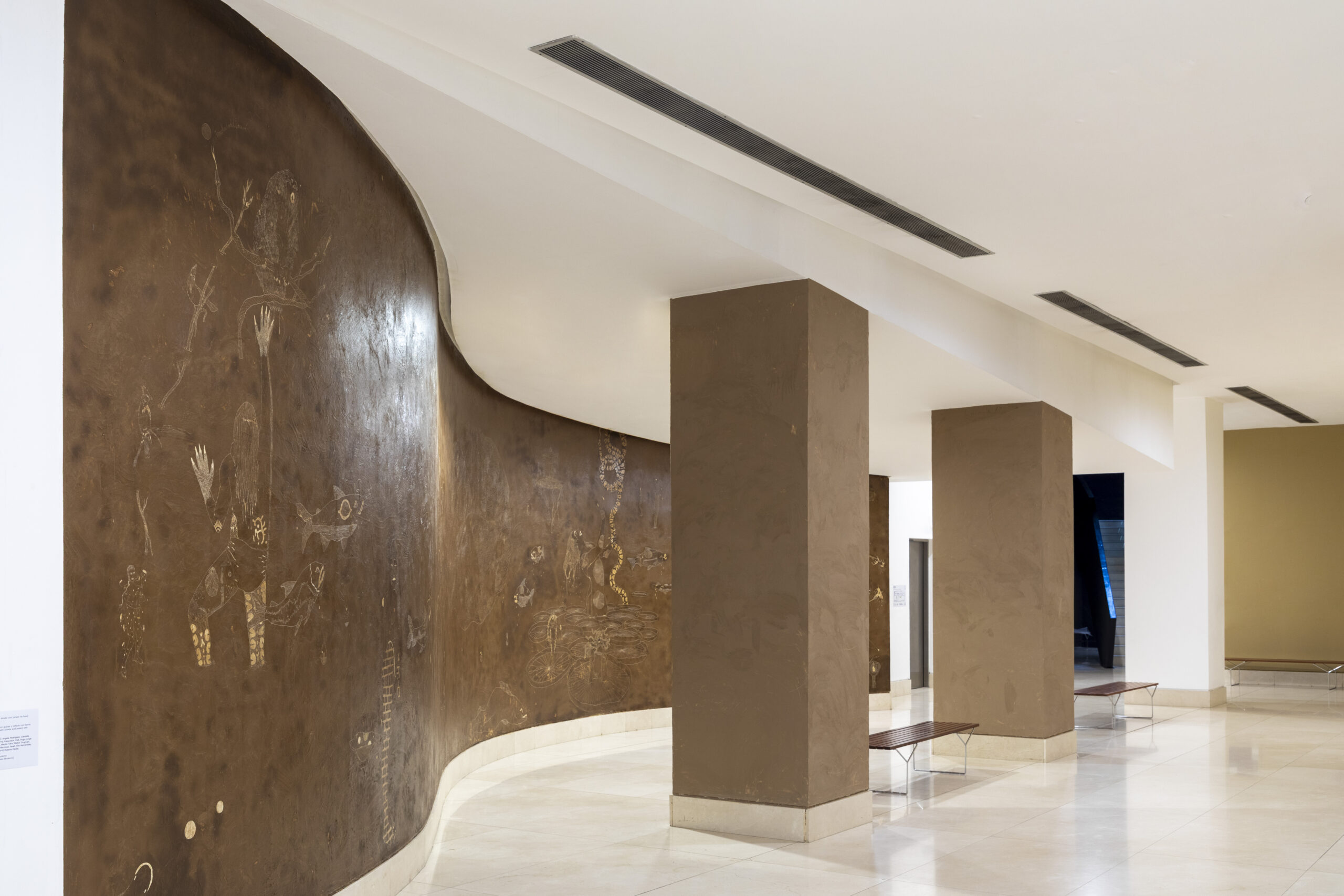
Born in Rosario, Manuel Brandazza uses the mud from the Paraná River as a living material: it is the support for his drawings and murals, the raw material for the sculptures he creates and integrates into his textile pieces, and the canvas onto which he projects his personal mythologies. In this mural, stretching from the entrance hall of the museum to the gallery containing the exhibition Naturaleza Arquitecta [Nature, The Architect], the mud becomes a sketchbook used by Brandazza to illustrate and narrate memories of a life spent by the river. The flora and fauna of the river environment – including reeds, snakes and birds – intertwine with a constellation of references to Rosario’s artistic traditions, from Lucio Fontana’s Muchacho del Paraná [Boy from the Paraná] (1942) to Raúl Domínguez’s murals, thus grounding the work in a visual history of the coastline. Within the same space, images of the artist’s friends appear, along with slogans related to gender activism and fantastical beings. Together they weave a narrative in which the artist’s own biography, imaginary and territory blend together in a material that is constantly evolving.
In this grand procession created especially for this exhibition, Manuel Brandazza transformed the Paraná River into an enormous natural catwalk, with dozens of models showcasing his designs from aboard barges. But the river is more than just an unusual setting for such a display: just as the river mud provides a support for his murals and sgraffito drawings, here, the Paraná is a space for an exuberant repertoire of stories filled with fantastical characters and, above all, the river – the true protagonist of the scene. After becoming a mainstay in the fashion and art circuits of Buenos Aires, Brandazza travelled to Brazil, where he worked creating the costumes for one of the samba schools that participates in the Rio de Janeiro Carnaval. That experience provided him with a wealth of inspiration and reinforced his appreciation for the carnaval’s rebellious spirit and unruly energy. Returning to Rosario, those learnings intertwined with his admiration for the Paraná and coalesced in a practice in which the river and the festive merge into a celebration of overflowing emotions.
Félix Shumba
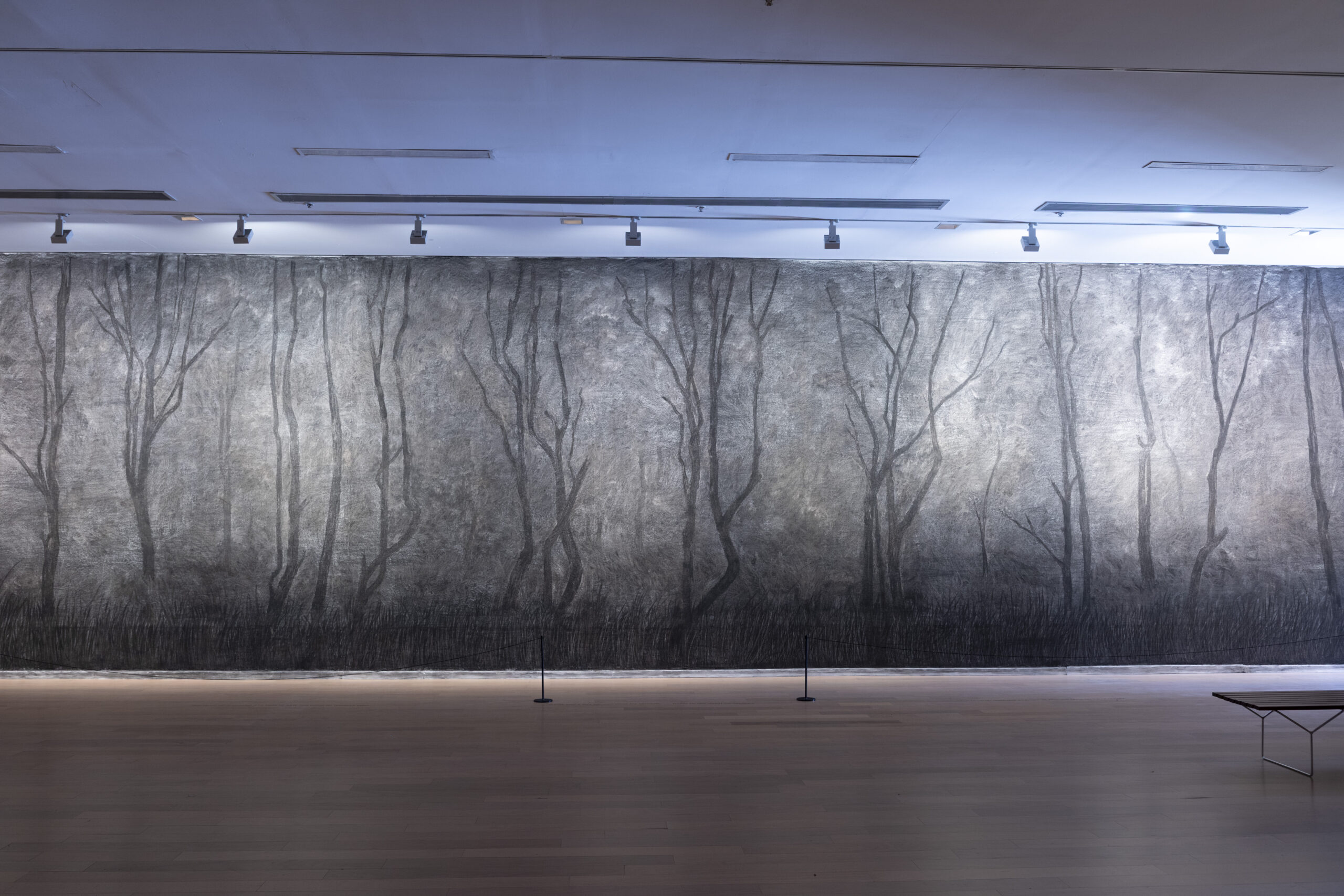
This monumental work marking the culmination of the exhibition – created by Zimbabwean artist Felix Shumba, who represents his country at the 61st International Art Exhibition of the Venice Biennale – shows a vast night-time landscape in which the forest is transformed into a fantastical creature, enveloping us and returning our gaze. The work has been created using charcoal produced by the artist himself from wood sourced from the forests of his homeland in Avonmore Farm, Masvingo. The mural is inspired by Muka Tiende [‘Wake up, let’s go’], a composition performed on the mbira to mark the close of nocturnal ceremonies, played just before dawn, when spirits are summoned one last time before daily routines and duties are resumed. In that liminal moment, bathed in an inimitable light, the mural invites us to open our eyes and surrender ourselves to a subtle game of revelation and concealment, to discover the myriad forms that inhabit the fabric of the forest. Shumba calls this the ‘Fold Fields Space’, a fictional universe haunted by unresolved, painful pasts, yet open to speculation about potential worlds.
Jonathas de Andrade
O Peixe [The Fish]
O Peixe [The Fish] depicts bucolic scenes of fishermen in the São Francisco River of north-eastern Brazil and the everyday gestures and rhythms that make up a life lived in harmony with the environment. The peaceful flow of the river bursts suddenly with a show of unexpected emotion: the fishermen cradle the freshly caught fish, accompanying them until their death, locked in an embrace in which brutality mixes with an erotic tension of a more ambiguous nature. Filled with scenes of captivating intimacy, the film initially appears to be a documentary, as if the subjects were unaware of the camera, but, in fact, the sequence was carefully orchestrated by the artist. O Peixe refuses to be pinned down to a single interpretation: the fishermen’s actions can be read either as caring for or dominating nature, as compassion or aggression: there is an ambiguity in which ritual, intimacy and violence become muddled.
Jangadeiros e canoeiros [Raftsmen and Canoeists]
For Jangadeiros e Canoeiros, Jonathas de Andrade worked with the communities of fishermen from north-eastern Brazil whom he used to watch as a child when he visited those beaches. De Andrade asks them about the shapes and choices of colours for their sails, and their answers reveal sensitive reflections similar to those of an artistic imagination, revealing the expressive and emotional power of the use of colours. In scenes reminiscent of a festive and hypnotic dance, the sails of the boats gliding across the water settle into shapes that recall some of the iconic chapters in Brazil’s history of abstraction – Helio Oiticica and neo-concretism in particular – as if the knowledge of that tradition had originate from popular practices before establishing itself in the aesthetic sphere.
Rivane Neuenschwander & Cao Guimarães
Artists Rivane Neuenschwander and Cao Guimarães have long collaborated on films that transform their observation of nature and Brazilian cultural phenomena into fables revealing the magic present in everyday life. This work pays tribute to a cultural tradition from northern Brazil related to the Cordão da Bicharada, a festival in the state of Pará in which communities dress up as animals and parade through the town and along the riverbanks. All of the characters are portrayed by children, making the event playful and involving the community in passing on these folk traditions. The narrative focuses on the preparations for the parade and the film combines a documentary style with a winking, celebratory perspective of the charming chaos of the children and the animals they portray.
Eduardo Navarro & Sebastián Roque
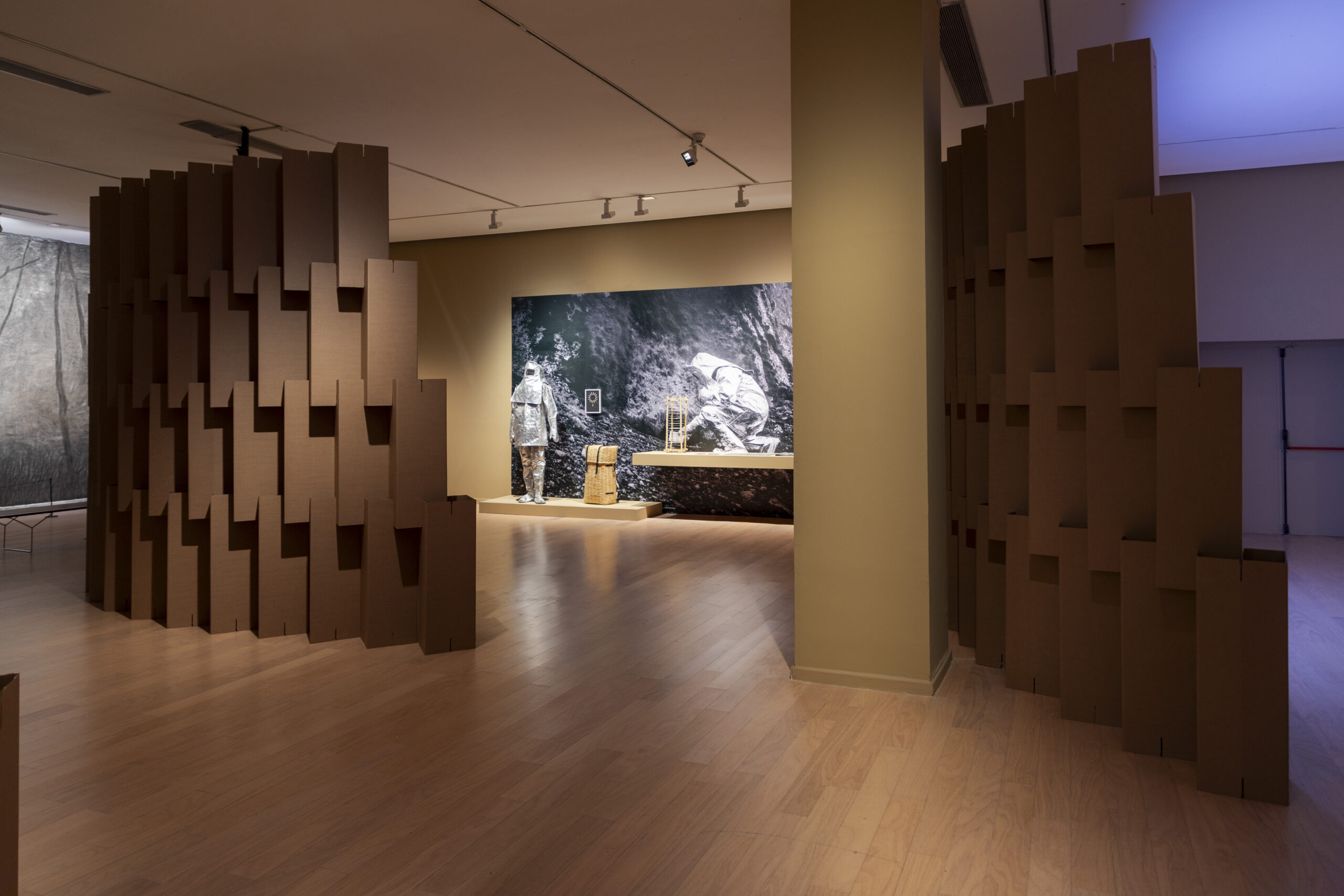
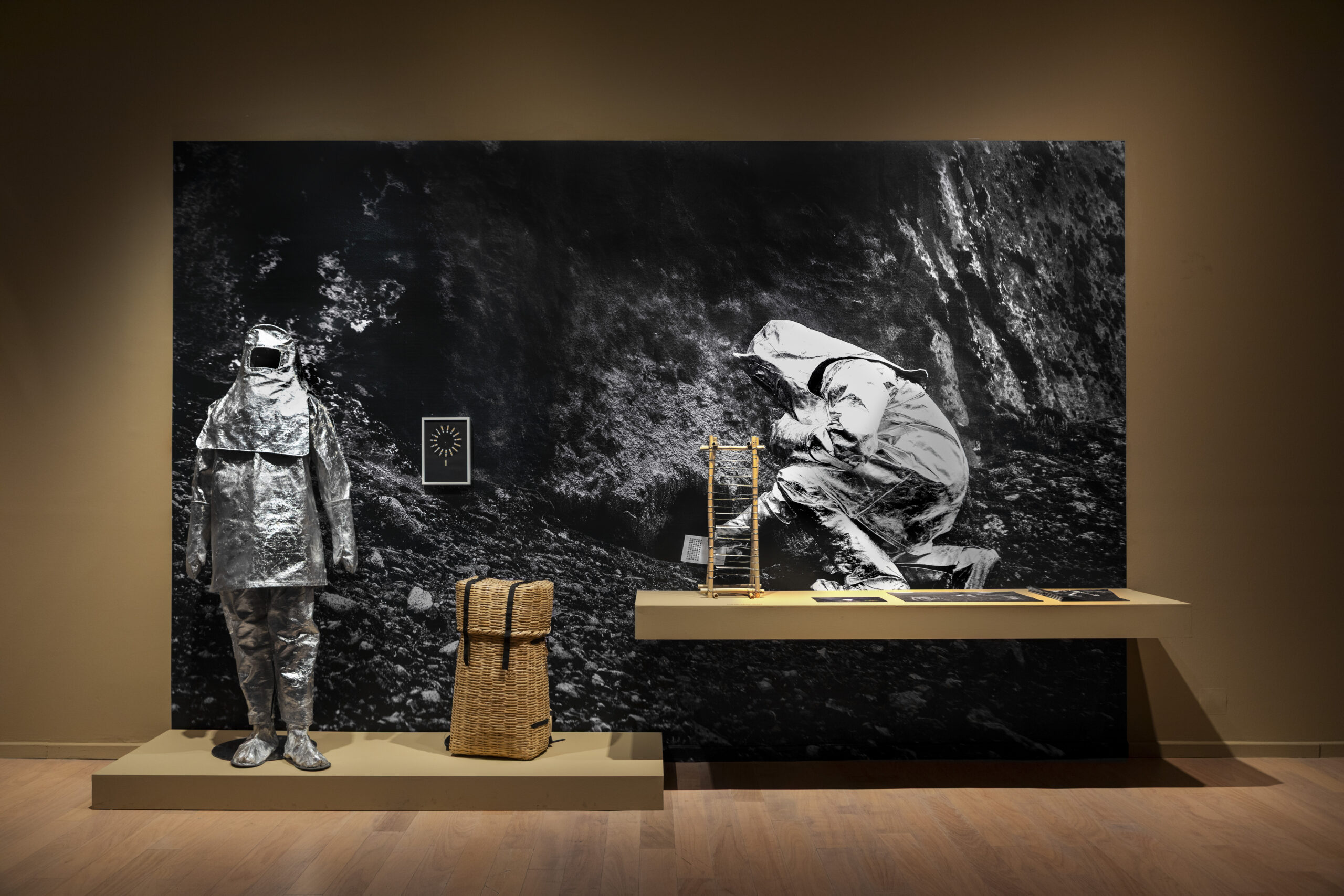
To create Poema volcánico [Volcanic Poem], Eduardo Navarro climbed a volcano in Ecuador and, wearing a protective suit he had designed himself, carried sheets of paper to the rim of the enormous crater, exposing them to its fumes and ash. In this way, it was the volcano itself that made the ‘drawings’: the chemical and thermal reactions left their marks on the surface, creating a kind of visual poetry. The work includes these volcanic ‘drawings’, the protective suit used by Navarro and a journal in which he recounts the experience. In Volcán de mí mismo [A Volcano of My Own], created in collaboration with Sebastián Roque, rocks from a real volcano (Mount Etna in Sicily) are part of the piece, which combines sculpture and metalwork, creating a miniature in which incense provides the volcanic emissions.
Artists and collectives: Manuel Brandazza (Argentina, 1975), Virginia Buitrón (Buenos Aires, 1977) , Adriana Bustos (Argentina, 1965), Ariel Cusnir (Argentina, 1981), Jonathas de Andrade (Brasil, 1982), Julián D’Angiolillo (Argentina, 1976), Cao Guimarães (Brasil, 1965), Artur Lescher (Brasil, 1962), Florencia Levy (Argentina, 1979), m7red (Argentina, 2005), Valeria Maggi (Argentina, 1985), Eduardo Navarro (Argentina, 1979), Rivane Neuenschwander (Brasil, 1967), Rayana Rayo (Brasil, 1989), Casa Río Lab (Argentina, 2021), Florencia Rodríguez Giles (Argentina, 1978), Sebastián Roque (Argentina, 1982), Tomás Saraceno (Argentina, 1973), Felix Shumba (Zimbabwe, 1989), Paulo Tavares (Brasil, 1980) and Utopía del Sur / Fundación Nicolás García Uriburu (Argentina).
Curated by: Patricio Orellana, Head of Curatorial Department, in dialogue with Victoria Noorthoorn
Curatorial assistance: Florencia Morel
General Coordination: Agustina Vizcarra y Noelia Magnelli
Museum Design: Daniela Thomas, Felipe Tassara, Iván Rösler and Gonzalo Silva
Production: Ana Cambre and Julieta Potenze
Installation coordinator: Germán Sandoval
Technical coordinator: Guillermo Carrasco
Graphic design: Job Salorio