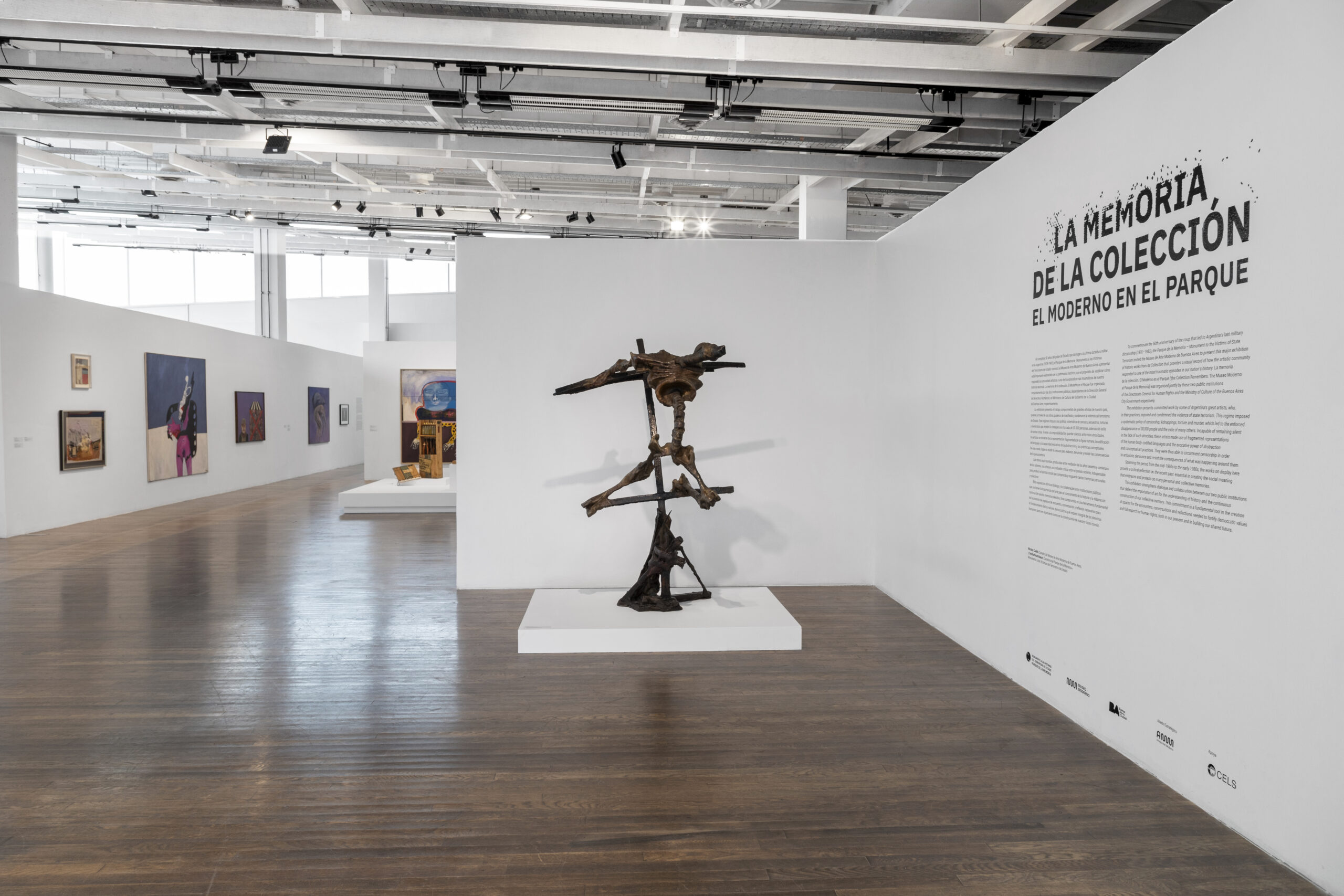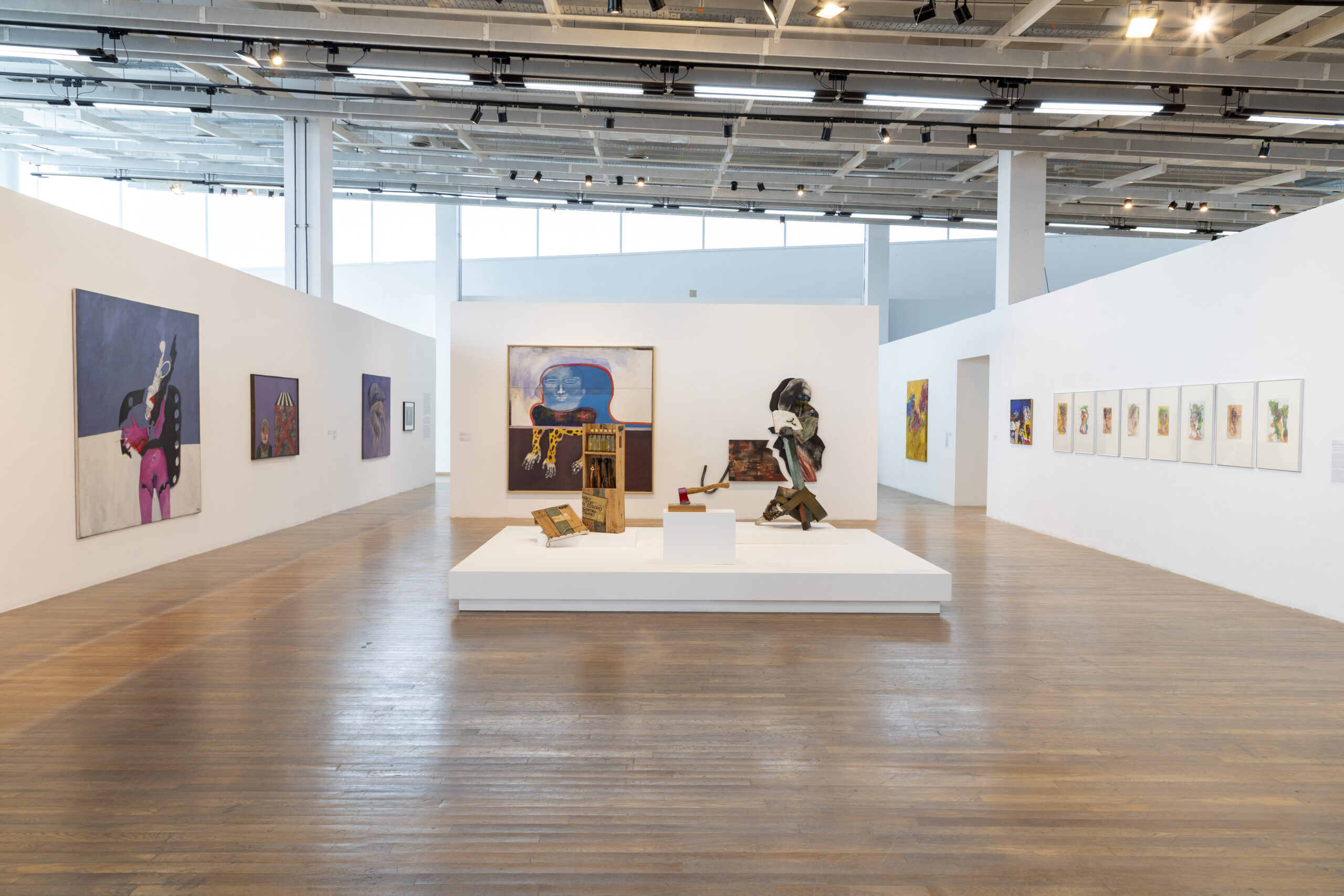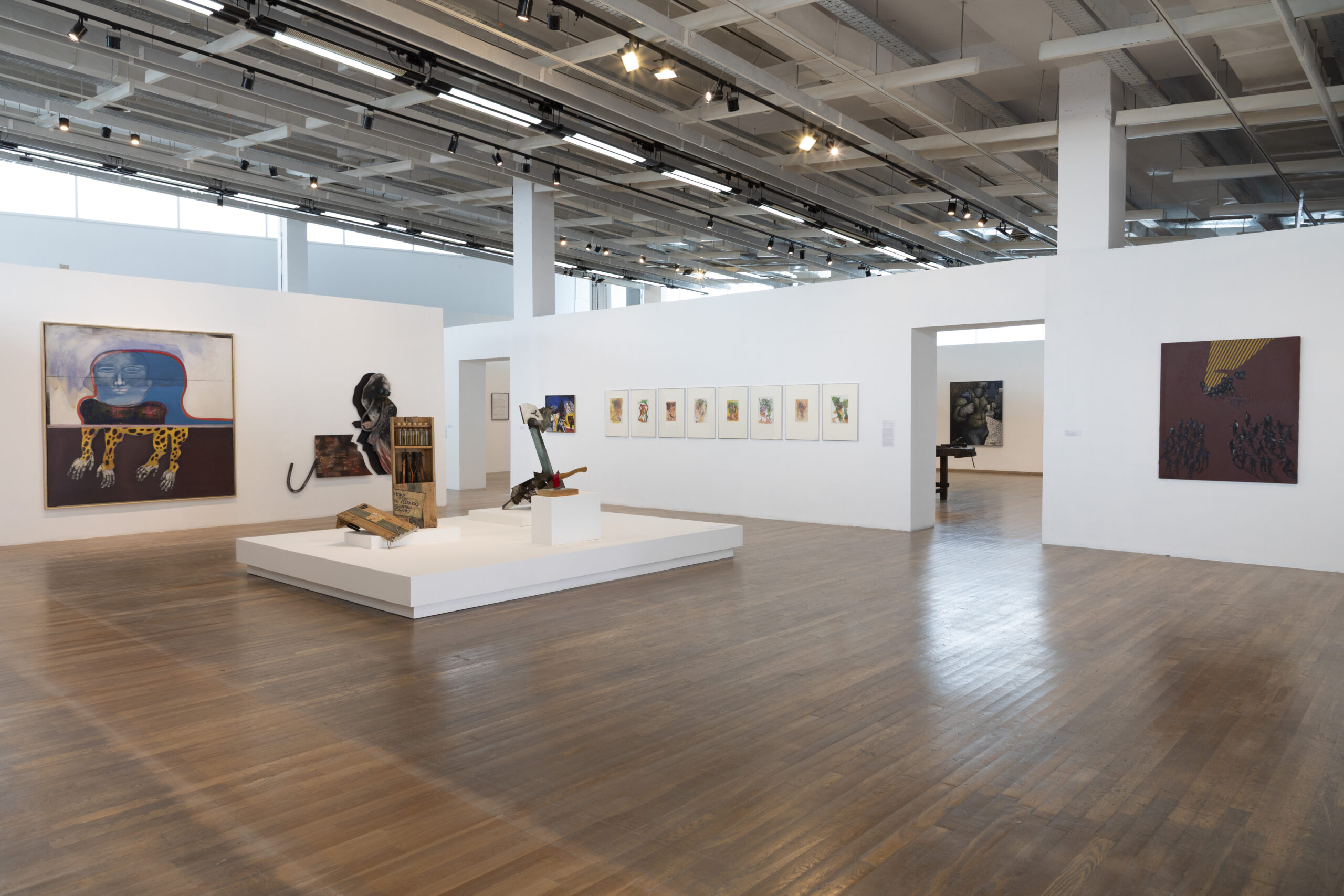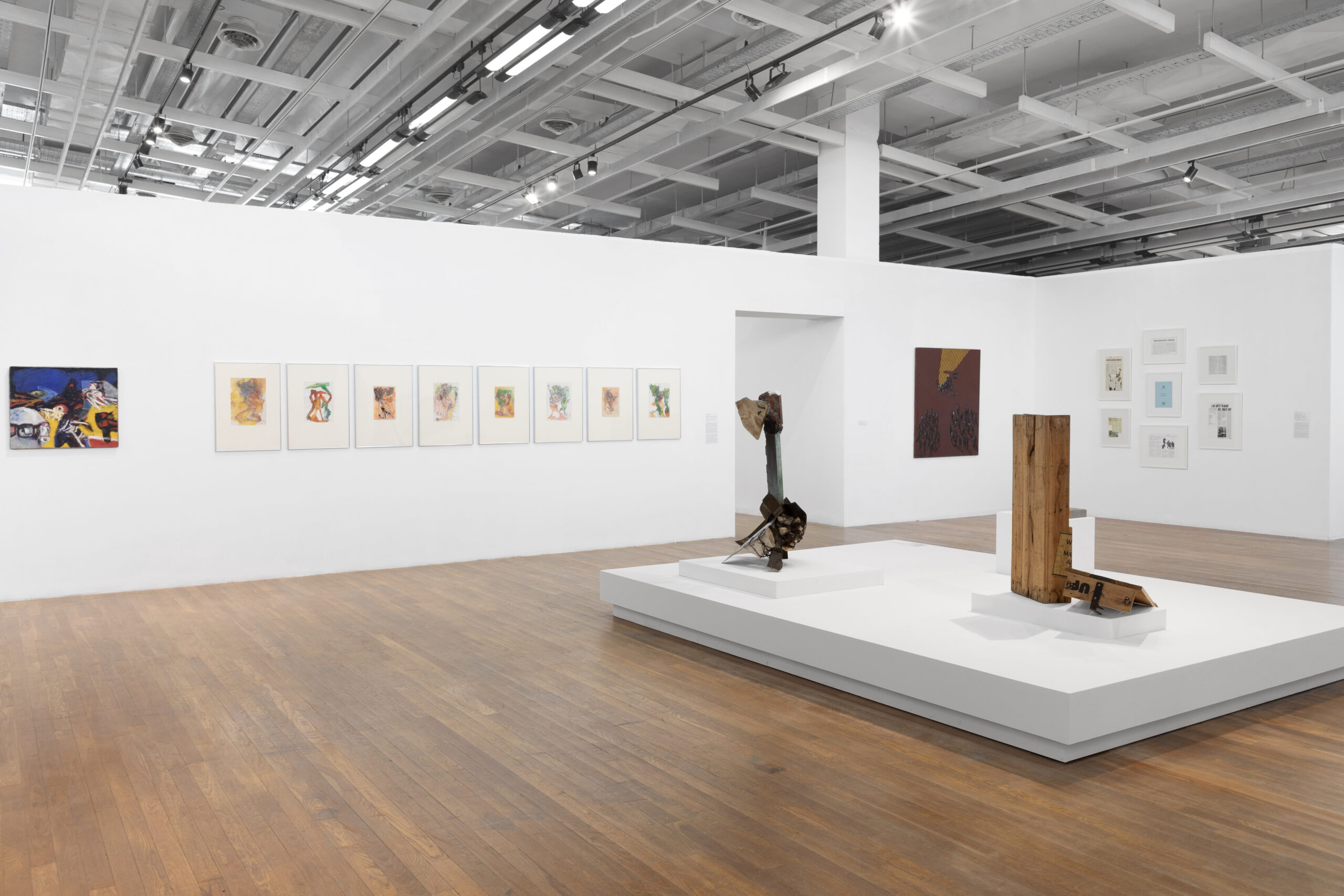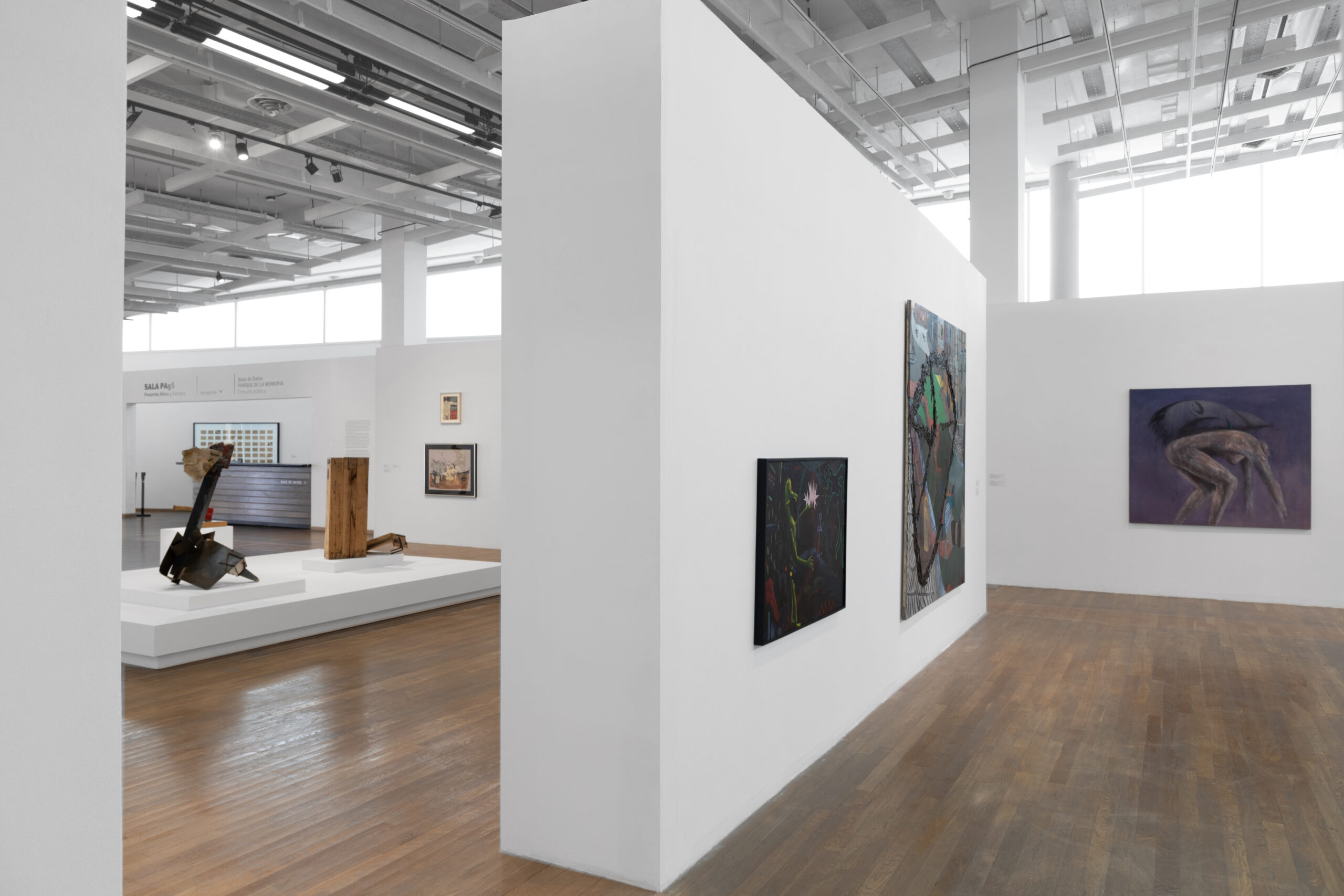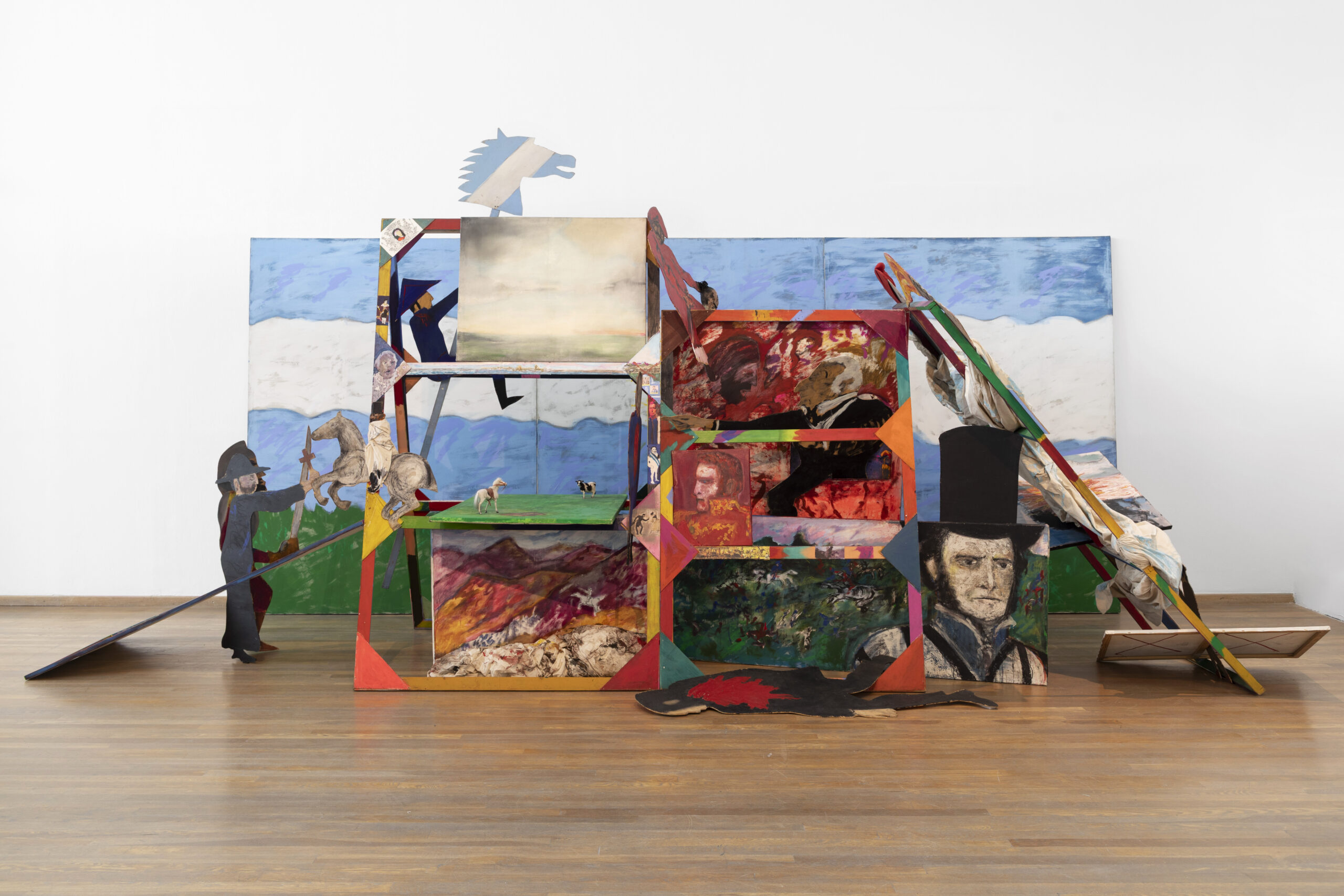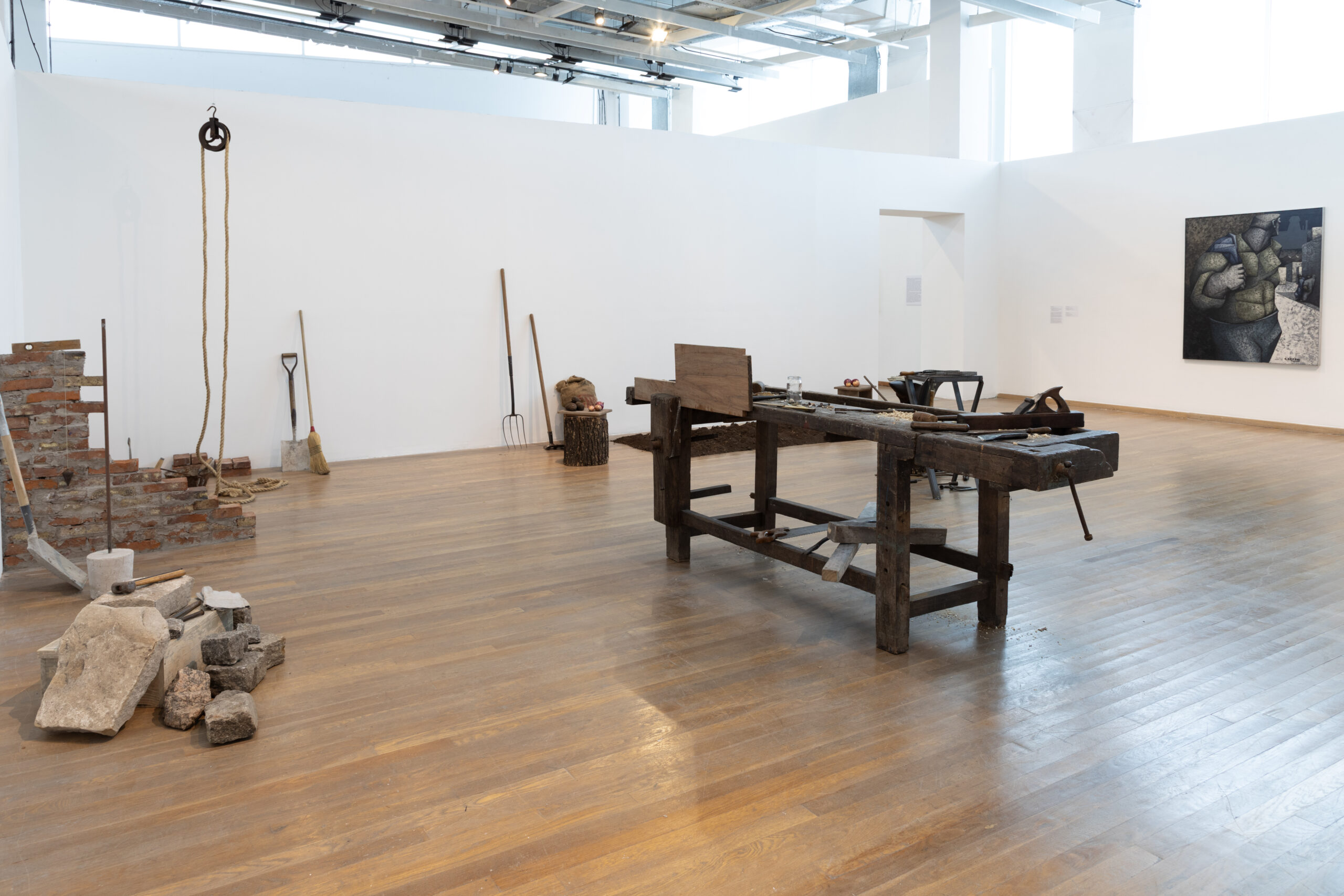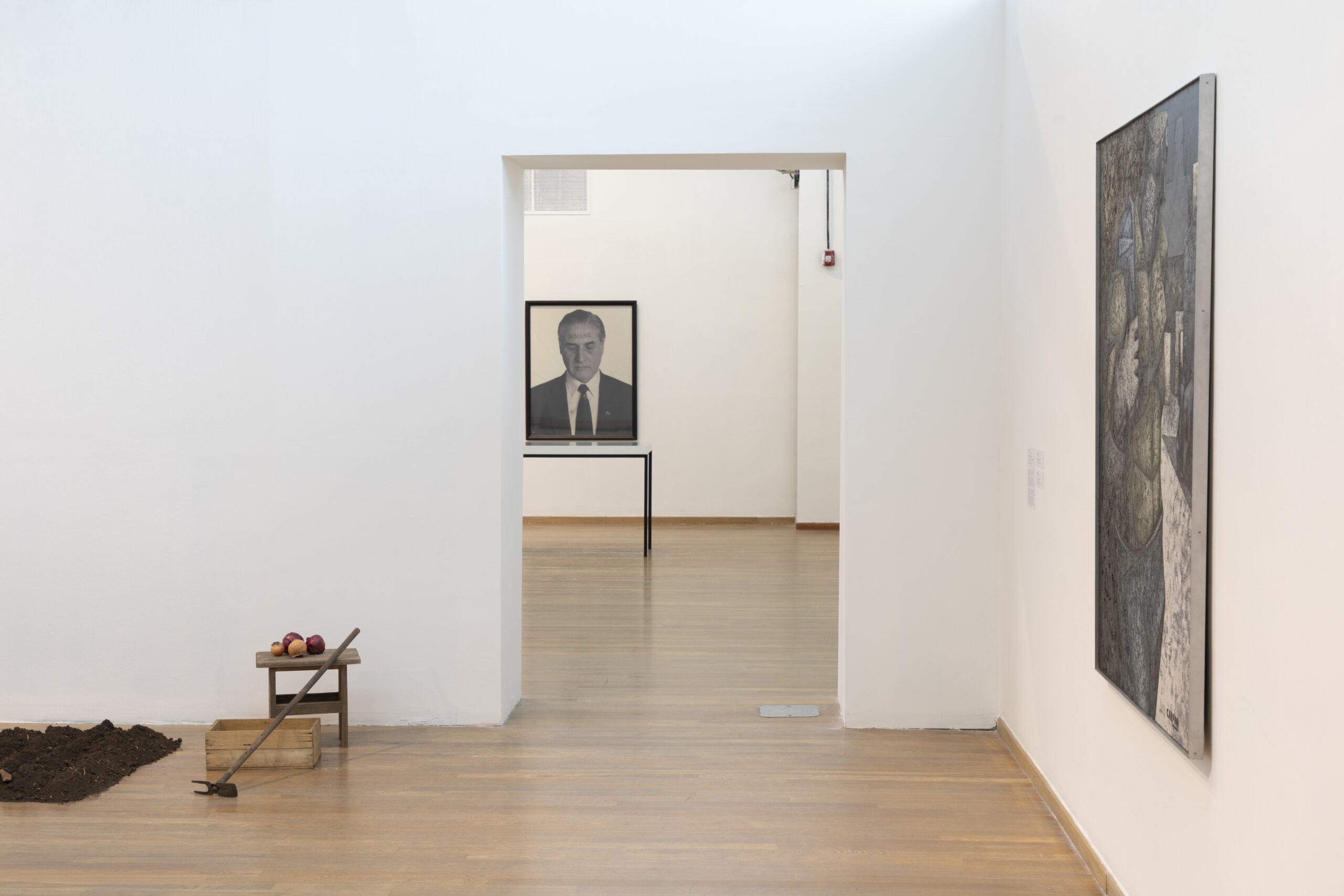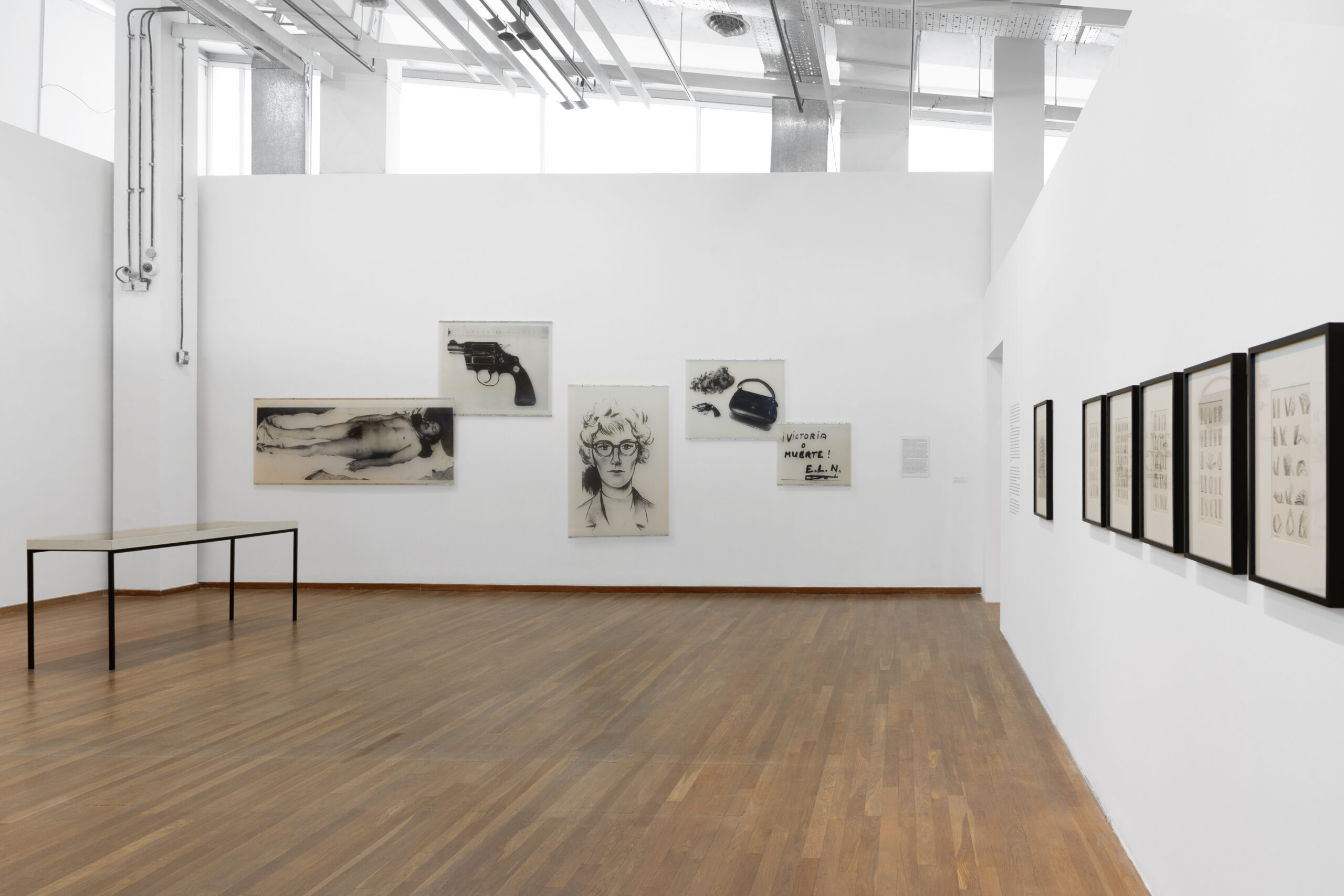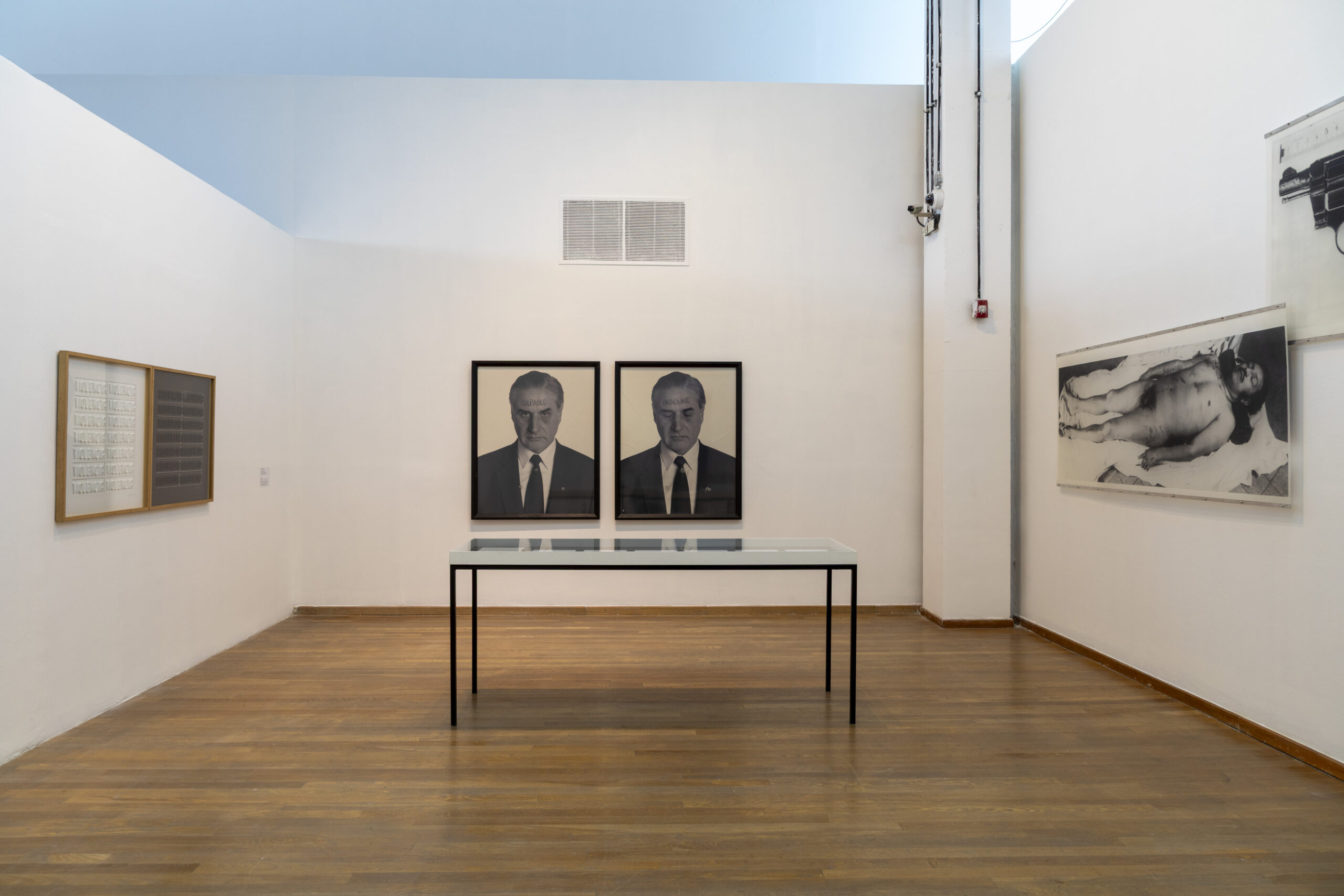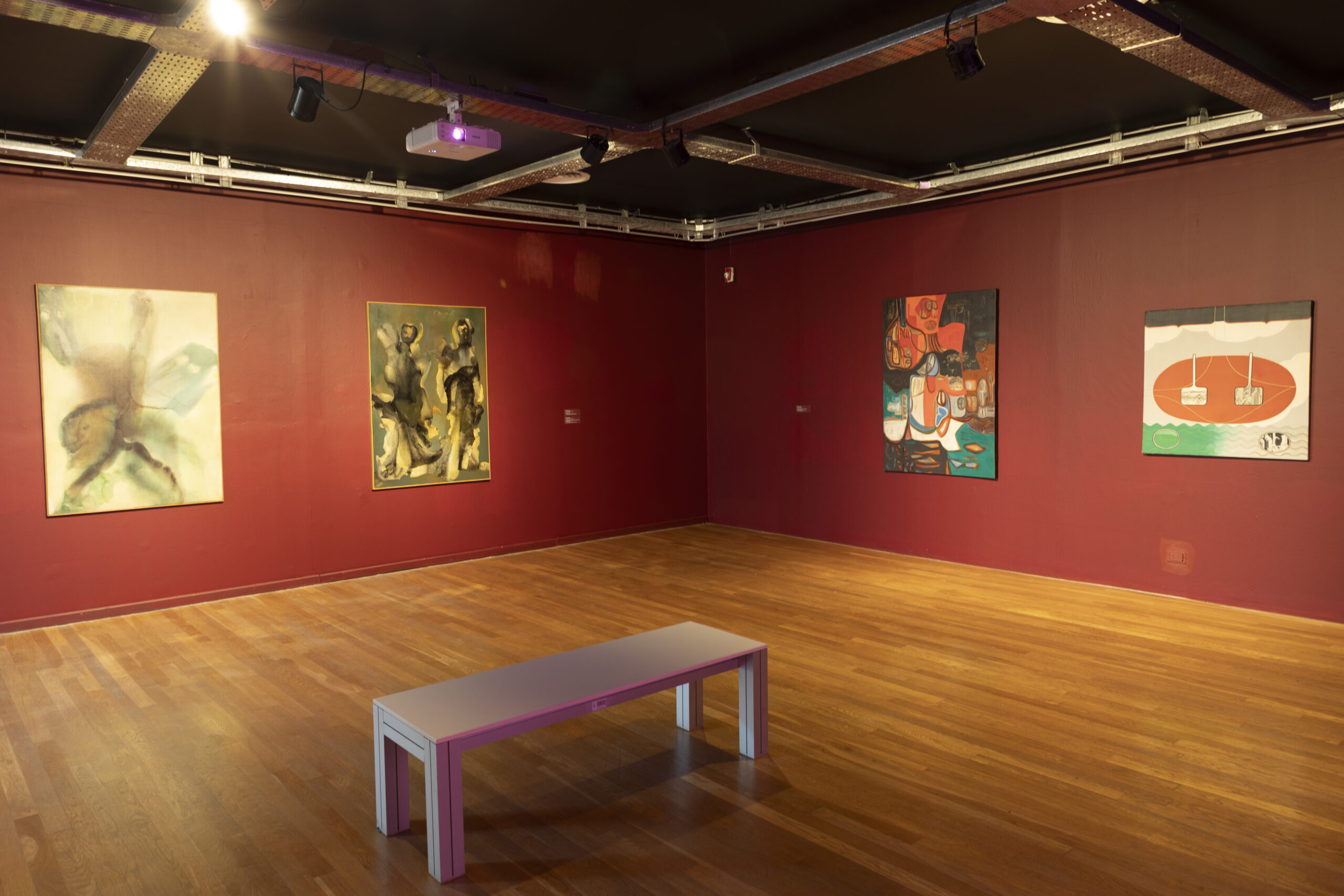

This exhibition is the result of a joint initiative by the Museo de Arte Moderno de Buenos Aires and the Parque de la Memoria – Monument to the Victims of State Terrorism. It forms part of the commemoration of the 50th Anniversary of Argentina’s last military coup.
This selection of works from the Museo Moderno’s exceptional collection now on display is not haphazard. It is a set of historic pieces that engage critically and sensitively with the emotional weight of the Parque de la Memoria’s past. La memoria de la colección. El Moderno en el Parque [The Collection Remembers: The Museo Moderno at Parque de la Memoria] offers a journey through the different poetic strategies developed by artists even in times of censorship and on through Argentina’s subsequent return to democracy. In works that question how Argentina has built its identity against a background of the deep social and political divisions caused by the dictatorship, the artists denounce the violence of those years and bring lucidity and sensitivity to the process of working through social trauma.
Half a century on from that institutional breakdown, this partnership reaffirms our institutions’ commitment to Memory, Truth and Justice. We invite you to explore this exhibition not only as an invaluable aesthetic experience but, crucially, as an act of citizenship. We hope these extraordinary works serve to further reinforce our society’s unbreakable commitment to the famous watchword ‘Nunca Más – ‘Never Again’.
Florencia Battiti, Director of the Parque de la Memoria – Monument to the Victims of State Terrorism & Victoria Noorthoorn, Director of the Museo de Arte Moderno de Buenos Aires
To commemorate the 50th anniversary of the coup that led to Argentina’s last military dictatorship (1976–1983), the Parque de la Memoria – Monument to the Victims of State Terrorism invited the Museo de Arte Moderno de Buenos Aires to present this major exhibition of historic works from its Collection that provides a visual record of how the artistic community responded to one of the most traumatic episodes in our nation’s history. La memoria de la colección. El Moderno en el Parque [The Collection Remembers: The Museo Moderno at Parque de la Memoria] was organised jointly by these two public institutions of the Directorate-General for Human Rights and the Ministry of Culture of the Buenos Aires City Government respectively.
The exhibition presents committed work by some of Argentina’s great artists, who, in their practices, exposed and condemned the violence of state terrorism. This regime imposed a systematic policy of censorship, kidnappings, torture and murder, which led to the enforced disappearance of 30,000 people and the exile of many others. Incapable of remaining silent in the face of such atrocities, these artists made use of fragmented representations of the human body, codified languages and the evocative power of abstraction and conceptual art practices. They were thus able to circumvent censorship in order to articulate, denounce and resist the consequences of what was happening around them.
Spanning the period from the mid-1960s to the early 1980s, the works on display here provide a critical reflection on the recent past, essential in creating the social meaning that embraces and protects so many personal and collective memories.
This exhibition strengthens dialogue and collaboration between our two public institutions that defend the importance of art for the understanding of history and the continuous construction of our collective memory. This commitment is a fundamental tool in the creation of spaces for the encounters, conversations and reflections needed to fortify democratic values and full respect for human rights, both in our present and in building our shared future.

The 1960s were marked by profound political, social and cultural upheavals. The aftermath of the Cold War, the impact of the Cuban Revolution, the processes of decolonisation in Africa and the emergence of counter-cultural youth movements were just some of the key changes in the latter half of that turbulent century. In Argentina, these upheavals unfolded against a backdrop of rapid modernisation and growing political unrest. The country’s fragile institutional order led to a succession of civilian governments kept in check by the armed forces and dictatorial regimes, among them the government of Juan Carlos Onganía (1966).
Against this complex background, artists undertook a critical re-examination of art’s social function and, through experimentation with materials, depicted this historical crisis by distorting the human figure. This gallery features works by the New Figuration group (1961–1965), whose members included Jorge de la Vega, Rómulo Macció, Ernesto Deira and Luis Felipe Noé. Noé’s commitment to a new image of the human being was manifested in stridently coloured, large-format paintings incorporating collages, ripped canvases and assembled objects as metaphors for the fragmentation of the social body. Meanwhile, such artists as León Ferrari and Alberto Heredia addressed the rise of political authoritarianism in aesthetics that drew on coded language or the muzzling of the body to put across the urgency of their message.
During the military dictatorship, against the backdrop of repression, censorship and enforced disappearances, the direct depiction of state violence in art became increasingly unsafe. In the face of this, many artists turned to such indirect strategies as graphic experimentation, conceptual practices and abstraction to convey the impact of state terrorism.
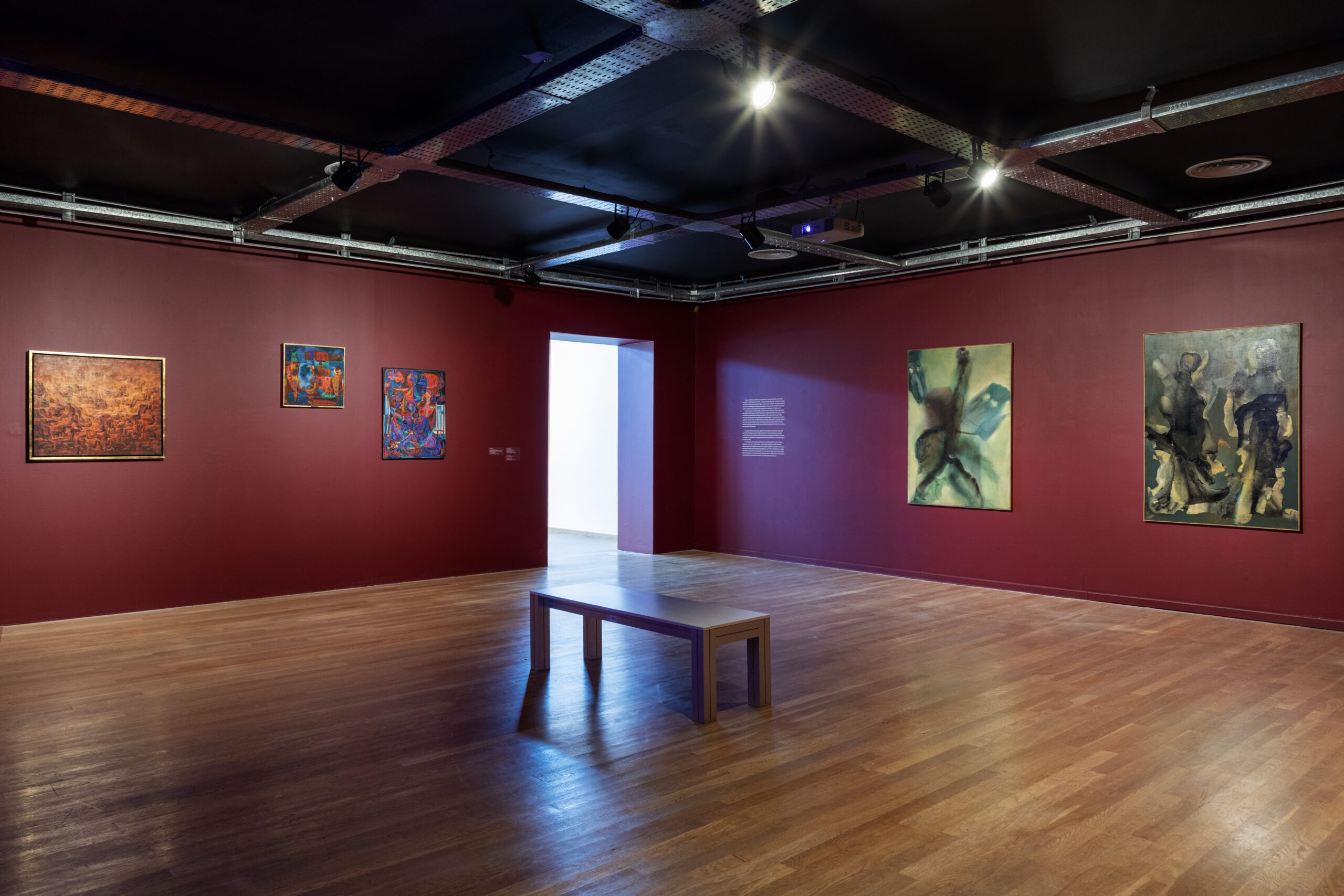
This fracturing of the visible world can be traced through the works of Paulina Berlatzky, Juana Butler, Elda Cerrato, Josefina Mazzaglia and Josefina Quesada, whose outputs are devoted to the creation of utopian imaginaries, spiritual explorations of pictorial matter and experimental approaches to scientific and political knowledge. Abstraction and surrealist aesthetics in their works do not imply a retreat from reality but an exploration of what eludes direct representation: invisible forces, altered states of consciousness and latent memories of a period steeped in violence.
This gallery presents a group of works exploring the relationships between work, youth and grassroots activism. Together, they deploy a range of artistic strategies designed to denounce violence and the abuse of power in the turbulent political climate of the 1970s.
The space is structured around the striking installation Some Trades by Víctor Grippo, which celebrates manual labour in various scenes depicting trades from a bygone era. In all of them, the task is under way, which appear to indicate the worker might return at any moment or has just left and abandoned the work mid-flow. This feature allows the 1976 piece to be read as representing activities to which workers were forced never to return: possible scenes of disappearance, that is.
In dialogue with Grippo’s installation, other pieces place the working individual and their political dimension centre stage, as with the paintings by Ricardo Carpani and Elena Diz. Alongside them, Sara Facio’s photographs reinforce the relationship between youth and political engagement by foregrounding the faces of young activists at Juan Domingo Perón’s funeral.
Under the censorship and violence imposed in the years of dictatorship, artists found different ways to push back against their enforced silence by exploring graphic resources and the use of the media. Leandro Katz worked with the figure of Monika Ertl, a journalist and communist activist whose career sparked fierce debate about the photojournalism’s role in legitimising political violence.
By treating language as a subject for artistic experimentation, renown artists like León Ferrari and Mirtha Dermisache, created their own visual languages to articulate what could not be freely expressed. Dermisache’s indecipherable calligraphy and Ferrari’s codes and alphabets stand as acts of resistance against the policing of meaning.
Marie Orensanz’s work Eros establishes a particular relationship with the Parque de la Memoria. Functioning as a manifesto, it comprises twelve phrases and opens with a statement in one sculpture: “Thinking is a revolutionary act…” Standing in a public space, the piece alludes to censorship and the circulation of skewed information during the last military dictatorship.
From 10 December 1983 on, the restoration of democracy in Argentina was marked by demands for individual freedom, the popular occupation of public spaces and the revival of political debate. Known as the ‘democratic spring’ or ‘cultural unblocking’, this period condensed a diverse range of symbolic practices that processed the trauma of repressive state violence, through both the celebration of pictorial forms and the enhancement of performative works centred on the use of the body.
Large-format works incorporated such techniques as collage – an allusion to the mass consumption of cultural magazines – the graphic experimentation of the young punk counterculture and the gestural freedom of painting. Caught between the euphoria and wariness surrounding the promises of democracy, several generations of artists frequented alternative social spaces like the Café Einstein, the La Zona studio, the Centro Parakultural or Cemento. There, they explored new strategies to reflect on the meaning of representation and the tensions produced by the presence or absence of the human body. At the same time, they developed their own take on the aftermath of the enforced disappearances, documented the consequences of the Malvinas War (1982) and took part in the actions of the Mothers of the Plaza de Mayo and the emerging Human Rights Movement in pursuit of Memory, Truth and Justice.
Artists: Paulina Berlatzky (La Plata, 1918), Oscar Bony (Buenos Aires, 1941), Marcelo Brodsky (Buenos Aires, 1954), Silvia Brewda (Buenos Aires, 1949), Juana Butler (Buenos Aires, 1928), Juan José Cambre (Buenos Aires, 1948), Ricardo Carpani (Tigre, 1930), Ricardo Carreira (Buenos Aires, 1948), Juan Carlos Castagnino (Mar del Plata, 1908), Elda Cerrato (Asti, Italia, 1930), Jorge Demirjian (Buenos Aires, 1932), Mirtha Dermisache (Buenos Aires, 1940), Juana Elena Diz (Buenos Aires, 1925), Diana Dowek (Buenos Aires, 1942), Ana Eckell (Buenos Aires, 1947), Sara Facio (San Isidro, 1932), León Ferrari (Buenos Aires, 1920), Norberto Gómez (Buenos Aires, 1941), Carlos Gorriarena (Buenos Aires, 1925), Víctor Grippo (Junín, 1936), Alberto Heredia (Buenos Aires, 1924), Enio Iommi (Rosario, 1926), Leandro Katz (Buenos Aires, 1938), Carlos Langone (Buenos Aires, 1945), Rómulo Macció (Buenos Aires, 1931), Josefina Mazzaglia (Vicente López, 1923), Marta Minujín (Buenos Aires, 1943), Osvaldo Monzo (Buenos Aires, 1950), Luis Felipe Noé (Buenos Aires, 1933), Marie Orensanz (Mar del Plata, 1936), Diulio Pierri (Buenos Aires, 1954), Josefina Quesada (Buenos Aires, 1930), Juan Carlos Romero (Avellaneda, 1931), Gabriel Salomón (Buenos Aires, 1943), Alejandro Santamarina (España, 1941), Juan Manuel Sánchez (Buenos Aires, 1930), Antonio Seguí (Villa Allende, 1934), Carlos Ernesto Uría (Buenos Aires, 1929), Edgardo Antonio Vigo (La Plata, 1928), Horacio Zabala (Buenos Aires, 1943).
Curated by: Nicolás Cuello, Curator of the Museo de Arte Moderno de Buenos Aires & Cecilia Nisembaum, Curator of the Parque de la Memoria – Monument to the Victims of State Terrorism
Location: Parque de la Memoria – Monument to the Victims of State Terrorism, Av. Costanera Rafael Obligado 6745, CABA