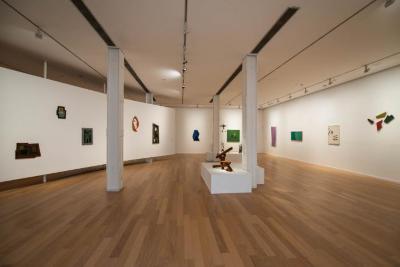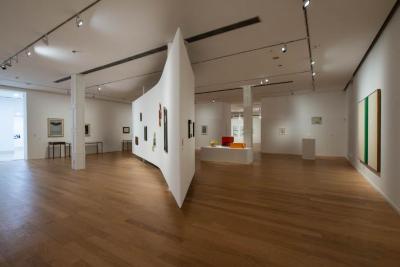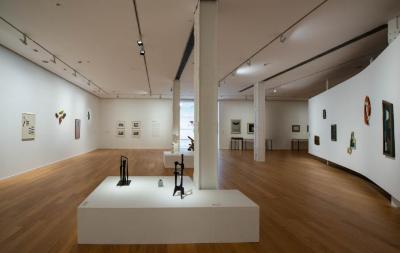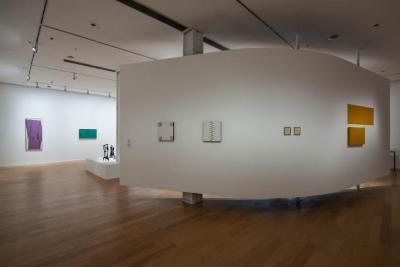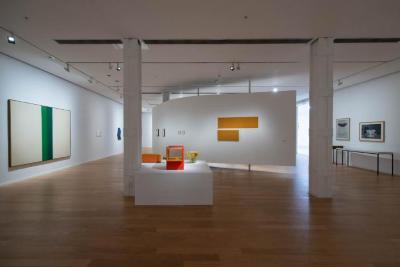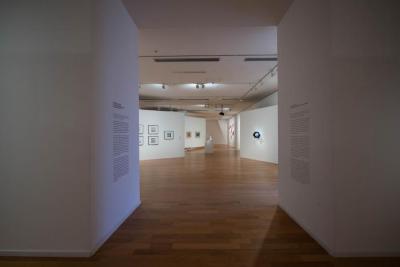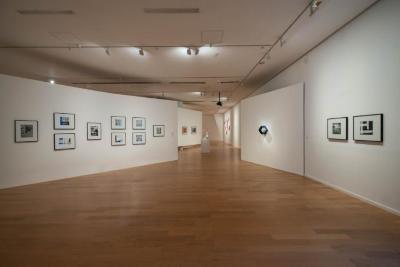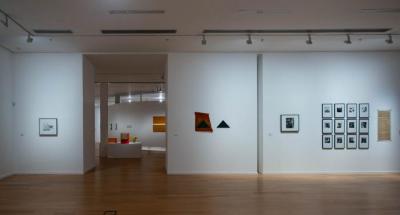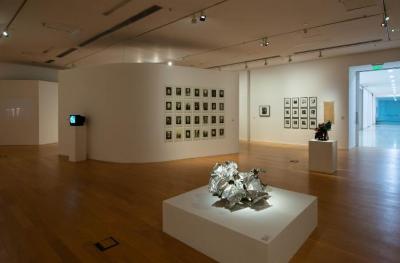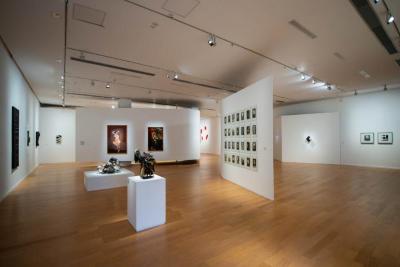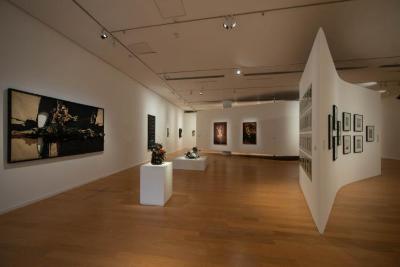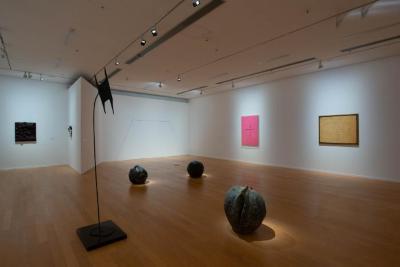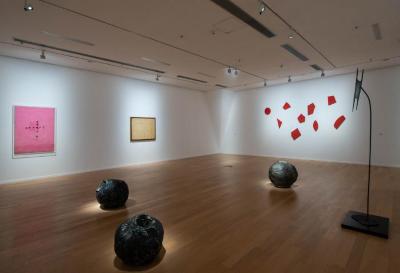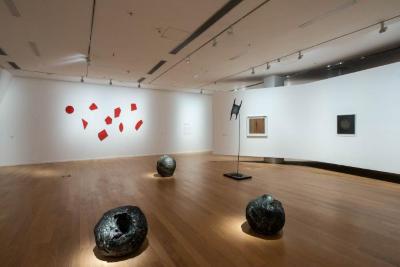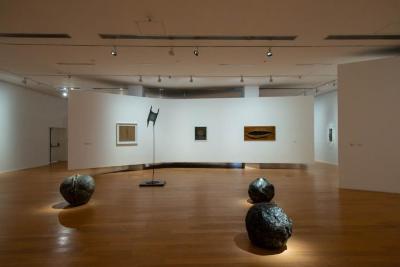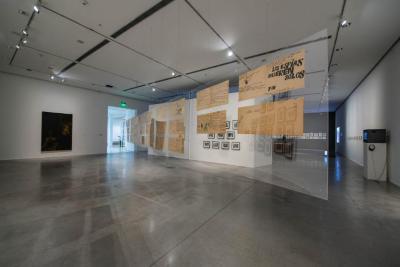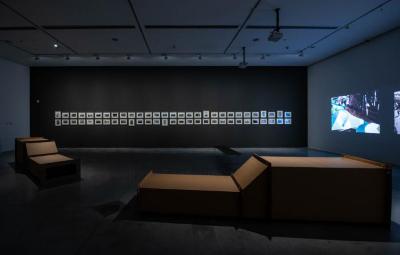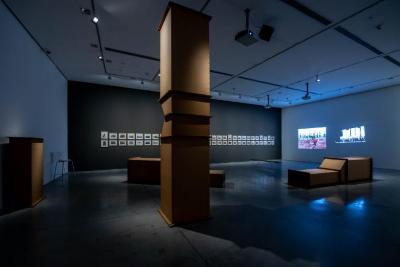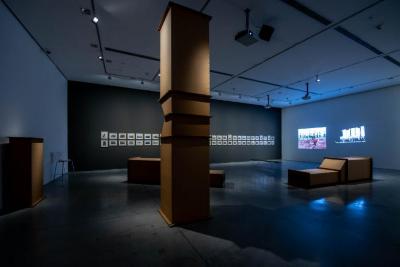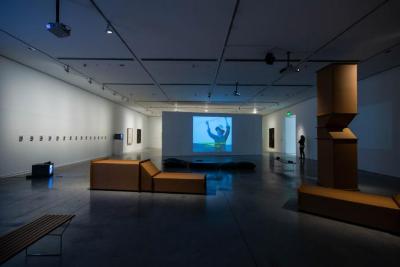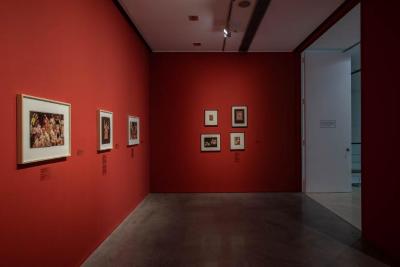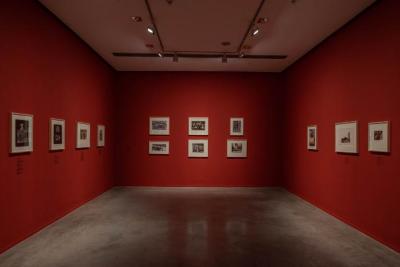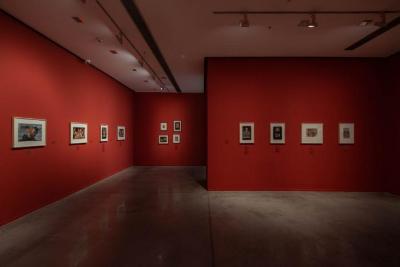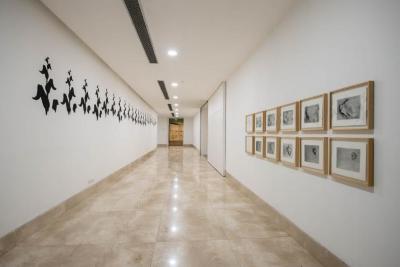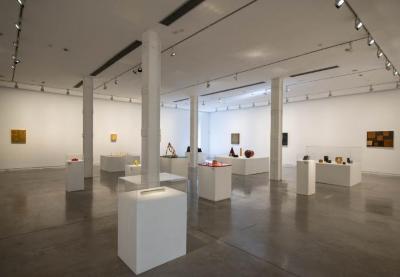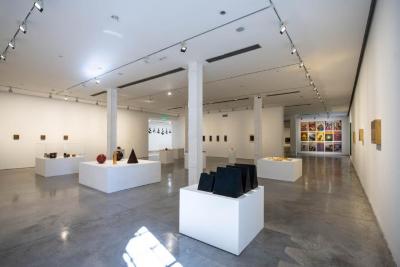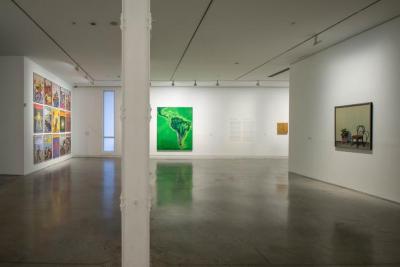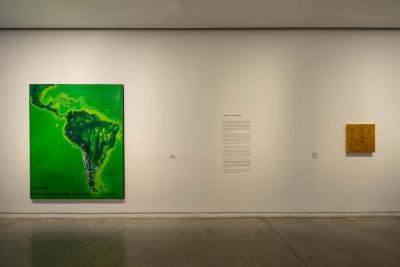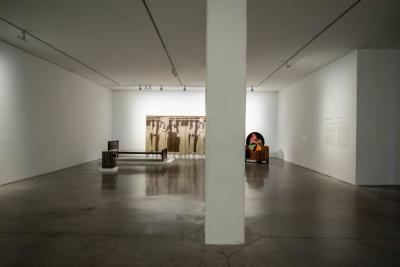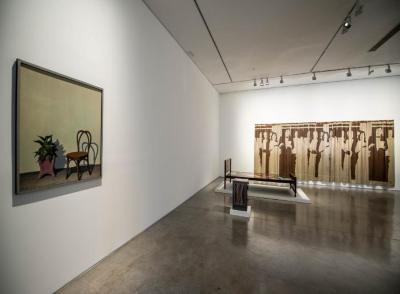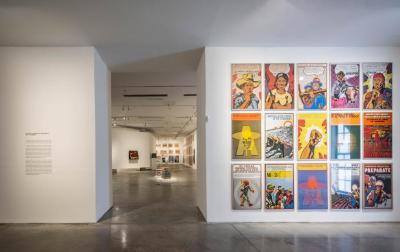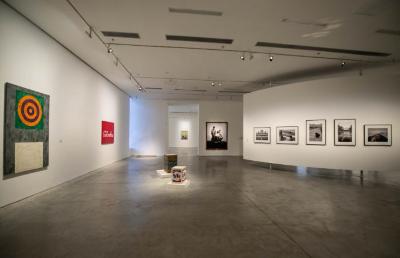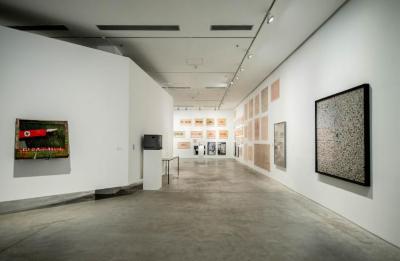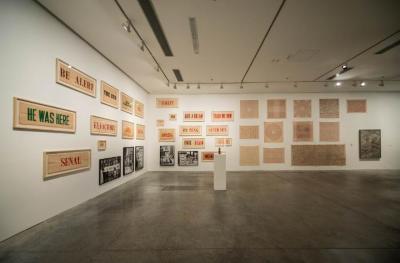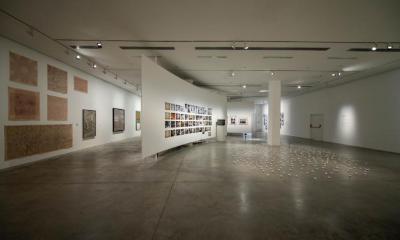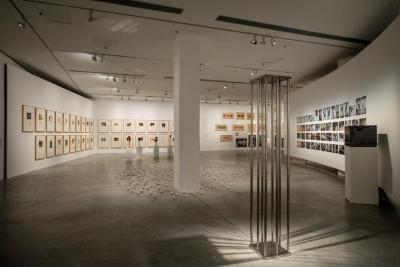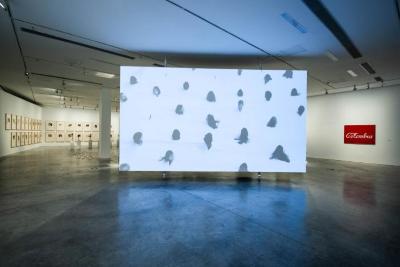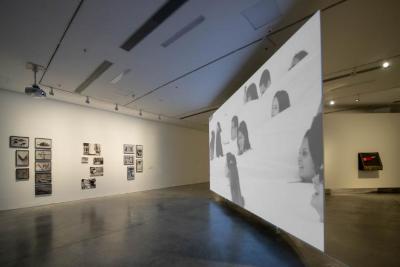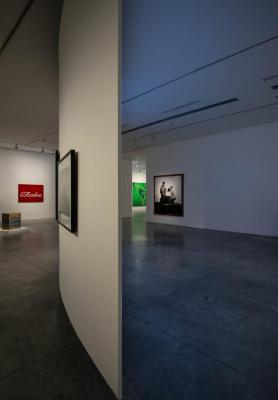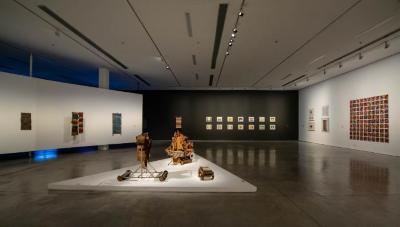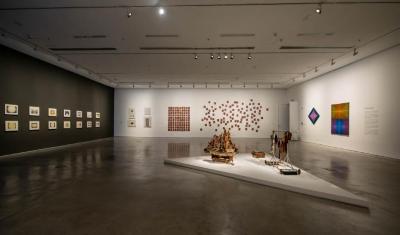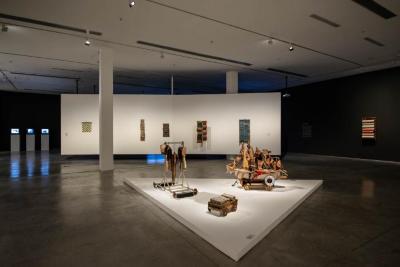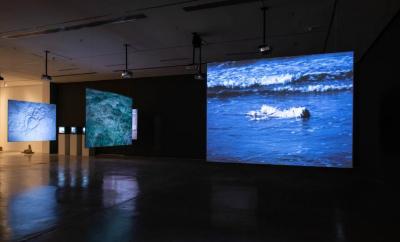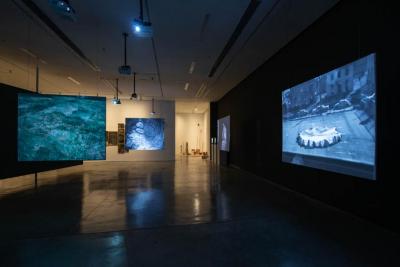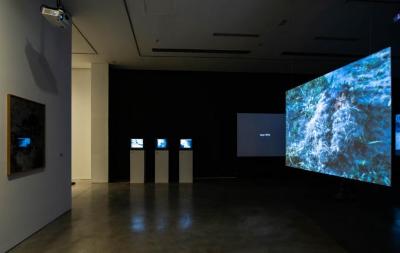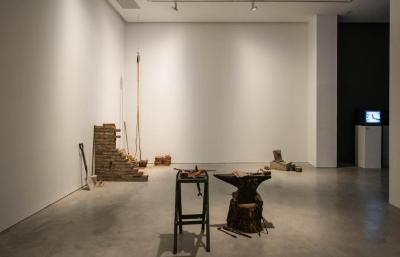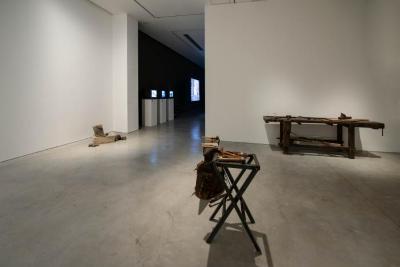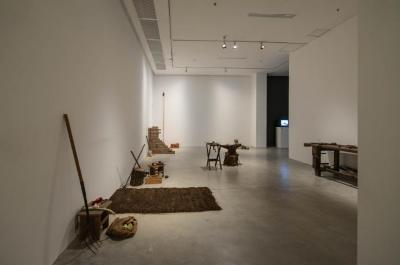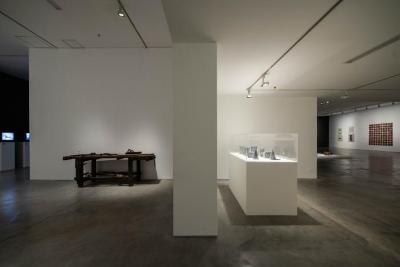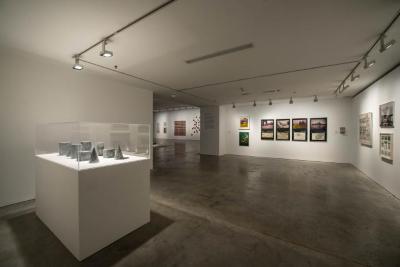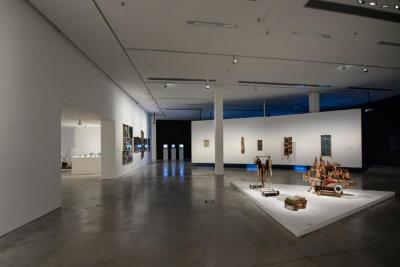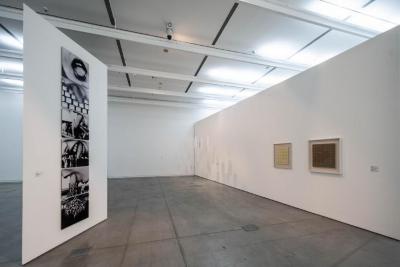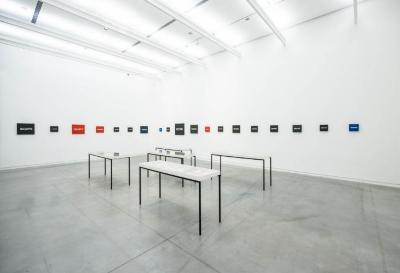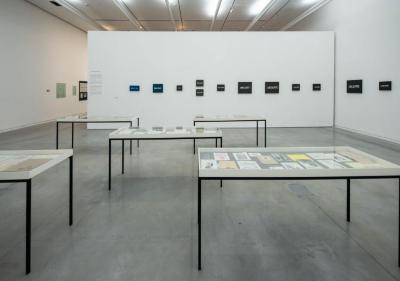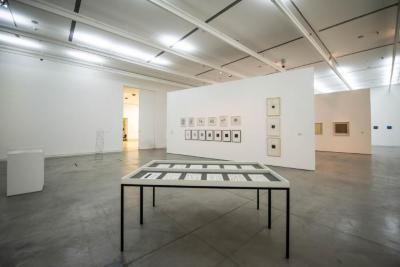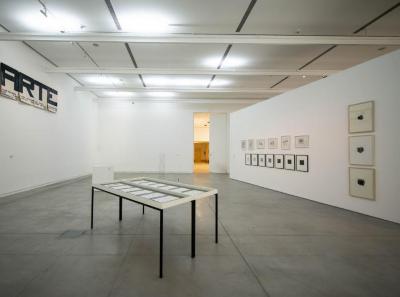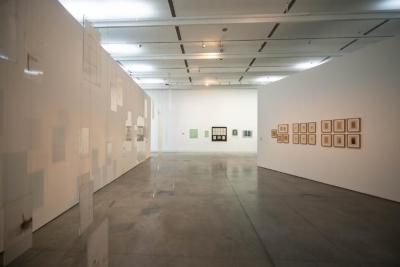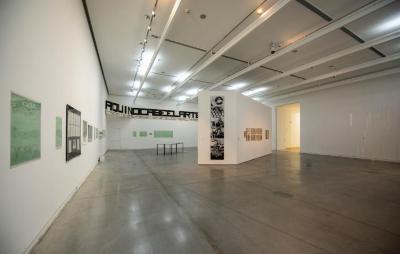


A Tale of Two Worlds features more than 500 artworks by 100 artists across 16 differently themed sections taking up all four floors of the Moderno.
In A Tale of Two Worlds, there is no hierarchy of artistic movements, there are no ‘contributions’ or ‘additions’, there are just two powerful artistic currents: European and North American art and Latin American art. Over time, they have flowed in parallel, come together and been at cross-purposes. They have forged autonomous identities and approaches to their different contexts and they have also grown inter-dependent, producing dialogues, collaborations, controversy and mutual rejection. In this new vision of history, Latin American art does not complete or complement the canon, neither is it merely there to provide a contrast, it is an equal brother in a relationship – both fraternal and competitive – of global, diverse, combative, and democratic art.
This exhibition sets out to establish a dialogue between canonical works of European and North American art from 1942 to 1986 from the collection of the Museum für Moderne Kunst (MMK) and the history of experimental Latin American art from 1944 – the year when Concrete art movements first emerged in Argentina – to the end of the military dictatorships in the late 1980s. It was organized and curated by both the Museo de Arte Moderno and the MMK as part of the ‘Global Museum’ programme run by the Kulturstiftung des Bundes Foundation. A Tale of Two Worlds first opened in Frankfurt in November 2017 with a significant contribution from the Museo collection, breaking new ground for Latin American art: this is the first time that a European museum has allowed its collection to be examined by Latin American curators.
The exhibition begins by exploring the major upheavals of the 1940s, which shook the foundations of Latin American art, unleashing a powerful wave of experimentation in numerous cities across the continent. Then it moves on to examine how artists regarded their role in society and the transformative potential of art in contexts that were often ravaged by political violence. A Tale of Two Worlds thus seeks to encourage discussion of how different artists react to their socio-political environments.
Curated by Klaus Görner, Victoria Noorthoorn and Javier Villa
This exhibition at the Moderno will feature artworks by the following artists: Adolfo Bernal, Albert Georg Riethausen, Alberto Greco, Alberto Heredia, Aldo Sessa, Alejandro Puente, Alfredo Hlito, Alighiero Boetti, Ana Mendieta, Andy Warhol, Anna Maria Maiolino, Antonio Caro, Antonio Vigo, Arman, Arte Destructivo, Artur Bispo de Rosário, Artur Barrio, Augusto de Campos, Barry Le va, Beatriz González, Ben Vautier, Blinky Palermo, Bruce Nauman, Carmelo Arden Quin, Charlotte Posenenske, Cildo Meireles, Claes Oldenburg, Cy Twombly, David Lamelas, Eduardo Gil, Edward Ruscha, Escuela de Valparaíso, Flavio de Carvalho, Francis Bacon, Franz Erhard Walther, Franz Mon, Fred Sandback, Gego, Geraldo de Barros, Gerhard Richter, Gerry Schum, Grete Stern, Gyula Kosice, Heinz Kreutz, Hélio Oiticica, Hermann Goepffert, Jasper Johns, Jesús Ruiz Durand, John Chamberlain, Joseph Beuys, Juan del Prete, Juan Downey, Juan Melé, Juan Andrés Bello, Karl Otto Götz, Kenneth Kemble, Kenneth Noland, Lenora de Barros, León Ferrari, Leopoldo Maler, Lidy Prati, Liliana Maresca, Liliana Porter, Lothar Baumgarten, Lotty Rosenfeld, Lucio Fontana, Luis Camnitzer, Luis Felipe Noé, Luis Pazos, Lygia Clark, Lygia Pape, Manuel Millares, Marcel Broodthaers, Marcel Duchamp, Marcel Gautherot, Margarita Paksa, Marta Minujín, Martin Blaszko, Mathias Goeritz, Mira Schendel, Nicolás García Uriburu, On Kawara, Oscar Bony, Otto Greis, Pablo Suárez, Paul Almásy, Peter Roehr, Piero Manzoni, Raul Lozza, Rhod Rothfuss, Ricardo Carreira, Roy Lichtenstein, Rubén Santantonín, Teresa Burga, Thomas Bayrle, Thomas Farkas, Tomás Maldonado, Ulises Carrión, Víctor Grippo, Walter De Maria, Willys De Castro, Yente and Yves Klein
Galleries A and B
DISTANT WORLDS
LATIN AMERICAN UTOPIAS IN POST-WAR EUROPE
From 1944 onwards, Concrete artists in Buenos Aires and Montevideo sought to move beyond European abstract art by ‘inventing’ a new kind of object that interacted more fluidly with the real world rather than just representing it. Paintings with cut-out frames – precursors to shaped canvases – introduced a new relationship with the space around the artwork while articulated sculptures added the dimensions of time and movement.
By the mid-1940s, Latin America was a territory of experimentation for the concrete artists of Buenos Aires, Montevideo, Sao Paulo, Rio de Janeiro and Caracas The utopian ideas of the concrete movement in Latin America, which were echoed by different trends in architecture and the Valparaíso School in Chile, all of which are featured in this exhibition – began to spread through local intellectual circles during the Second World War when Latin American artists found their traditional path to Europe blocked and spread to Europe in the post-war period.
In 1954, Ivan Serpa founded the Grupo Frente along with Lygia Clark, Hélio Oiticica, Lygia Pape and other artists who sought to bring about the gradual disintegration of painting in space so as to free up the line and colour and create a new visual order. In 1959, the group was re-founded as a neo-Concrete movement that sought to develop an art that transcended the space of the painting and incorporated the body and subjectivity.
Presenting a counterpoint to the Argentinian and Brazilian movements, these galleries feature works by the American and German artists Morris Louis and Blinky Palermo, who sought the liberation of colour and experimentation with the surface of the painting.
Artists featured: Paul Almásy, Carmelo Arden Quin, Jo Baer, Juan Andrés Bello y Carlos Raúl Villanueva, Martín Blaszko, Lúcio Costa, Geraldo de Barros, Augusto de Campos, Willys de Castro, Juan del Prete, Thomaz Farkas, Marcel Gautherot, Alfredo Hlito, Gyula Kosice, Morris Louis, Raúl Lozza, Tomás Maldonado, Juan Melé, Oscar Niemeyer, Hélio Oiticica, Blinky Palermo, Lygia Pape, Lidy Prati, Albert Georg Riethausen, Rhod Rothfuss, Grete Stern, Amancio Williams, Yente (Eugenia Crenovich)
STRATEGIES OF DESTRUCTION IN EUROPE AND LATIN AMERICA
In the 1960s, the destruction of art, both as representation and the actual act, was explored by artists from across the world. It was a way of addressing the extreme violence of the decade – as exemplified by the threat of the atomic bomb, the war in Vietnam and Latin American dictatorships, among others – but also a means of emphasizing the value of art as a liberating, creative force. The Italo-Argentinian artist Lucio Fontana anticipated these approaches in 1949 with work that explored the dichotomy between the violent gesture that breaks with traditional forms of modernist representation and that which creates a new artistic dimension.
Artists featured: Francis Bacon, John Chamberlain, Exposición Arte Destructivo (Enrique Barilari, Kenneth Kemble, Jorge López Anaya, Jorge Roiger, Antonio Seguí, Silvia Torras y Luis Wells), Alberto Heredia, On Kawara, Kenneth Kemble, Manolo Millares, Marta Minujín, Luis Felipe Noé, Aldo Paparella, Emilio Renart, Rubén Santantonín
A BRIDGE BETWEEN TWO WORLDS
LUCIO FONTANA BEGINS THE DEBATE BETWEEN LATIN AMERICA AND EUROPE
The revolutionary ideas put forward by the Concrete Movement in the 40s in Argentina led to heated debate. The Argentine-born artist Lucio Fontana spent the first years of his career in Europe before returning to Argentina in 1940. Between 1940 and 1947 he came into contact with the rioplatense Concrete artists.
Within a month of his return to Europe in 1947, Fontana published his Primo manifesto dello spazialismo (First Manifesto of Spatialism) while his legendary buchi [holes] and tagli [slashes] moved beyond traditional brushstrokes to explore fundamental concepts such as the role of the artist as a visible and conceptual part of his work, the dichotomy between destruction and the opening of new dimensions and the tension between the space of representation and real space.
Artists featured: Lucio Fontana, Kenneth Kemble, David Lamelas, Fred Sandback
Galleries C, D, E, F and Communal areas
THE SOCIAL BODY
PUSHING THE BOUNDARIES DURING TURBULENT TIMES
This gallery features artworks created in response to the violence, repression and social disintegration caused by military dictatorships in Latin America. These artworks take powerful political positions be it through physical artistic action in public spaces, or poetic content denouncing violent atrocities committed by the state.
The artists in this gallery saw art as a way not just of keeping people informed and increasing awareness in repressive societies but also as a tool of cultural and creative resistance and social transformation.
Artists featured: Arthur Barrio, Oscar Bony, Luis Camnitzer, Walter De Maria, Eduardo Gil, Alberto Heredia, Anna Maria Maiolino, Lygia Pape, Luis Pazos, Lotty Rosenfeld, Aldo Sessa
URBAN CARTOGRAPHIES
In their pieces from the MMK collection, Thomas Bayrle (Germany) and Ed Ruscha (USA), along with their Latin American colleagues León Ferrari, Adolfo Bernal and Cildo Meireles, work with new configurations of human populations and habitats that formed in the 20th century in big cities in Germany, the USA, Brazil and Colombia.
Artists featured: Thomas Bayrle, Adolfo Bernal, León Ferrari, Cildo Meireles, Peter Roehr, Edward Ruscha
THE VIOLENCE OF WESTERN CULTURE
In the mid-sixties, during a generalized radicalization and politicization of artistic practice in Buenos Aires, the artworks of the Argentine artist León Ferrari began to address what he saw as the underlying violence of Western culture. This series, which Ferrari began in 1983 during his exile in Sao Paulo, presented caustic criticisms that exposed the ties between political power and religious institutions in South America.
Artist featured: León Ferrari
WHEN POP TURNED CRITICAL
In the sixties, European and North American pop artists expanded the universe of modern art to include direct references to images originally meant for mass consumption. This represented a watershed moment in avant garde movements: the barrier between high and popular culture was broken down.
In this gallery, iconic works by the American artists Andy Warhol and Jasper Johns from the MMK collection are placed in dialogue with works by the German artist Thomas Bayrle and Latin American artists who used Pop strategies to protest the political and social contexts in which they found themselves.
Artists featured: Thomas Bayrle, Antonio Caro, Ricardo Carreira, Nicolás García Uriburu, Jasper Johns, Jesús Ruiz Durand, Andy Warhol
DOMESTIC SPACE AS A MIRROR TO SOCIETY
The construction of taste, desire and new identities imposed by images in the mass media transformed the private world of the home into a public battlefield where different subjectivities are moulded. Artworks by Beatriz González, combine the traditional tastes of a new social sector; the urban, conservative middle class, with major socio-political issues, are placed in dialogue with the work of Pablo Suárez Patio (1978), from the Moderno collection; the series depicts images that appear to have been frozen in time and objects condemned to solitude.
Artists featured: Beatriz González, Pablo Suárez.
ALCHEMY AND COLONIZATION
In a world rocked by the violence of totalitarian regimes, Mira Schendel, Mathias Goeritz and Liliana Maresca, from Brazil, Mexico and Argentina respectively, sought to create spaces for spirituality. Their works use gold as a symbol for transcendence, commerce and alchemy where the transformation of elements is seen as a metaphor for personal or social transformation. They also included references to religion: Catholicism in the case of Goeritz and Taoism in that of Schendel.
These artworks are placed in dialogue with pieces by the German artist Joseph Beuys and the American artist Walter de Maria, which refer to the energy concentrated in nature.
Artists featured: Joseph Beuys, Walter De Maria, Mathias Goeritz, Victor Grippo, Liliana Maresca, Mira Schendel.
PUNCTURING THE SURFACE
FROM THE MONOCHROME TO THE REAL
With their monochrome paintings, the Argentinian artist Alberto Greco, the French artist Yves Klein and the Italian artist Piero Manzoni took their ideas about painting to an extreme before moving on to experiment with ‘living art’. In the mid-fifties, Klein began to exhibit monochromes that immersed the viewer in the experience of ‘living in colour’. This immersion in colour was accompanied by his attempts to make immaterial artworks that would generate a sensory experience within a void, as seen in the legendary photomontage Un homme dans l’espace! Le peintre de l’espace se jette dans le vide! [A Man in Space! The Painter of Space Jumps into the Void!] (1960) exhibited here. In both similar and distinctive ways, the Argentinian artist Alberto Greco shifted from experimentation with different materials in his black monochromes to signalling people and spaces in artworks.
Artists featured: Flávio de Carvalho, Alberto Greco, Yves Klein, Piero Manzoni
THE BODY IN ACTION
PARTICIPATION AND THE EXPLORATION OF SUBJECTIVITY
In the 1960s, experiments with sensuality and sexuality, as well as new concepts inspired by technological advances and consumerism led to a dizzying transformation in the output of artists from across the world. The traditional artistic object was being deconstructed by artists such as Lygia Clark in Brazil and Franz Erhard Walther in Germany, both of whom sought to explore corporality and subjectivity. They saw art as a place where the body and what the poet, art critic and founder of the Neo-Concrete movement Ferreira Gullar called a ‘non-object’ came together.
Artists featured: Oscar Bony y Pablo Suárez, Manuel Casanueva y Escuela de Valparaíso, Lygia Clark, Leopoldo Maler, Liliana Porter, Charlotte Posenenske, Timm Rautert
Gallery H
COSMOLOGICAL EMBROIDERY AND MENTAL ARCHITECTURES
Bispo do Rosário began his embroidery by unravelling hospital uniforms and making religious cloaks with the threads. He saw the new order as a pathway to the vibrant world of his imagination as he embroidered the names of everyone he knew, each material he used and every place he visited. Bispo’s work affirms his belief in the power of art, the imagination and play as crucial tools for the acquisition of knowledge. Artworks by the Italian artist Alighiero Boetti, juxtaposed here with those by Bispo do Rosario, also use embroidery and focus on order as the key to an artistic programme.
The markedly different artistic practices of the Chilean artist Juan Downey and the Argentinian artist Alejandro Puente explore indigenous traditions.
Artists featured:: Arthur Bispo do Rosario, Alighiero Boetti, Juan Downey, Alejandro Puente.
SHAMANS OF MATERIAL
GRIPPO, BEUYS AND GARCÍA URIBURU
The artists in these galleries address universal preoccupations such as work and ecology. The installation by Víctor Grippo Algunos oficios [Some Trades] (1976), from the Moderno collection and Joseph Beuys’ installation, Blitzschlag mit Lichtschein auf Hirsch [Flash of Lightning with Deer] (1958-1985), which is on permanent exhibition at the MMK and is represented here in a series of photographs by Hidegard Weber; ‘Hommage à Beuys – Lehmwerkstatt Berlin 1982’ – share ideas about the energy that is produced during the encounter between art and material.
The Argentinian artist Nicolás García Uriburu, meanwhile, shared Beuys’ interest in the environment.
Artists featured: Joseph Beuys, Nicolás García Uriburu, Victor Grippo, Ana Mendieta, Marta Minujín, Bruce Nauman, Richard Serra
Gallery I
POLITICAL AND POETIC ALPHABETS
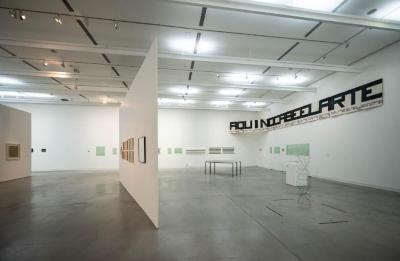
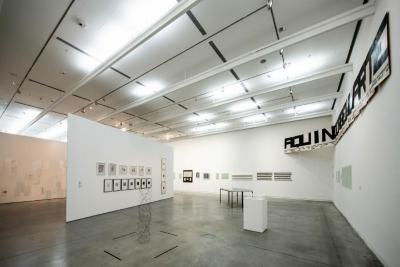
Writing has always been a crucial artistic tool in the political sphere. In the sixties, several conceptual Latin American artists also began to explore the deconstruction of language to undermine fixed meanings and major cultural narratives, mixing writing with visual narratives to explore new poetic and political territories. In contrast, other artists in the gallery make use of more abstract visuals to undermine linguistic notions about linearity and meaning and to explore new forms of reason, perception and response to concrete realities.
Artists featured: Teresa Burga, Antonio Caro, Ulises Carrión, Lenora de Barros, León Ferrari, Gego (Gertrud Goldschmidt), Franz Mon, Margarita Paksa, Peter Roehr, Mira Schendel
THE EXPERIENCE OF TIME
Growing awareness that art is able to contain and express the passing of time provides the basis for the silent, programmatic artworks by the Japanese artist On Kawara, part of the MMK collection, and the Argentinian visual poet, conceptual artist and mail art exponent Edgardo Antonio Vigo. They both saw subjectivity as a construction within time and in marking its passing their artworks become a record and affirmation of both life and its ephemeral nature.
Artists featured: On Kawara, Edgardo Antonio Vigo
EXAMINING THE BRUSHSTROKE
WHEN EXPRESSIONISM TURNS CONCEPTUAL
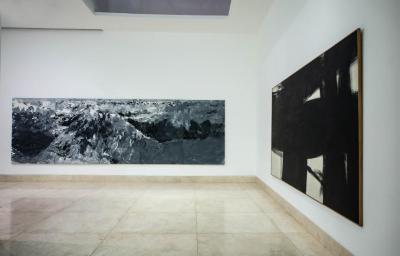
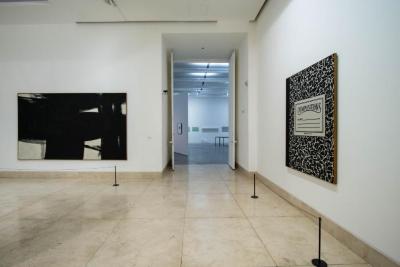
Kenneth Kemble’s Gran pintura negra [Big Black Painting] (1960), part of the Moderno collection, and Alpen [Alps] by Gerard Richter (1968) from the MMK collection, are exhibited next to one another to compare the artists’ complex and markedly different explorations of the essential symbol of the painterly tradition, the brushstroke. Roy Lichtenstein (USA) removes the artistic gesture entirely by appropriating the visual language of comics and mass-produced objects. Experimenting along similar lines, Roy Lichtenstein (USA) removes the artistic gesture entirely by appropriating the visual language of comics and mass-produced objects.
These three artworks might be considered an homage to the brushstroke but also a caustic examination and deconstruction of the tradition it represents.
Artists featured: Kenneth Kemble, Roy Lichtenstein, Gerard Richter
BANCO CIUDAD FOUNDATION IS THE OFFICIAL SPONSOR OF THE HISTORY OF TWO WORLDS EXHIBITION.
This exhibition is suppported by

Portrait – Hortensia Völckers
We spoke to Hortensia Völckers, artistic director of the Kulturstiftung des Bundes, Germany (2002–2022), on whose initiative the exhibition “A Tale of Two Worlds: Experimental Latin American Art in Dialogue with the MMK Collection” was organised. This project marked the reopening of the expanded Museo Moderno in 2018.