Cantamos porque llueve sobre el surco y somos militantes de la vida. Y porque no podemos ni queremos dejar que la canción se haga ceniza. Cantamos porque el grito no es bastante y no es bastante el llanto ni la bronca. Cantamos porque creemos en la gente y porque venceremos la derrota.
We sing because it rains in the furrows and we’re militants for life. And because we cannot and will not let the song turn to ashes. We sing because shouting isn’t enough and neither are tears nor anger. We sing because we believe in the people and because we will overcome defeat.
‘Por qué cantamos’ [‘Why We Sing’], song by Mario Benedetti and Alberto Favero, from the album Los patitos feos [The Ugly Ducklings] (1984)
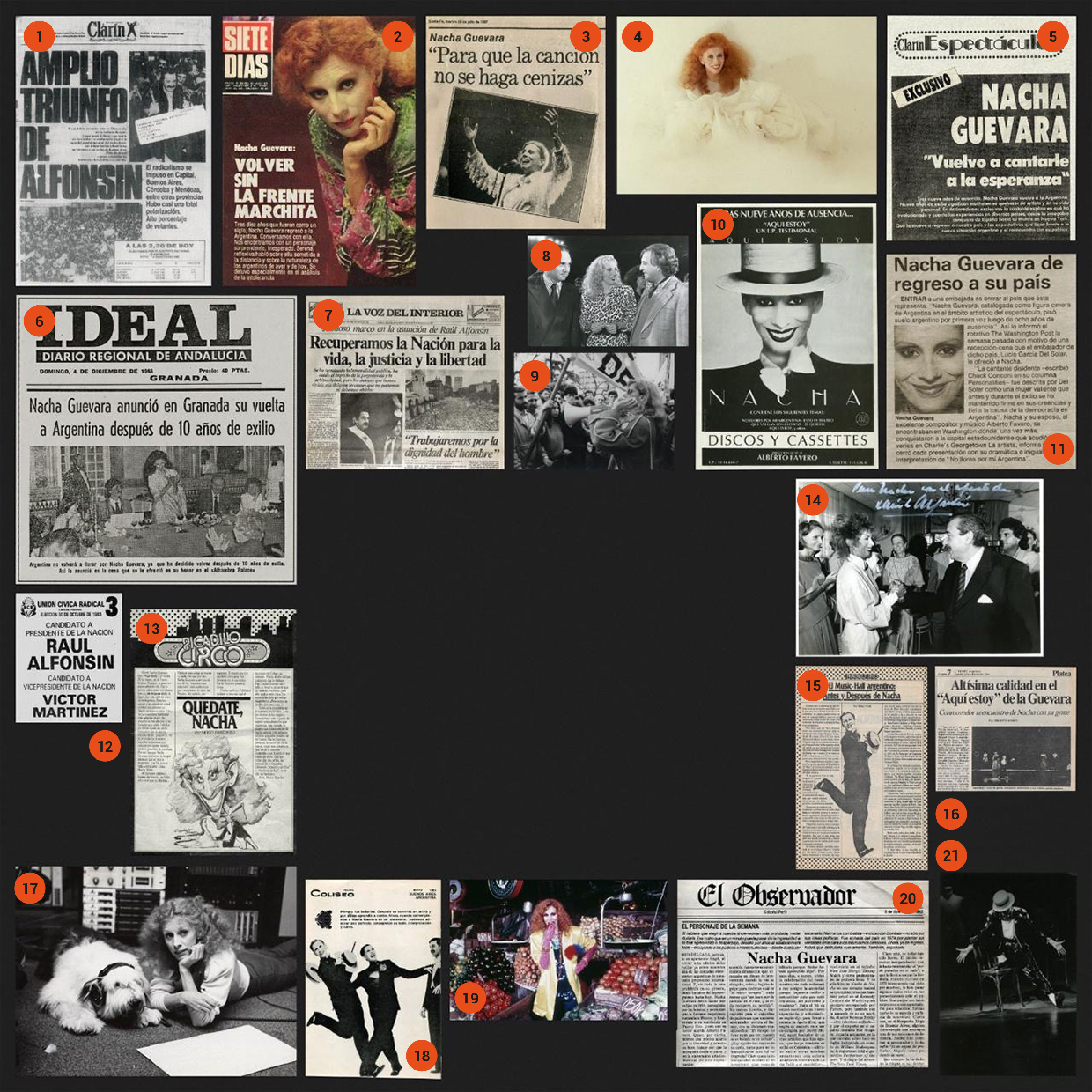
After years of repression, censorship and forced disappearances, Argentina returned to democracy in December 1983. The country emerged from the dictatorship with the election of Raúl Alfonsín, who took office on 10 December.
Nacha Guevara returned to the country after nine years in exile to witness, filled with emotion, the return to democracy. Her own return was a symbol of the reunion between art and freedom.
In this new climate, her songs ‘Por qué cantamos’ [‘Why We Sing’], ‘Te quiero’ [‘I Love You’], ‘Vuelvo’ [‘I’m Coming Back’] and ‘Mi ciudad’ [‘My City’] quickly became part of the soundtrack of the so-called ‘Alfonista Spring’, forming part of the marches, rallies and meetings where words once again had value.
The song ‘Los patitos feos’ [‘The Ugly Ducklings’] (1984), dedicated to artist Federico Manuel Peralta Ramos, describes members of the generation who, after suffering exile, censorship and death, became prophets in their own land.
In 1984, Nacha sold out more than 160 performances of her show Aquí estoy [I’m Still Here], first at the Coliseo theatre and later at the Lola Membrives, ultimately performing for more than 100,000 spectators. The public’s response was overwhelming: the country wanted to see Nacha Guevara, to hear her and thank her. It was not simply about applauding an artist, but a celebration of the return of a voice that had been silenced and had returned to the stage at a time of democratic euphoria.
‘I need to reconnect with my country. I believe there is a time for everything. I believe now is time for me to return. I simply love my country. I love to be here, more than ever. I don’t know, I love it more, they love me more’.