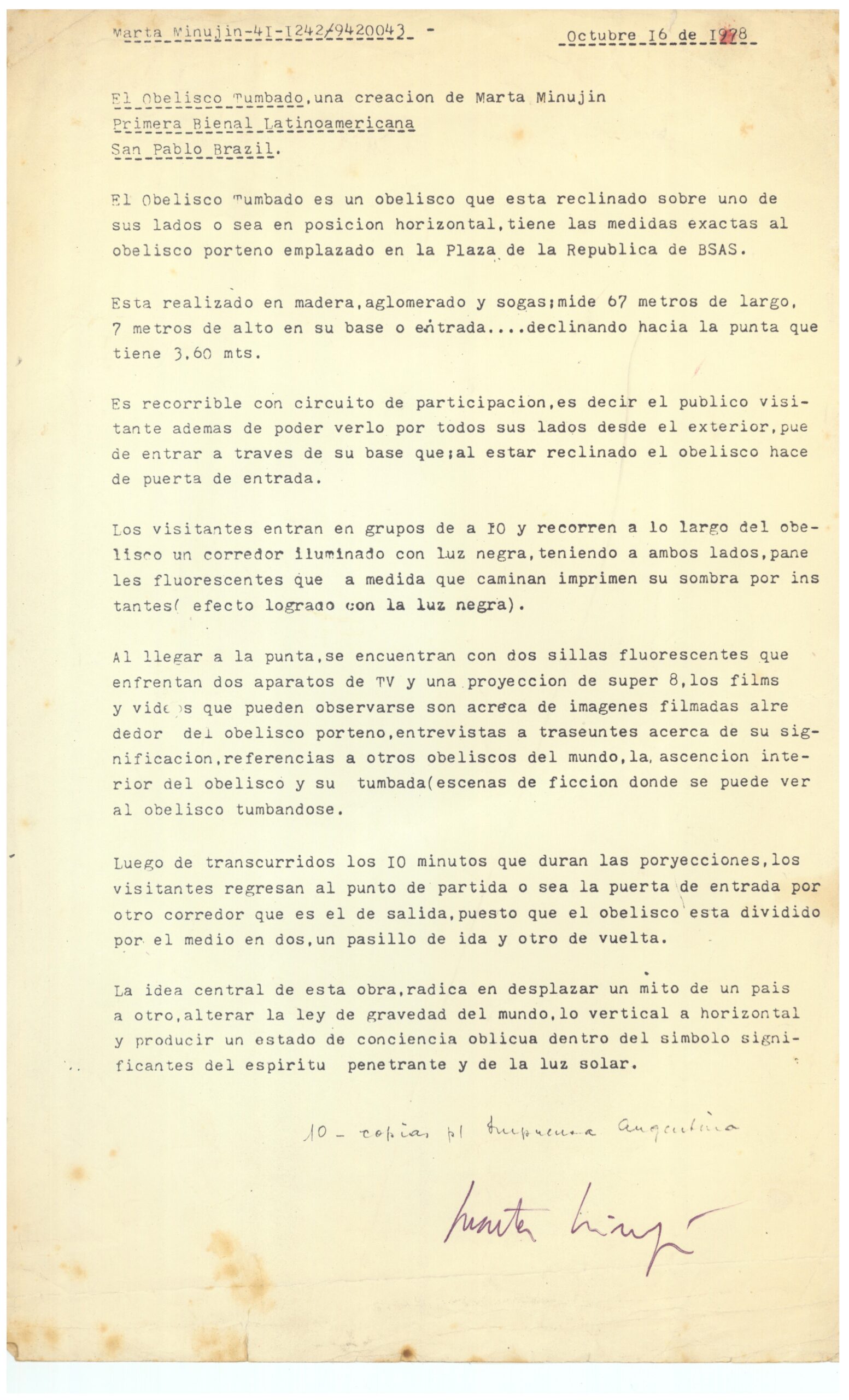
16 October 1978
Obelisco tumbado [Fallen Obelisk], a creation of Marta Minujín
First Latin American Biennial
São Paulo, Brazil
Obelisco tumbado [Fallen Obelisk] is an obelisk lying on its side, in a horizontal position. It is of the exact same dimensions as the Obelisk in the Plaza de la República of Buenos Aires.
It has been produced using wood, chipboard and rope; it measures 67 metres long, 7 metres high at its base, or entrance… and reduces at an angle towards the point, where it measures 3.60 metres.
It is accessible via a visitors circuit; that is, the public can view it from all angles on the outside, but can also enter the structure through its base, which, as the obelisk is reclining, serves as an entrance.
Visitors enter in groups of up to 10 and walk the length of the obelisk along a passage lit by black light. There are fluorescent panels on either side so, as they walk, their shadows are cast onto the panels for a moment (an effect that is achieved with the black light).
When they reach the point, there are two fluorescent chairs facing two television sets and a Super 8 projector with films and videos showing footage shot around the Obelisk in Buenos Aires, along with interviews with passers-by about its significance, references to other obelisks around the world, an interior ascent of the Obelisk and scenes of its toppling (fictitious scenes in which the Obelisk can be seen falling over).
Once the 10-minute screening of the films are over, visitors return to the starting point – that is the entrance door – via another passageway, which serves as the exit, as the obelisk is divided in two, with one passage for entry and another for exit.
The central theme of the work lies in transplanting a myth from one country to another, altering the laws of gravity – turning a vertical into a horizontal – and raising a state of oblique awareness using a meaningful symbol of the penetrating spirit and sunlight.
Marta Minujín
16 ottobre 1978
Obelisco acostado [L’obelisco abbattuto]. Opera di Marta Minujín.
Prima Biennale Latinoamericana
San Paolo, Brasile
L’ Obelisco acostado [L’obelisco abbattuto] è un obelisco adagiato su un fianco, in posizione orizzontale. Ha le stesse dimensioni dell’obelisco di Buenos Aires, situato in Plaza de la República.
È realizzato in legno, truciolato e corda, con una lunghezza di 67 metri, un’altezza alla base o ingresso di 7 metri… e un’inclinazione verso la punta che raggiunge i 3,60 metri.
È possibile visitarlo con un percorso partecipativo: oltre a poterlo ammirare dall’esterno da ogni angolazione, i visitatori possono accedervi attraverso la base, che funge da porta d’ingresso data l’inclinazione dell’obelisco.
I visitatori entrano in gruppi di 10 persone e percorrono l’obelisco attraverso un corridoio illuminato da luci nere. Grazie all’effetto della luce nera, pannelli fluorescenti proiettano per brevi istanti, su entrambi i lati, le loro ombre mentre camminano.
In cima trovano due sedie fluorescenti di fronte a due televisori e una proiezione di un film in Super 8. I film e i video proiettati includono riprese attorno all’obelisco di Buenos Aires, interviste a passanti sul suo significato, riferimenti ad altri obelischi nel mondo, l’ascesa interna dell’obelisco e il suo abbattimento (scene fittizie in cui è possibile vederlo crollare).
Dopo una proiezione di 10 minuti, i visitatori tornano al punto di partenza, l’ingresso, attraverso un altro corridoio, ovvero l’uscita, poiché l’obelisco è diviso in due: un corridoio per entrare, e un altro per uscire.
L’idea centrale dell’opera risiede nello spostamento di un mito da un paese all’altro, alterando la legge di gravità del mondo, da verticale a orizzontale, producendo uno stato di coscienza obliqua all’interno del significativo simbolo dello spirito penetrante e della luce del sole.
Marta Minujín