
2025
Bilingual Spanish-English edition
Texts: Sofia Bohtlingk, Fernando García, Juan Tessi and Victoria Noorthoorn
Translation: Ian Barnett, Leslie Robertson
Design: Pablo Alarcón, Matías Schilman
–
208 pages
Format: 16 × 23 cm
ISBN 978-987-22339-1-4
–
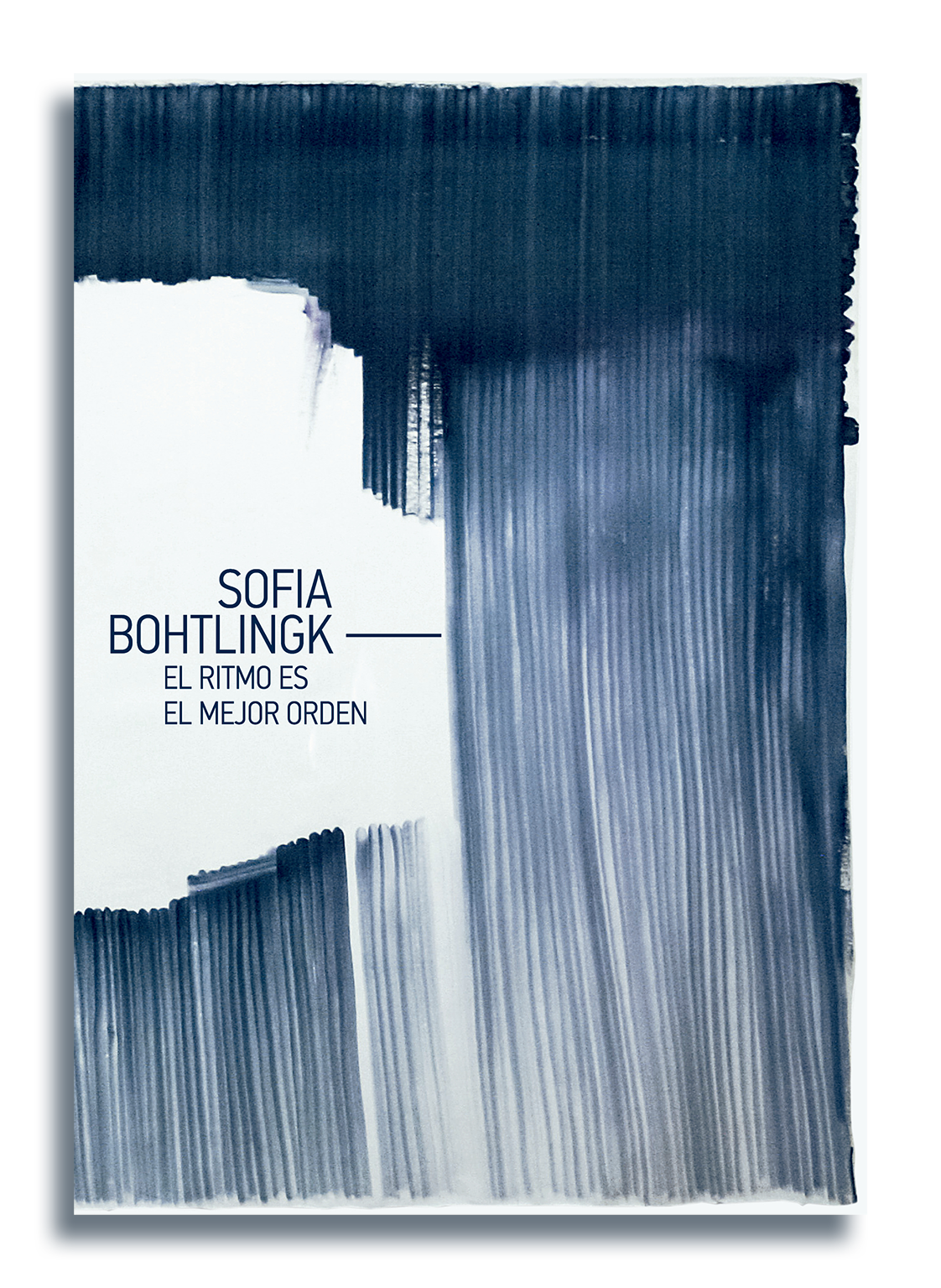
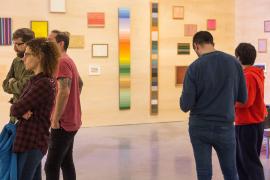
This book celebrates Sofia Bohtlingk’s exhibition at the Museo de Arte Moderno, which opened in November 2024. The artist’s paintings and drawings reveal traces of her own physicality, which is expressed in her brushstrokes, lines and visual gestures. Sofía’s body and her art are inseparable: it is an essential condition for the creation of her works, and understanding that connection is key to understanding her artistic practice. This publication includes the works exhibited at the Museo Moderno as well as a selection of earlier works by the artist. It also includes a text written by Fernando García and a playlist of more than one hundred songs that Bohtlingk plays while at work on her creations.
“Sofía Bohtlingk has the gift and freedom of a child-artist, one who names impossible things that can only be represented in images that, of course, do not correspond to anything known. For the child-artist, what is named is everything, and a drawing – that atavistic approach – is independent of any references, yet at the same time, cannot be anything other than what has been named.”
Fernando García
“While the body has been the preferred channel through which to consider the work of the artist, the human form is a resource that has been curiously banished from Bohtlingk’s lexicon, although she used to be a regular at the Asociación de Estímulo de Bellas Artes, which offered live model classes. Neatly arranged in groups, a few [of the drawings] give the impression of being sketches for paintings that have already been finished. Others appear to be experiments that use repetitive shapes and lines to add musicality to the space. There are also further experiments in which she mixes oil with earth and bits of cement, the result of a performative practice in which she paints without painting, letting the material do as it pleases, while inventing devices with which to support her own body.”
Juan Tessi