“This project originates from the question “How are indigenous cultures represented in museums?”, in which “indigenous” is not understood as an essentialist category, but as a fabric of imaginaries that refer to several cultural, symbolic and political characteristics of communities that pre-date the nation state. It begins from the premise that, historically speaking, indigenous artistic practices were sources of inspiration for many modern and contemporary artists, who took their worldviews, techniques, materials and ways of relating to the environment without giving proper recognition to their authorship or knowledge. The project will identify and select works from the museum’s collection – pieces that are currently in storage and others that were part of past exhibitions – that establish a formal, symbolic or conceptual link with the Indigenous, in order to organise images that open up new interpretations. The aim is not to follow any chronological or linear order, but to find other ways of narrating, of re-presenting images, using Walter Benjamin’s notion of the dialectical constellation as a methodology to guide the construction of new narratives based on other images. This will allow me to establish connections between different pieces that reflect their enduring existence. The project will not only strengthen my own artistic research but also generate tools for cultural circulation that reinforce the ties between artistic production, the institutional management of the museum and indigenous communities, from an education and community perspective. Rural indigenous communities, such as my own, face structural barriers to accessing cultural and museum spaces that allow them to see, discuss and engage with their own representations. In view of this situation, the project aims to activate other ways of circulating the museum’s collection with the purpose of establishing meaningful ties with contemporary Indigenous communities. The proposal approaches the museum as a living archive that can be moved, relocated and stay open to new forms of territorial activation. As a research artist, I want to encourage processes of symbolic and affective feedback to re-signify pieces linked to indigenous cultures and raise their profile and political power beyond the traditional institutional frameworks.”
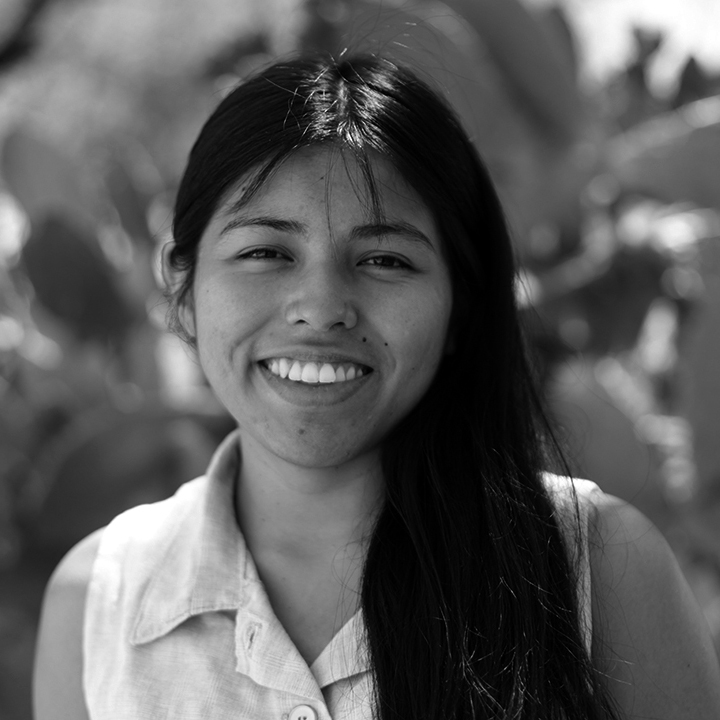
Victoria Pastrana was born in 1999 in Amaicha del Valle, Tucumán. She holds a degree in Visual Arts from the Universidad Nacional de Tucumán (2024). Pastrana trained at the Taller C workshop and the Sculpture Workshop of the Faculty of Arts of the Universidad Nacional de Tucumán (FAUNT). As an artist, she is interested in researching the practices and knowledge of the indigenous community to which she belongs, and her practice focuses on textiles, clay/adobe and performance. Since 2023, she has participated in the Textiles Semilla project with the Humboldt Forum’s programme, 99 Questions. She is currently teaching art at a CEPLA centre (Local Addiction Prevention Centre) in the indigenous community of Amaicha del Valle, where she resides. Pastrana has been awarded several study grants and participated in residencies such as the ULMUS Project’s NOA Creation Residency, the LODO Platform (2024), and she received a grant to attend the Annual Virtual PAC Programme, organised by Galería Gachi Prieto (2024). Group exhibitions include the 17th Contemporary Art Salon (2024) at the Museo de la Universidad Nacional de Tucumán, where she was awarded the Grand Prize. In 2025, she has shown her work at Galería Gachi Prieto and at the Centro Cultural Recoleta exhibition Corteza interna [Inner Bark], both in Buenos Aires.