BARILOCHE, RÍO NEGRO PROVINCE
VISUAL AND AUDIO-VISUAL ARTIST AND POSTDOCTORAL RESEARCHER
SUBMITTED PROJECT
Meteorologías situadas [Local Weather Conditions]
“In this investigation that combines art and science, I will reflect on transformations in atmospheric landscapes. I will observe the changes in recent seasonal cycles and ecosystems and study the impacts these have had on the lives of humans and non-humans, and the relationships and alliances between them. In this regard, I am particularly interested in exploring meteorology and observing how processes, measurements and forecasting methods have transformed in light of the current socio-ecological crisis.
Meteorology is a dynamic science that involves several variables, and thus challenges the assumptions of Western science, which is based on controlled predictions. One example of these is so-called Chaos Theory (1963), proposed by the meteorologist and mathematician Edward Lorenz, in which he argues the heresy of an optimistic world in the face of the possibility of a controlled manipulation of time.
In their book Palabras del tiempo y del clima [Words of Weather] (2023), Jussi Parikka and Daphne Dragona discuss different key concepts that can be used to address the current global social and environmental crisis, in a context in which modern Western science has turned air into an abstract, imperceptible entity. Daphne Dragona provides one possible answer to the problem, saying: ‘Weather can take on a life of its own.’ At the same time, Donna Haraway’s concept of situated knowledge invites us to reveal the marks of the place from which we speak and write, since our bodies are located in a certain space, time and way of seeing.
During my residency at Casa Alberto Heredia, I would like to hold a workshop, open to the public, where, over the course of five sessions, participants will be asked to invent devices to observe the sky, applying different methodologies that fall somewhere between art and science (for example, phenology, which focuses on the ways seasonal rhythms are expressed in the behaviours of plants and animals).”
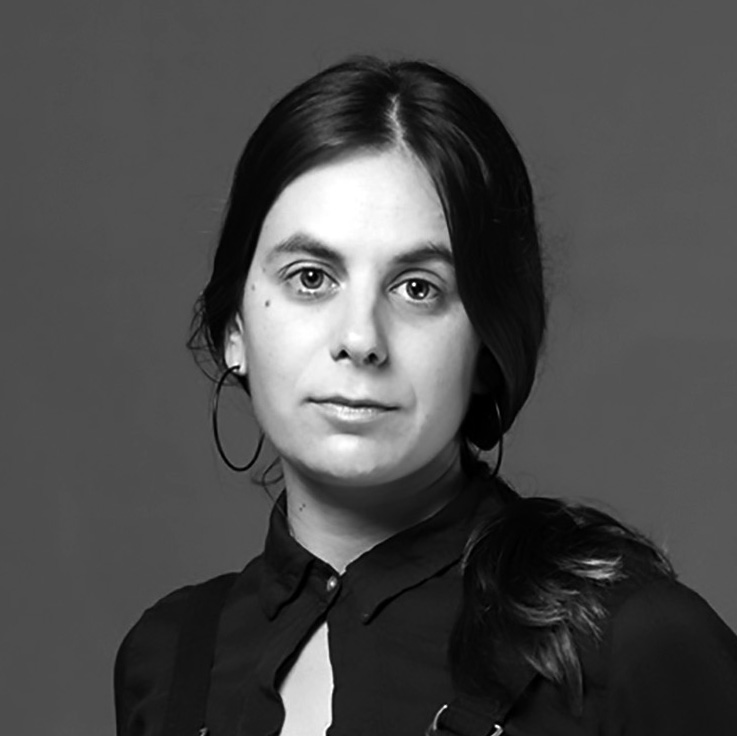
Maia Gattás Vargas holds a PhD in Arts (UNLP), completed a doctoral fellowship at CONICET (2016-2021) and is currently a postdoctoral fellow with a CONICET grant (2022-2025). Her artistic work focuses on the relationships between science, landscapes, nature and colonial history. In 2022, she published Diario de exploración al territorio del color [A Journal of Exploration in the Realm of Colour], edited by Biblioteca Popular Astra (Comodoro Rivadavia) as part of its contemporary art collection, ‘Imai’.Her first feature-length documentary, Viento del este [East Wind], had its national premiere at the 2023 Doc Buenos Aires Festival and its international premiere at Ji.hlava IDFF (Czech Republic), where it won the award for Original Approach. She has exhibited her visual and audio-visual works throughout Argentina, as well as in Ecuador, Chile, Brazil, Colombia, Canada, France, Spain, Germany and Czech Republic. She is currently completing a Situated Research residency with Medialab Matadero in Madrid (2024-2025).